

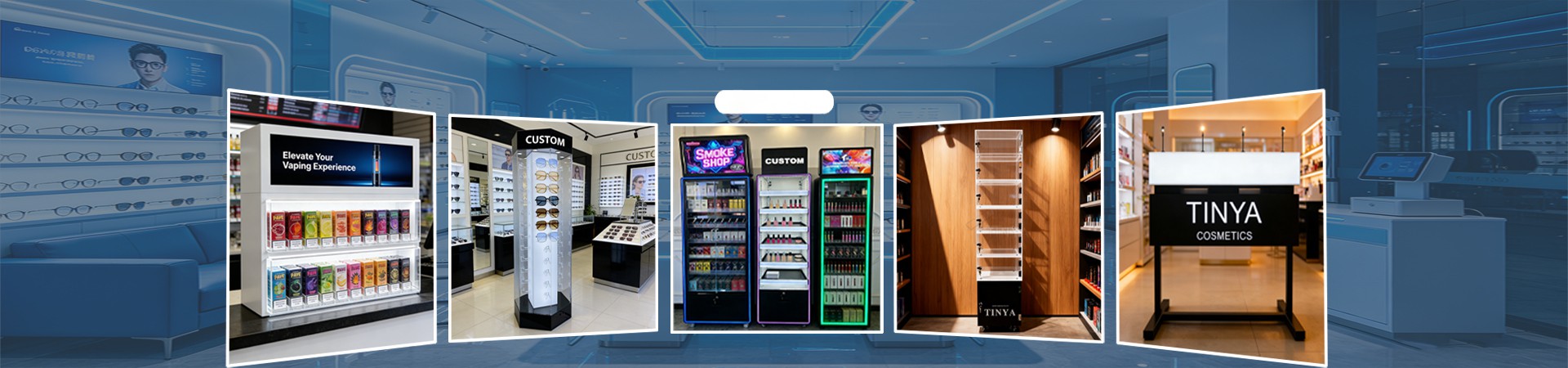

Retail brands often face the same problem when choosing display stands. They need a design that looks good, fits their products, and works across different stores. But when product sizes change or new items arrive, a fixed display may no longer meet their needs.
This is why more buyers are considering an Acrylic Modular Retail Display. Instead of using one permanent structure, a modular display uses separate parts that can be changed, replaced, or rearranged.
But is a modular display always better than a traditional fixed display? The answer depends on your products, store layout, budget, and future plans.

What Is the Difference Between an Acrylic Modular Retail Display and a Fixed Display?
An acrylic modular retail display is made with parts that work together as one system. Depending on the design, brands can adjust shelves, replace product holders, or change display sections without replacing the entire unit.
A fixed display has a more permanent structure. Its shelves, holders, and panels are designed for a specific product arrangement. While it may offer a clean and stable appearance, major changes often require a new design.
Both options can use clear or colored acrylic, metal supports, LED lighting, and custom branding.
The main difference is how easily each display can adapt when retail needs change.
Acrylic Modular Retail Display vs. Fixed Display Comparison

| Feature | Modular Retail Display | Fixed Retail Display |
|---|---|---|
| Design Flexibility | Parts can be changed or rearranged | Usually follows one layout |
| Product Updates | Easier when compatible modules are available | May require redesign |
| Initial Cost | May be higher due to extra components | Often simpler for one design |
| Shipping | Some designs support flat packing | Depends on the structure |
| Assembly | May require store assembly | May arrive fully assembled |
| Maintenance | Individual parts may be replaceable | Repairs may affect the whole unit |
| Best For | Changing product lines and multi-store programs | Stable product ranges and permanent displays |
For brands launching new products often, modular displays can offer more value over time. However, fixed displays may still be the better choice when the product range and store layout rarely change.
Which Display Is More Cost-Effective for Retail Brands?
The purchase price is only one part of the total display cost.
A fixed acrylic display often has fewer parts and a simpler structure. This can make production more economical for brands that need the same design for a long period.
A modular display may require more detailed engineering, connectors, adjustable components, and assembly testing. As a result, its initial production cost can be higher.
However, the cost difference can change when a brand operates many stores.
Imagine a cosmetics brand launching new lipstick colors every season. With a fixed display, changes in packaging size or product arrangement could require new display units.
With a well-designed modular system, the brand may only need replacement holders, shelves, or printed panels.
This can reduce the need to purchase complete displays for every product update.
For wholesale buyers, the best way to compare costs is to consider the initial production price, shipping, assembly, maintenance, and future replacement needs.

How Do Modular Displays Help With Shipping and Store Installation?
Shipping is an important cost for international retail display buyers, especially when ordering large quantities.
Some modular acrylic retail displays can use a knock-down (KD) structure. This means certain components are packed separately and assembled after delivery.
When designed correctly, this approach can reduce packaging volume and make the displays easier to transport.
However, modular construction does not automatically mean lower shipping costs. Some designs need additional protective packaging or stronger connectors, which may increase weight or carton size.
At TINYA, we can review display dimensions, material thickness, assembly methods, and packaging requirements during the design stage.
For example, a countertop display with removable shelves may be packed differently from a large floor-standing display with metal support frames.
A good design should balance shipping efficiency with easy assembly and reliable performance in stores.
Which Retail Products Are Better Suited to Modular Displays?
Different products need different display structures. A modular system is especially useful when a brand sells several product sizes or changes its product range frequently.
For cosmetics displays, removable trays and product holders can help accommodate new packaging sizes.
For phone accessories displays, adjustable hooks, shelves, and branded header panels can support different products such as chargers, cables, and phone cases.
For eyewear displays, interchangeable holders may help brands present different frame collections while keeping a consistent display appearance.
Modular systems can also be useful for vape and other regulated-product displays in markets where permitted, although security features and local retail requirements must be considered.
Fixed displays remain a practical choice for products that require a highly specific structure or a permanent branded presentation.
The right option is not simply the one with more features. It is the one that matches how the retailer actually sells and updates its products.

What Should Buyers Consider Before Customizing a Modular Retail Display?
Before requesting a quotation, buyers should clearly understand how the display will be used.
The size and weight of the products are particularly important. Acrylic shelf thickness, support spacing, connector design, and overall stability must match the intended load.
Buyers should also consider how often display parts will be changed. If employees need to update the layout every week, the connection system should be simple and practical.
For multi-store retail programs, the design should be easy to assemble consistently without special tools whenever possible.
At TINYA Acrylic, we support OEM and ODM retail display projects using acrylic, metal, MDF, and mixed materials.
Our production capabilities include CNC cutting, laser processing, polishing, UV printing, and assembly. We can also integrate LED lighting and custom branding when required.
Our team can help develop 2D and 3D design proposals, review product dimensions, and arrange samples before mass production.
A physical sample is particularly important for modular displays because it allows buyers to check assembly, connection strength, appearance, and real product fit before placing a larger order.

FAQ About Acrylic Modular Retail Displays
1. What is an acrylic modular retail display?
An acrylic modular retail display is a display system made with interchangeable or adjustable parts. It allows retailers to modify certain sections without replacing the entire display, depending on its design.
2. Are modular retail displays more expensive than fixed displays?
They can have a higher initial cost because of additional components and engineering. However, replaceable parts may help reduce long-term costs when product collections change frequently.
3. Can modular acrylic displays be shipped flat-packed?
Yes, some modular displays can use knock-down structures for easier packing and transportation. The actual packaging method depends on the display size, materials, and connections.
4. Are acrylic modular displays strong enough for heavy products?
They can be designed for different product weights, but load capacity depends on material thickness, shelf span, support structure, and connectors. Heavy products may require metal reinforcement.
5. Can I add LED lighting and custom logos?
Yes. TINYA can develop custom display solutions with printed logos, branded panels, and LED lighting. Electrical and structural requirements should be confirmed during design.
6. Can TINYA manufacture modular displays for multiple retail stores?
Yes. We support custom retail display manufacturing for brands, distributors, and retail programs. Buyers can provide product dimensions, design ideas, store requirements, and estimated quantities for review.
Find the Right Custom Retail Display for Your Brand
An Acrylic Modular Retail Display offers flexibility for brands that regularly update products or operate different store layouts. A fixed display may provide a simpler and more economical solution when the product arrangement remains unchanged.
The best choice depends on how your displays will be used, shipped, maintained, and updated.
Looking for a custom acrylic retail display manufacturer?
Contact TINYA Acrylic with your product dimensions, target quantity, and preferred design. Our team can help you compare modular and fixed display options before production.