

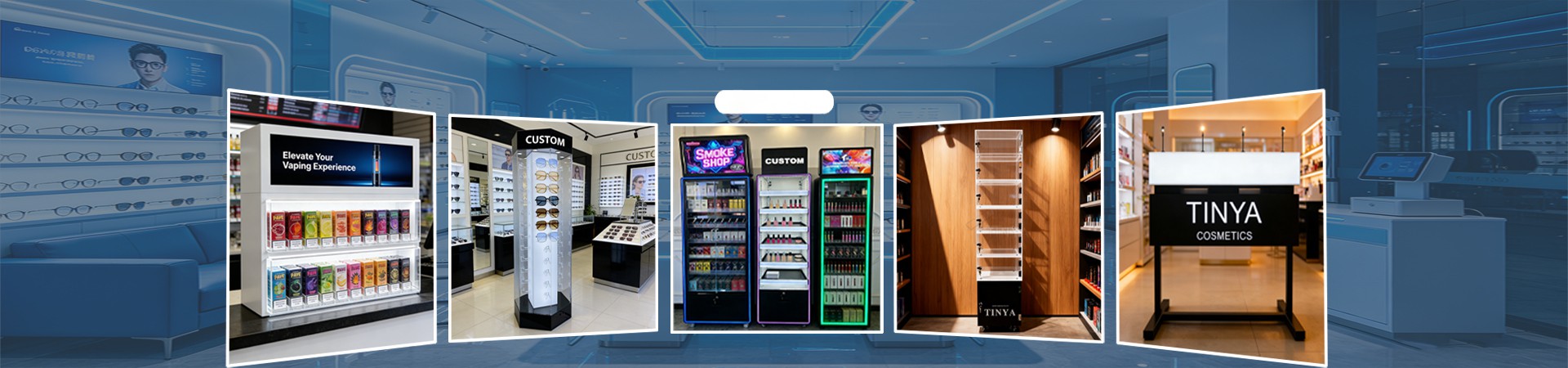

Ask five acrylic display suppliers for a quote on the exact same product, and you'll probably get five different numbers - sometimes wildly different. If you've ever stared at two quotes side by side wondering how one supplier's price is triple another's for what looks like the same countertop stand, you're not imagining things. Wholesale acrylic display pricing is one of those areas where a little background knowledge saves you real money, and honestly, a fair amount of frustration.
This guide walks through what actually drives the price of acrylic displays, how to read a quote without getting blindsided later, and what questions separate a solid manufacturing partner from one that's going to cost you more down the line. Whether you're sourcing point-of-sale racks, cosmetic risers, or a custom retail fixture line, the logic underneath the pricing is the same.
Why Two Acrylic Quotes Rarely Look Alike
Here's the thing about acrylic: it's not one material, it's a whole family of grades, thicknesses, and fabrication methods, and each of those choices moves the price. A supplier quoting cast acrylic at 5mm with laser-cut precision edges is working from a completely different cost base than one quoting extruded acrylic at 3mm with a rougher finish. Neither quote is "wrong" - they're just describing different products.
There's also the labor side. Bending, bonding, polishing, and assembly all take skilled hands and calibrated equipment. A factory with an experienced QC team and proper tooling isn't cutting corners to hit a lower number, so when a quote looks unusually cheap, it's worth asking what got left out - wall thickness, edge polishing, or maybe the packaging that keeps your product from arriving cracked.
Then there's geography and freight. A factory closer to your shipping port, or one that consolidates orders efficiently, can shave real cost off the final landed price - and that's before anyone talks about the acrylic itself. Currency shifts, raw material costs, and even seasonal demand (retailers gearing up for a holiday rush, for instance) all nudge pricing up or down. None of this means quotes are random. It just means the number on the page is the sum of a lot of smaller decisions, and understanding those decisions is what lets you compare quotes on equal footing instead of just picking the lowest one and hoping for the best.
The Real Cost Drivers Behind Every Acrylic Display Quote
Once you know what's actually being priced, quotes stop feeling like a mystery. Here are the factors that move the needle most.
Material Thickness and Grade
Thicker acrylic costs more, plain and simple, but it also holds shape better and survives shipping and daily retail handling. Cast acrylic generally outperforms extruded acrylic in clarity and durability, which shows up in the price - usually 15-30% higher depending on the piece. For a display that's going to sit on a busy counter for two years, that difference is often worth paying for.
Fabrication Complexity
A flat sign holder is cheap to make. A multi-tier rotating display with bent panels, bonded joints, and moving parts is not. Every additional cut, bend, or bonded seam adds labor time, and labor is a bigger chunk of the final price than most buyers expect.
Finishing and Printing
Polished edges, UV printing, laser engraving, frosted panels - these details are what make a display look premium on a shelf, and they're also where pricing tends to jump. It's worth deciding upfront which finishing touches actually matter for your brand versus which ones are nice-to-haves you can skip.
Order Volume and MOQ
This one's intuitive but still catches people off guard: unit price drops as order volume climbs, because tooling and setup costs get spread across more pieces. A supplier with flexible MOQ can often get you a workable price even on smaller test orders, which matters if you're piloting a new retail concept before committing to a bigger run.

Tooling and Design Complexity
Custom molds, jigs, and cutting templates are a one-time cost that gets built into your first order. If your design reuses an existing mold or a supplier's standard component library, that upfront cost disappears or shrinks considerably. This is worth asking about directly - a small tweak to your design (say, swapping a fully custom base for a modular one the factory already tools for) can bring the price down without changing how the display looks on the shelf.
Stock vs. Custom: A Quick Price Comparison
Before you decide which route fits your budget, it helps to see the tradeoffs laid out side by side.
|
Factor |
Stock Acrylic Displays |
Custom OEM/ODM Displays |
|
Typical Unit Price |
Lower, fixed pricing |
Varies by design complexity |
|
Lead Time |
Fast, often ready to ship |
Longer, includes design and tooling |
|
MOQ Flexibility |
Usually low or none |
Depends on supplier; ask upfront |
|
Branding Options |
Limited to none |
Full branding, color, and logo control |
|
Best For |
Quick fills, testing layouts |
Brand differentiation, retail rollouts |
How to Ask for a Quote That Won't Surprise You Later
Getting an accurate number starts with giving suppliers accurate information - sounds obvious, but it's the step most buyers rush through. Include your target thickness, dimensions, quantity, and any finishing requirements in your first message rather than a vague "how much for an acrylic display?" You'll get a tighter, more comparable quote back, and honestly, faster too.
It also helps to ask directly what's included: packaging, shipping terms, sample costs, and QC inspection. A supplier that walks you through these without hesitation is usually one that's done this a thousand times before.
One more thing that's easy to overlook - payment terms and production timelines shape the real cost of doing business, not just the unit price. A slightly higher quote from a factory with a track record of on-time delivery can work out cheaper overall than a rock-bottom price from a supplier whose shipments show up late and throw off your retail launch schedule. Ask for references or past project photos if you're evaluating a new supplier for the first time; a manufacturer confident in their work will usually be glad to share them.
Red Flags That Signal a Pricing Trap
Not every low quote is a bargain. Watch for prices that seem detached from the material specs you asked for, vague answers about wall thickness or acrylic grade, and suppliers who won't provide samples before a bulk order. These are the moments where a few extra questions save you from a container full of displays that crack in transit or yellow within months.
A trustworthy manufacturer will explain their pricing logic rather than just handing you a number. If a factory can walk you through why a certain thickness or bonding method costs what it does, that's a good sign they know their process inside and out.
It's also worth being cautious of quotes that never change no matter what you ask for. If you request a thicker panel, a different finish, or a smaller MOQ and the price stays identical, that's usually a sign the quote wasn't built from real specs in the first place - it's a placeholder number meant to get you in the door. Real pricing moves when the details move, and a supplier who can show you exactly how a change in spec changes the cost is one who actually understands their own production line.
Frequently Asked Questions
Q: What's a reasonable price range for wholesale acrylic displays?
A: It depends heavily on size, thickness, and complexity, but simple countertop stands often start in the low single digits per unit at volume, while multi-tier or custom-branded displays can run several times higher. Getting a quote based on your exact specs is the only reliable way to know.
Q: Does a lower MOQ always mean a higher unit price?
A: Usually, yes, since tooling and setup costs get divided across fewer pieces. That said, some manufacturers offer flexible MOQ programs specifically for buyers testing a new product line, so it's worth asking rather than assuming.
Q: Is cast acrylic worth the extra cost over extruded acrylic?
A: For displays that need to survive daily handling and stay clear over time, cast acrylic's durability and optical clarity generally justify the price difference. For short-term promotional displays, extruded acrylic can be the more practical choice.
Q: How long does it typically take to get a custom acrylic display quote?
A: A detailed quote based on clear specifications usually comes back within a couple of business days. Vague requests take longer simply because the supplier has to go back and forth clarifying details first.
Q: Can I get a sample before committing to a bulk order?
A: Reputable manufacturers almost always offer samples, sometimes at a small cost that's credited back on the full order. If a supplier resists this step, treat it as a signal to keep looking.
Get a Real Quote, Not a Guess
TINYA works with retailers, wholesalers, and brand owners across the globe on custom and stock acrylic display solutions, backed by cast acrylic materials, flexible MOQ, and ISO-aligned quality control. Send over your specs and get pricing that reflects exactly what you need - no guesswork.
Email: seo@tinya168.com
Phone: +86 199 2655 8676