

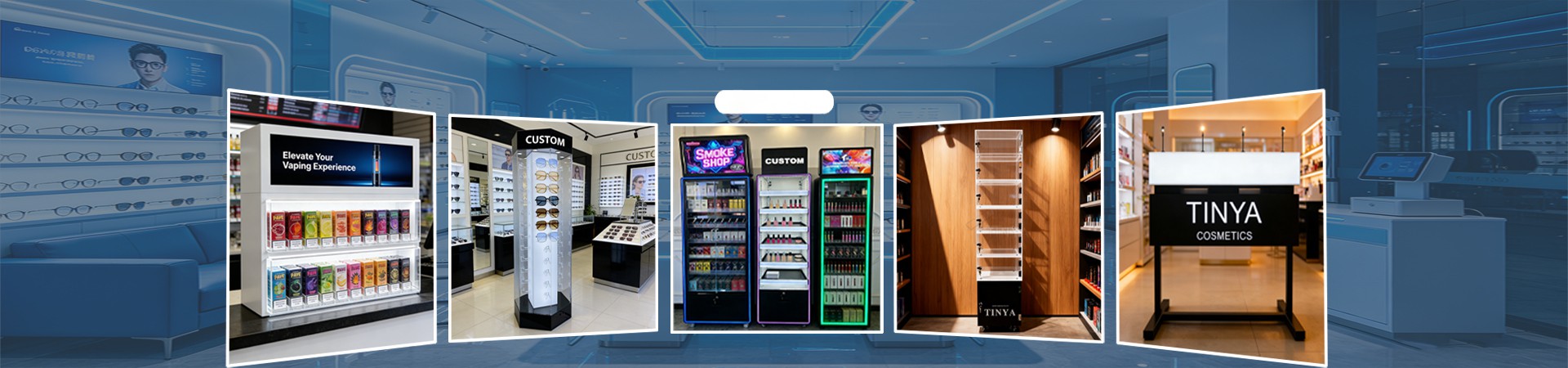

A jewelry display stand is not simply a fixture used to hold necklaces, rings, earrings or bracelets. In a retail environment, it influences which products customers notice first, how easily they compare different designs and whether the collection appears organized, valuable and worth exploring.
For jewelry retailers, the right display can improve visibility, simplify product selection and create more opportunities for cross-selling. For wholesalers and distributors, a coordinated display collection can make the product range easier to demonstrate, resell and introduce to different retail channels.
A display stand cannot replace product quality, pricing or customer service, but it can help remove common barriers that prevent customers from discovering and purchasing jewelry. When products are crowded, poorly lit or difficult to access, even attractive items may be overlooked. A well-planned display gives every product a clear position and guides customers through the collection more naturally.
Product Visibility Is the First Step Toward a Sale
Customers cannot consider a product they do not notice. Small jewelry items are especially easy to lose visually when they are placed flat on a counter or mixed with too many similar products.
Acrylic risers, necklace panels, ring holders and earring stands raise products to different viewing heights. This prevents the front row from blocking the items behind it and allows more of the collection to remain visible from the customer's normal viewing position.
Clear acrylic is useful when the product should remain the main visual focus. It supports the jewelry without introducing a heavy background. Black, white, frosted or colored acrylic can create stronger contrast when the retailer wants the display to match a particular brand identity.
Visibility also depends on spacing. Crowding too many pieces onto one stand can make the collection look confusing and reduce the perceived importance of individual products. Providing appropriate space between products allows customers to notice differences in shape, color, material and price.
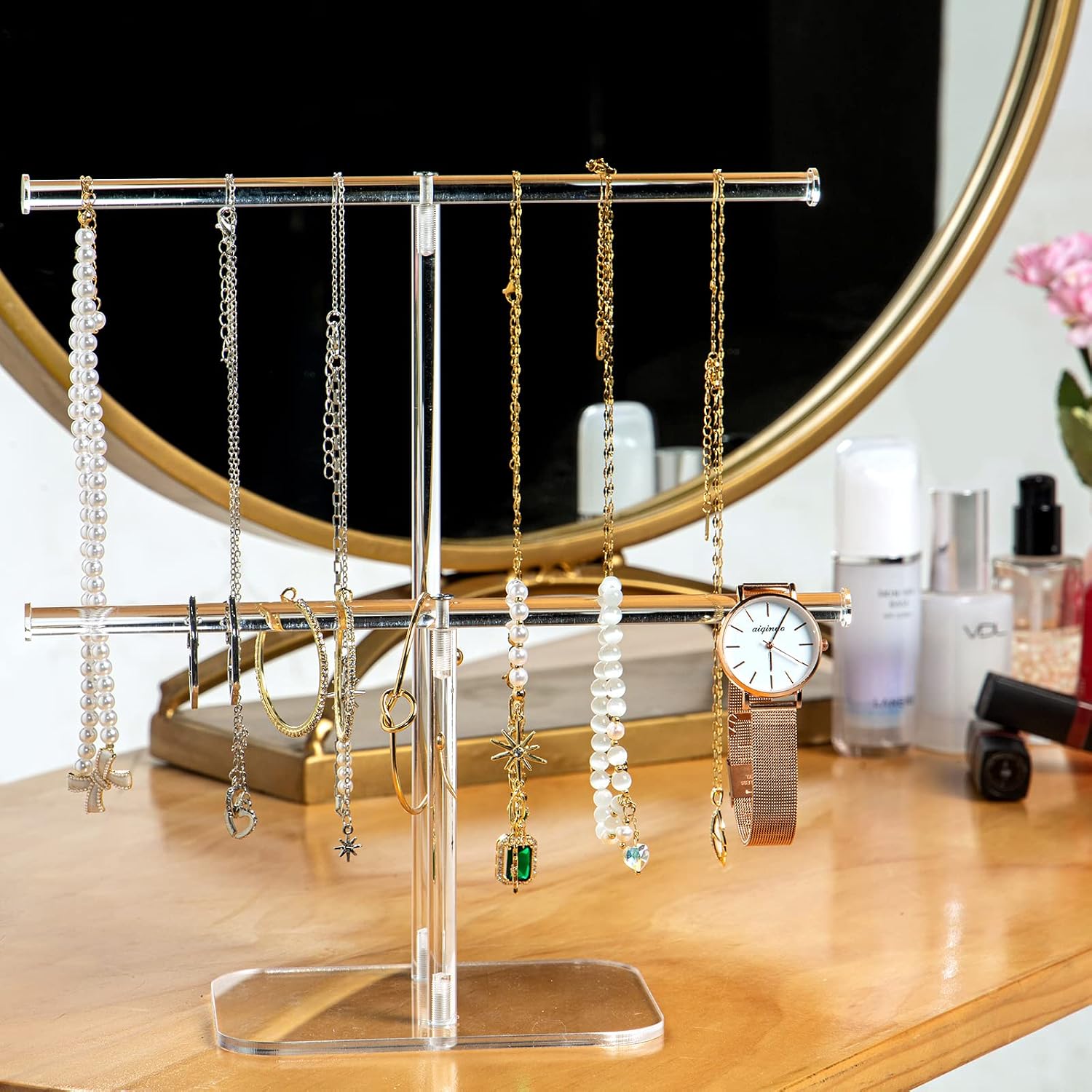
A Jewelry Display Stand Can Improve Perceived Product Value
Presentation affects how customers interpret a product. The same necklace may appear very different when placed loosely on a counter compared with being displayed on a fitted bust stand with controlled lighting and a branded base.
A structured presentation suggests that the retailer has selected and organized the collection carefully. This is particularly important for premium jewelry because customers expect the display environment to support the product's price positioning.
Materials, colors and surface finishes should match the intended market. A minimalist clear acrylic stand may be suitable for modern fashion jewelry, while black acrylic with warm-white lighting can create stronger contrast for gold-colored products. Frosted acrylic, mirrored details or metal accents may help create a more refined boutique appearance.
Retailers do not need to make every stand visually complex. In many cases, simple shapes and consistent spacing create a more premium result than decorative structures that compete with the products.
Using Display Layouts to Encourage Cross-Selling
A well-designed display can place complementary products within the same viewing area. Instead of presenting necklaces, earrings and rings in completely separate parts of the store, the retailer can arrange matching pieces as a coordinated set.
When customers can immediately see how several items work together, they may be more likely to consider purchasing an additional piece. A necklace can be displayed with matching earrings, while a watch can be shown beside bracelets or accessories with a similar color and finish.
The display should make the relationship between the products clear without creating clutter. A multi-level stand can place the main item in the center and supporting products around it. Product cards, small printed panels or engraved labels can provide collection names, material information or promotional messages.
This approach can also help retailers promote gift sets and seasonal collections. During holidays, weddings or new-product launches, the same modular display
system can be rearranged around a different combination of products.
Matching Display Design to Retail Sales Goals
Different sales objectives require different display structures. The table below shows how jewelry display design can support common retail and wholesale goals.
| Sales goal | Suitable display design | Customer experience | Potential business benefit |
|---|---|---|---|
| Attract attention to new products | Raised central platform, illuminated base or branded header | Customers identify the featured collection quickly | Greater visibility for new arrivals |
| Increase cross-selling | Coordinated necklace, ring and earring holders | Matching products can be compared together | More opportunities for multi-item purchases |
| Present premium jewelry | Minimalist acrylic stand with controlled spacing | Products appear more organized and valuable | Supports premium positioning |
| Sell more products in limited space | Tiered, rotating or double-sided display | Customers can view more products without a crowded counter | Better use of retail space |
| Promote seasonal collections | Modular stands with replaceable graphics | Display can be refreshed for campaigns | Faster merchandising updates |
| Support customer browsing | Accessible hooks, trays and removable holders | Products are easier to inspect and compare | Smoother purchasing experience |
| Reduce unauthorized handling | Enclosed stand, magnetic door or lockable case | Products remain visible with controlled access | Better security for valuable items |
| Supply multiple retail locations | Standardized modular display system | Customers receive a consistent brand experience | Easier rollout and replenishment |
The display should be selected according to the actual sales environment. A boutique counter may prioritize presentation and spacing, while a busy accessories store may require greater product capacity and faster customer access. A wholesaler may need a display range that can serve several store formats rather than one highly specialized design.
Improving Sales per Square Foot With Tiered and Rotating Displays
Retail space is expensive, and every section of the counter must contribute to the product presentation. A single-level layout often leaves vertical space unused and allows front products to block the rear items.
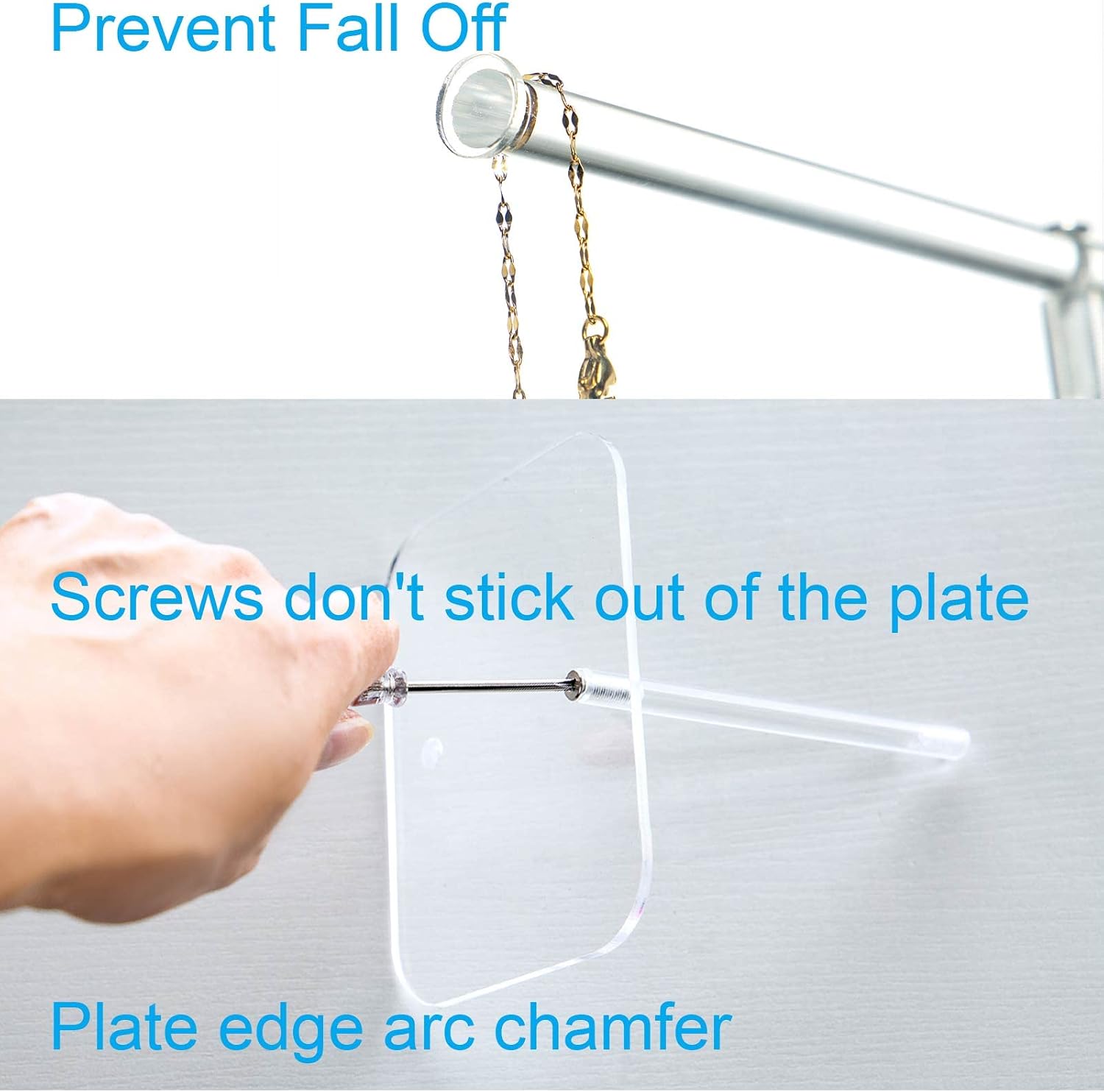
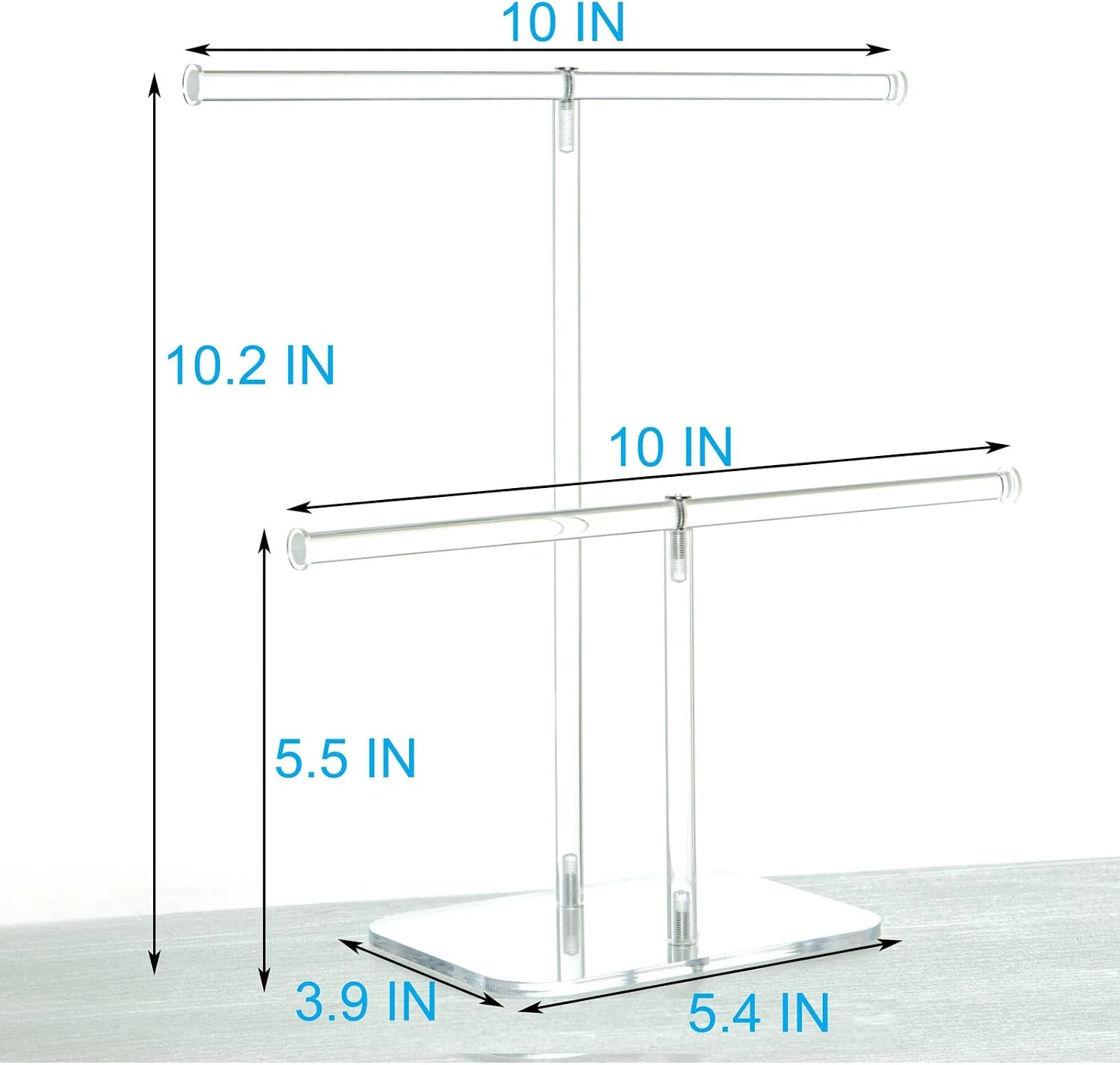
Tiered jewelry display stands create several viewing levels within the same footprint. Rings and small earrings can be placed on lower levels, bracelets and watches in the center, and necklaces or branded graphics at the back.
Rotating stands can provide access from several sides and increase display capacity without requiring a much wider counter. They are especially useful for earring cards, pendants, keychains and fashion accessories. The rotating mechanism should move smoothly and the base should remain stable when customers browse the products.
A high-capacity stand should still keep each product recognizable. Adding too many hooks or slots may increase the nominal capacity but reduce the effectiveness of the display if products overlap or customers cannot remove one item without disturbing several others.
Helping Customers Compare Products More Easily
Customers frequently compare several designs before making a purchase. A clear layout helps them understand the differences without needing continuous assistance from store employees.
Products can be grouped by collection, material, price range, color or intended use. The grouping method should reflect how customers naturally shop. A retailer selling gift jewelry might organize products by occasion, while a fashion accessories store may arrange them by color or style.
Consistent product positions also make price labels and product descriptions easier to understand. If labels are placed randomly, customers may struggle to identify which price belongs to which item. A display designed with designated label areas can reduce this confusion.
For wholesalers, a clear comparison layout is valuable in showrooms and trade fairs. Buyers can review multiple designs, finishes and packaging options more efficiently when the samples are presented in a coordinated system.
Strengthening Brand Recognition Across Retail Locations
Generic fixtures may hold the products, but they do little to distinguish one jewelry brand from another. A custom jewelry display stand can incorporate brand colors, logos, patterns and materials that are consistent with the packaging and store environment.
Branding can be added through UV printing, silk-screen printing, laser engraving, metal letters or separate acrylic logo panels. The logo should be visible without covering the merchandise or dominating the display.
For retail chains, consistent display systems help create a recognizable brand experience across different locations. The same base design can be adapted into countertop, wall-mounted and rotating formats while maintaining common colors, logo positions and materials.
Wholesalers can also develop a private-label display collection for resale. By offering several coordinated sizes and structures, the distributor can serve independent boutiques, department-store counters, pop-up stores and exhibition buyers with the same product family.
Making Product Rotation and Replenishment Easier
Retailers regularly introduce new collections, replace sold items and adjust displays for promotions. A fixed structure designed for only one product size may become difficult to use when the collection changes.
Modular jewelry display stands allow holders, trays, hooks and risers to be rearranged or replaced. This makes it possible to update the product layout without purchasing a completely new display system for every campaign.
Removable components also simplify cleaning and replenishment. Store employees can take out one tray, replace the products and return it without dismantling the complete stand.
For wholesalers supplying multiple customers, modular systems create a broader sales opportunity. A standard base can be offered with different attachments for necklaces, rings, earrings, watches or mixed collections. Retailers can begin with one configuration and purchase additional components as their product range expands.
Balancing Product Access and Security
Easy access supports customer browsing, but valuable products may require controlled handling. The appropriate structure depends on the price of the merchandise, store staffing and expected customer interaction.
Open stands work well for lower-priced accessories and products that customers are encouraged to try. Higher-value jewelry can be placed inside an acrylic cover or lockable display case. Magnetic doors, hinged panels and sliding doors allow staff access while reducing unrestricted customer handling.
Security should not make the display difficult to operate. Doors must open smoothly, locks should be positioned conveniently and internal shelves should remain accessible. A physical sample should be tested in the actual retail workflow before a large order is produced.
For portable displays used at exhibitions or pop-up shops, stability is also important. The base must support the loaded stand, and small products should remain secure when the fixture is moved.
How Wholesalers Can Build a More Sellable Display Range
Wholesalers need to consider not only how the stand works in one store, but also how easily it can be sold to different customers. A coordinated range usually has greater commercial flexibility than a single isolated design.
A practical wholesale collection may include small countertop holders, necklace stands, ring trays, earring panels, rotating displays and enclosed premium cases. The products can share the same acrylic color, edge style and logo position while serving different retail applications.
Packaging also affects wholesale sales. Retail-ready cartons, product labels, barcodes, assembly instructions and clear product photographs make the display easier for distributors and e-commerce sellers to manage.
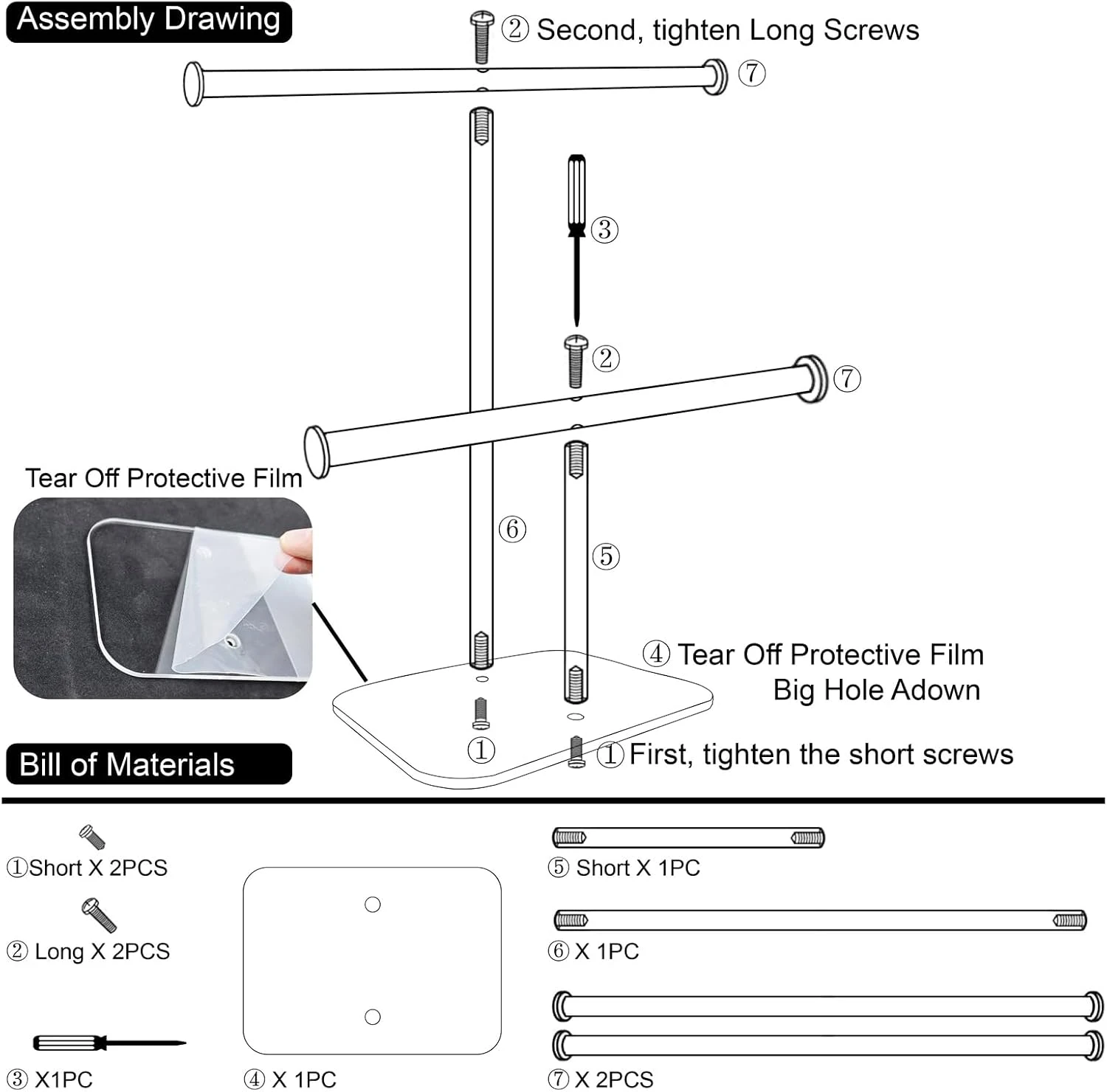
The stand should be designed with transportation in mind. Fully assembled acrylic displays may provide a premium appearance but require more carton space. Knock-down structures can reduce shipping volume, provided that the assembly method is stable and easy to understand.
Before choosing a wholesale range, buyers should evaluate product differentiation, packaging volume, target retail price, customization options and the number of compatible product categories.
Custom Jewelry Display Stands for Retail and Wholesale Projects
A custom jewelry display stand should be developed around the product dimensions, sales environment and target customer. Buyers should provide product photographs, maximum dimensions, required quantity, store layout, logo files and preferred materials before requesting a quotation.
The design stage should confirm the overall size, product capacity, acrylic thickness, base stability, holder arrangement, lighting, branding and packaging. A rendering can help review the appearance, but a physical sample is recommended for checking product fit, daily access and structural stability.
TINYA supports OEM and ODM jewelry display projects using acrylic, metal, MDF, PVC and integrated lighting. Custom options include countertop stands, rotating displays, wall-mounted systems, enclosed cases, replaceable graphics and private-label packaging.
Samples can normally be produced in approximately 3–7 working days, depending on the structure and customization requirements. The usual MOQ for customized display stands is around 50 pieces, although the final quantity depends on the product size, complexity and commercial value.
Frequently Asked Questions
How can a jewelry display stand help increase retail sales?
It can improve product visibility, organize related items and make it easier for customers to compare products. A clear presentation can also support cross-selling and strengthen perceived product value.
Which display is best for cross-selling jewelry?
A coordinated multi-level display that presents matching necklaces, earrings, rings or bracelets together can make product relationships easier to understand. The layout should remain spacious enough for each item to be seen clearly.
Are rotating jewelry displays suitable for retail stores?
Yes. Rotating displays are useful when a store needs to present many earrings, pendants or accessories within a limited counter area. The base and rotating mechanism should remain stable under the expected product load.
Can a display be customized for several jewelry categories?
Yes. Modular holders, removable trays, hooks, ring slots and risers can be combined on one display system. The structure should be developed according to the actual dimensions and weights of the products.
Should jewelry displays include LED lighting?
LED lighting can improve product visibility and draw attention to featured collections. The lighting color and brightness should be tested with the actual jewelry to avoid glare or inaccurate color presentation.
Can our logo and brand colors be added?
Yes. Logos can be added through UV printing, silk-screen printing, laser engraving or separate branding panels. Acrylic colors, metal finishes and packaging can also be coordinated with the brand identity.
What information should wholesalers provide before requesting a quote?
The manufacturer needs the intended display type, product dimensions, expected capacity, order quantity, logo, material preferences, packaging requirements and destination market. Reference photos or drawings are also helpful.
Can displays be supplied in flat-pack form?
Yes. Some displays can use knock-down or modular structures to reduce shipping volume. The design must still provide stable assembly and should include clear instructions for retailers.
Is a sample necessary before a bulk order?
A sample is strongly recommended for customized projects. It allows the buyer to test product fit, stability, lighting, logo appearance, access and packaging before mass production.
What should retailers measure after installing a new display?
Retailers can monitor customer attention, product handling, sales by SKU, cross-selling results and inventory turnover. These observations help determine whether the layout should be expanded, adjusted or reused in other locations.