

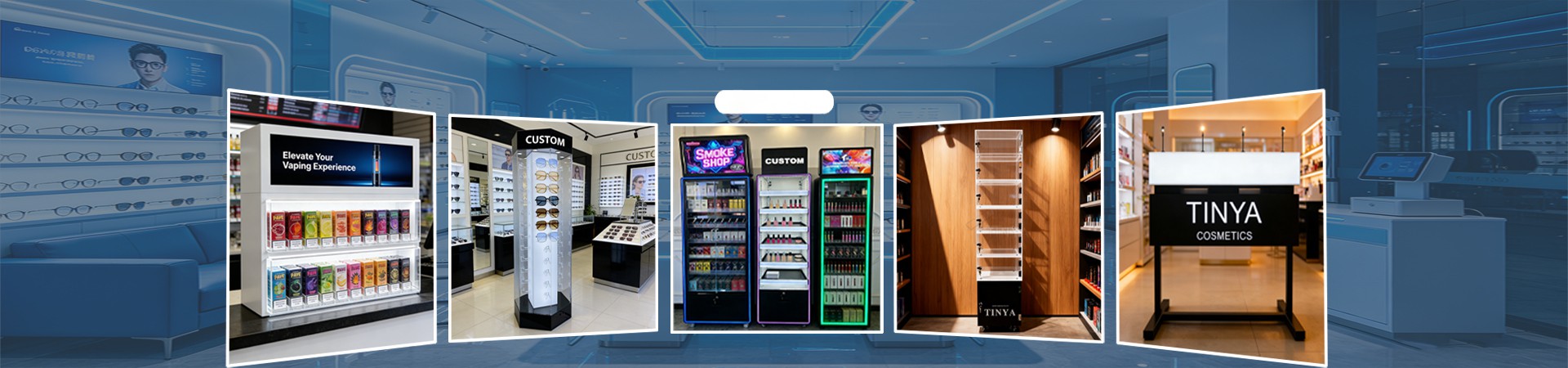
When we first started supplying acrylic display stands for European retail projects, we believed that visual clarity was the main requirement. If the structure was transparent enough and the product stood out clearly, the display was considered successful.
Over time, that assumption proved to be incomplete.
In several projects we supported across Germany and other European markets, feedback from retailers, brand teams, and distributors pointed in a different direction. The appearance of the display still mattered, but how it behaved after weeks or months on the shop floor mattered more.
What Daily Use Taught Us About Design
One of the earliest lessons came from store operations rather than design reviews.
In some locations, display stands that looked refined at installation began to shift slightly when customers interacted with the products. In others, highly polished acrylic surfaces showed wear sooner than expected under frequent cleaning and constant lighting. None of these issues were critical on their own, but together they affected how the display was perceived over time.
As a result, we began paying closer attention to structural details. Slightly thicker base plates and reinforced joints were not introduced to make the display more visible, but to make it more predictable in daily use. Matte and satin finishes, which we once considered secondary options, proved easier to maintain in busy retail environments.
This change did not happen all at once. In fact, some early designs were adjusted after installation when it became clear that flexibility was missing.
Retailers: Flexibility Matters More Than Novelty
In discussions with retail partners, one theme appeared repeatedly: change is constant.
Product assortments rarely remain fixed for long. Seasonal rotations, promotional campaigns, and supplier changes all affect how displays are used. Stands designed for a single configuration often become obsolete sooner than expected.
For this reason, adjustable shelves, interchangeable holders, and standardized footprints gradually became part of our default design thinking. These features allow retailers to adapt displays without replacing the entire structure. Fixed designs are still used, but mostly for short-term campaigns where longevity is not a priority.
This preference is rarely expressed in design language. It usually appears as a practical request: "Can we reuse this stand for the next product?"
Looking for adaptable display solutions for your evolving product lines? Contact our design team for a modular consultation.


Brand Owners: Balancing Identity and Approval
Working with brand owners across different European markets introduced another set of constraints.
In earlier projects, transparency was often treated as a design goal in itself. Over time, however, we saw that pure clarity was not always the most effective solution. Displays that relied entirely on clear acrylic sometimes lacked visual depth, especially under strong store lighting.
Design teams began experimenting with frosted sections, subtle color accents, and internal light diffusion. These elements helped create structure without competing with the product.
At the same time, compliance became a more visible factor. Displays that were visually striking but structurally complex often required additional approval steps at store level. In several cases, simpler designs moved faster through rollout simply because they were easier to evaluate and reproduce.
Consistency, from a brand perspective, turned out to be less about appearance and more about predictability.


The Distributor's Perspective: What Happens After Design
Distributors are rarely part of early design discussions, but their feedback has had a noticeable influence on how displays are now developed.
In practice, displays are stored, transported, unpacked, and reassembled many times. Designs that required special packaging or occupied excessive space created inefficiencies that became obvious very quickly. In some cases, visually refined details were the first components to fail during handling.
To address this, we began focusing more on reusable base structures with replaceable brand elements. Flat-pack or semi-assembled designs were not introduced for visual reasons, but because they reduced damage and simplified logistics.
This approach also allowed distributors to reuse display systems across different product categories, rather than treating each project as a one-off solution.
Need retail displays designed for durability and global logistics? Inquire about our flat-pack and high-stability solutions here.


Material Choices Based on Experience, Not Specification Sheets
Acrylic remains a preferred material in European retail, but our approach to specifying it has changed.
Early on, material decisions were often driven by availability or cost. Over time, feedback from long-term installations made differences more visible. Cast acrylic consistently performed better in displays intended for extended use, especially in terms of surface stability and resistance to stress under lighting.
Surface finishes followed a similar path. High-gloss options looked impressive at launch but required more maintenance than expected. In high-traffic areas, matte or lightly textured finishes proved more forgiving, especially when displays were cleaned frequently.
These were not theoretical conclusions. They were based on how displays aged in real environments.
Designing for Multiple Retail Formats
One recurring challenge in European projects is format diversity.
The same brand may appear in department stores, independent boutiques, travel retail, and temporary pop-ups. Designing a separate display for each environment is rarely efficient.
Instead, we increasingly aim for adaptable systems. Neutral color palettes, adjustable dimensions, and optional components allow one display concept to function in different settings without appearing out of place. This approach reduces complexity and extends the useful life of the display.
Lighting: Supporting the Product, Not Competing With It
Lighting is another area where our thinking evolved gradually.
Earlier projects often treated integrated lighting as a design feature. Over time, it became clear that subtle lighting worked better in most European retail environments. Soft internal illumination or diffused backlighting improved product readability without drawing attention to the display itself.
Maintenance also became part of the conversation. Easily replaceable components and concealed wiring reduced downtime, particularly in permanent installations.
Sustainability Seen Through Use, Not Claims
Sustainability discussions are unavoidable in Europe, but in practice they tend to focus on longevity.
In many projects, buyers asked whether a display could be reused, adapted, or repaired, rather than whether a specific material claim could be made. Reducing unnecessary material thickness was often considered, as long as structural stability remained intact.
From this perspective, a display that stays in use longer is often considered the more sustainable option.
A More Grounded Role for Acrylic Display Stands
Looking back, the role of acrylic display stands in European retail has become more grounded.
They are no longer expected to simply attract attention. They are expected to work-across different channels, over longer periods, and under real operational conditions. Retailers focus on stability and ease of use. Brand owners look for consistency and smoother approvals. Distributors prioritize handling and reuse.
This evolution did not come from trend forecasts. It came from accumulated experience on the shop floor.
Ready to build displays that truly perform in a retail environment? Get a tailored quote for your next European project today.