

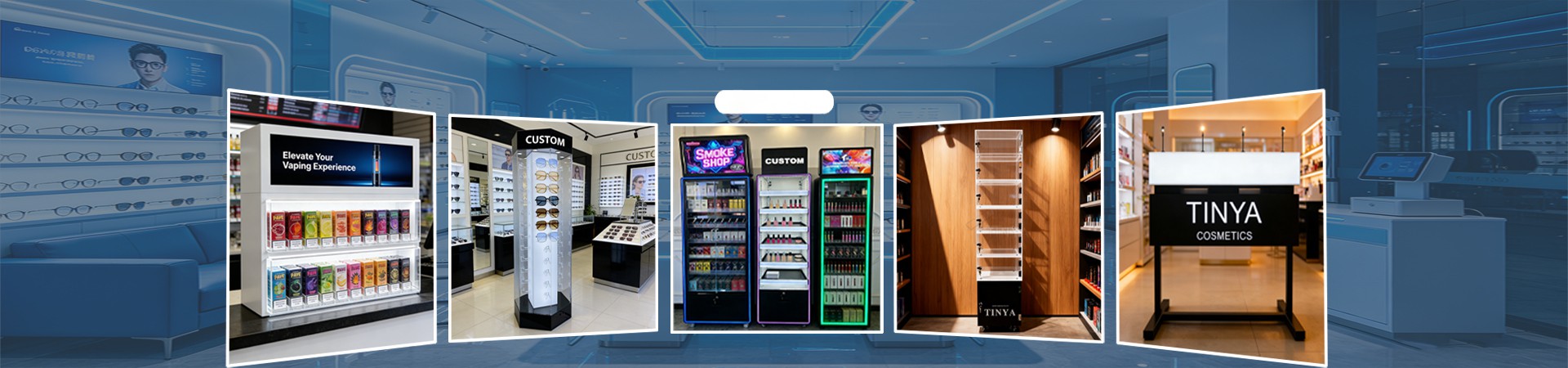
In many retail stores today, mobile phone accessories are no longer treated as secondary items placed near the checkout counter. Products like chargers, cables, cases, and power banks often deliver strong margins and steady turnover, but only when they are presented in a way that customers can easily notice and understand.
For overseas buyers and importers, selecting a mobile phone accessories display rack is therefore not a routine sourcing exercise. The choice affects how products are seen in-store, how often displays need to be replaced, and how much value the brand communicates at the point of sale.
A display rack that is well planned and properly built can make products easier to browse, encourage impulse buying, and support a more consistent store image. A poorly chosen one, however, may result in visual clutter, higher maintenance costs, faster wear and tear, and missed sales opportunities.
This article is intended as a practical procurement reference for international buyers, distributors, and retail brands. It examines mobile phone accessories display racks from a commercial perspective, covering materials, cost composition, build quality, visual design, durability, and expected service life-so that purchasing decisions are based on long-term value, not just initial price.
1. Understanding the Purpose of a Mobile Phone Accessories Display Rack
Before comparing materials or prices, it's important to clarify how the display rack will be used. Different retail scenarios require different solutions.
Typical use cases include:
Mobile phone brand stores
Electronics chain stores
Shopping mall kiosks
Supermarkets and convenience stores
Wholesale showrooms
Trade fairs and exhibitions
Key questions buyers should consider:
- Is the display rack for permanent or temporary use?
- Is it designed for high-traffic areas?
- Does it need to be movable or fixed?
- Will it display light items (cables, cases) or heavier products (power banks, chargers)?
- Is branding and customization important?
The answers to these questions directly affect material selection, structural design, and budget planning.


2. Material Differences: The Foundation of Performance and Cost
Material choice is the most critical factor influencing cost, quality, appearance, and lifespan.
2.1 Metal Display Racks
Common materials: Iron, steel, stainless steel, aluminum
Advantages:
High structural strength
Excellent load-bearing capacity
Long service life
Suitable for high-traffic retail environments
Can support heavy accessories like power banks
Disadvantages:
- Higher raw material and processing costs
- Heavier weight increases shipping costs
- Risk of rust if surface treatment is poor
Best for:
- Brand stores
- Long-term retail installations
- Premium or high-volume markets
Metal racks are often powder-coated or electroplated to improve corrosion resistance and appearance. Stainless steel and aluminum, while more expensive, offer superior durability and a modern aesthetic.
2.2 Acrylic Display Racks
Advantages:
Transparent and visually light
Modern, clean appearance
Good for highlighting product colors
Lower material cost than metal
Easy to customize shapes
Disadvantages:
- Lower impact resistance
- Prone to scratching
- Limited load capacity
- Shorter lifespan in high-traffic areas
Best for:
- Countertop displays
- Cosmetic or premium-looking accessories
- Short-term promotions
- Acrylic racks are popular in malls and boutique stores where appearance matters more than heavy usage.
2.3 Plastic Display Racks
Common materials: ABS, PP, PVC
Advantages:
Lowest material cost
Lightweight and easy to ship
High design flexibility
Good for mass production
Disadvantages:
- Lower perceived quality
- Deformation under heavy load or heat
- Shorter service life
Best for:
- Supermarkets
- Temporary promotions
- Price-sensitive markets
- Plastic display racks are often used for large-scale rollouts where cost control is critical.
2.4 Wood and MDF Display Racks
Advantages:
1
Warm, premium appearance
2
Strong branding presence
3
Customizable finishes
4
Good stability for floor display
Disadvantages:
- Sensitive to humidity
- Heavier and bulkier
- Higher shipping and packaging costs
Best for:
- High-end retail stores
- Brand flagship shops
- Fixed installations
Wood and MDF racks are commonly used for branded displays with a strong visual identity.
2.5 Mixed-Material Display Racks
Many modern designs combine metal frames with acrylic shelves or wood panels with metal supports.
Advantages:
- Balanced cost and performance
- Enhanced aesthetics
- Improved structural strength
Best for:
- Mid- to high-end markets
- Custom brand projects


3. Cost Differences: Looking Beyond the Unit Price
For overseas buyers, the real cost of a display rack includes more than just the factory price.
3.1 Manufacturing Cost
Key cost drivers:
- Raw material prices
- Labor cost
- Surface treatment (powder coating, polishing, printing)
- Custom molds or tooling
- Complexity of design
Metal and wood racks generally have higher manufacturing costs, while plastic and acrylic options are more economical.
3.2 Customization Cost
Customization elements may include:
- Logo printing
- Brand colors
- Custom dimensions
- Modular structures
- Unique shapes
Custom designs usually require:
- Design fees
- Sampling costs
- Longer lead times
For buyers ordering large quantities, customization costs can be amortized over volume, making branded racks more cost-effective in the long run.
3.3 Shipping and Logistics Cost
International buyers must consider:
- Weight (metal and wood are heavier)
- Volume (bulky designs increase freight cost)
- Knock-down vs fully assembled structures
- Packaging materials
A well-designed knock-down rack can significantly reduce shipping costs.
3.4 Long-Term Cost of Ownership
Cheaper racks often mean:
- Shorter lifespan
- Higher replacement frequency
- Increased maintenance cost
- Inconsistent store image
High-quality racks may have a higher upfront cost but lower total cost over time.

4. Quality Differences: What Separates Professional Racks from Cheap Alternatives
Quality is not just about material-it's about engineering, finishing, and consistency.
4.1 Structural Stability
High-quality racks:
- Do not wobble
- Maintain balance under full load
- Have reinforced joints and connectors
Poor-quality racks may collapse, posing safety risks in retail spaces.
4.2 Surface Treatment
Look for:
- Smooth edges
- Even coating
- No sharp corners
- Scratch-resistant finishes
Surface quality directly affects brand perception.
4.3 Load-Bearing Capacity
Each hook, shelf, or peg should be tested for:
- Maximum load
- Long-term deformation
- Fatigue resistance
This is especially important for power banks and chargers.

4.4 Manufacturing Consistency
For chain stores and distributors, consistency matters:
- Uniform dimensions
- Consistent color
- Standardized components
Reliable suppliers provide quality control documentation and inspection reports.
5. Appearance and Design: More Than Just Looks
A display rack is part of your visual merchandising strategy.
5.1 Visual Impact
Good design:
- Attracts attention from a distance
- Clearly displays product categories
- Enhances product value perception
Minimalist designs work well in modern markets, while bold colors suit promotional environments.
5.2 Branding Opportunities
Effective racks integrate:
- Logo placement
- Brand colors
- Light boxes or headers
- Promotional messaging
Branded display racks can significantly improve brand recognition at the point of sale.
5.3 Flexibility and Modularity
Modular designs allow:
- Easy product updates
- Seasonal changes
- Expansion without replacement
This flexibility is highly valued by international retailers.

6. Usage Duration and Lifespan Differences
6.1 Short-Term Use (3–12 Months)
Recommended materials:
- Plastic
- Acrylic
- Lightweight metal
Suitable for:
- Promotions
- Trade shows
- New product launches
6.2 Medium-Term Use (1–3 Years)
Recommended materials:
- Metal + acrylic
- Reinforced plastic
Suitable for:
- Shopping malls
- Kiosks
- Franchise stores

6.3 Long-Term Use (3–5+ Years)
Recommended materials:
- Steel
- Aluminum
- Wood + metal
Suitable for:
- Brand stores
- High-traffic retail chains
Long lifespan racks reduce replacement costs and ensure consistent store image
7. Key Procurement Advice for Overseas Buyers
When sourcing mobile phone accessories display racks internationally, buyers should:
- Define usage scenarios clearly
- Balance upfront cost and long-term value
- Request samples before mass production
- Check supplier experience and export capability
- Confirm packaging and shipping solutions
- Ensure compliance with local safety standards
- Plan for scalability and future updates
A reliable supplier should act as a solution provider, not just a manufacturer.

Choosing the Right Rack Is a Strategic Decision
For overseas buyers, mobile phone accessories display racks are not just store fixtures-they are sales tools, brand carriers, and long-term investments.
By carefully evaluating materials, cost structure, quality, appearance, and lifespan, you can select a display solution that supports your business goals, enhances customer experience, and delivers sustainable value over time.
In an increasingly competitive global market, the right display rack can make a measurable difference at the point of sale. Choosing wisely today means stronger performance tomorrow.
For cost-effective mobile phone accessory display stands suitable for various retail scenarios, please feel free to inquire and get a customized procurement solution.