

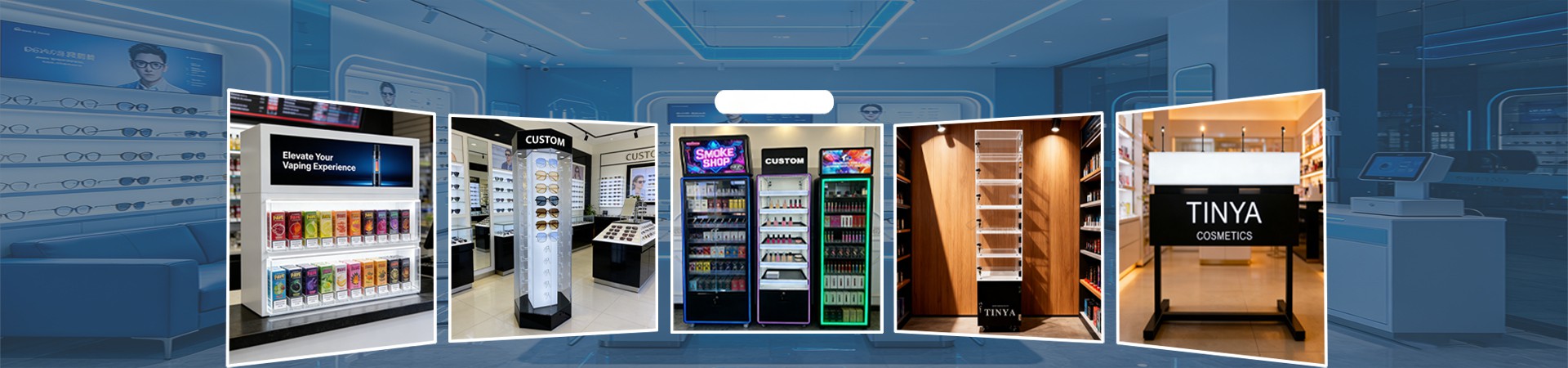

Retail brands often launch new products, change prices, and run seasonal promotions. But buying a new display stand for every campaign can be expensive.
There is a more practical way to manage these changes.
A retail display with interchangeable graphics allows stores to keep the same display structure and replace only the printed advertising panels.
This design can work well for beauty products, phone accessories, electronics, and other retail items.
For brand owners, distributors, and retail chains, it can make store updates easier and reduce the need for new display fixtures.
In this guide, we explain how these displays work, what design options are available, and what buyers should check before ordering.
What Is a Retail Display With Interchangeable Graphics?
A retail display with interchangeable graphics is a product display stand with removable advertising panels.
The main structure may be made from acrylic, metal, MDF, or a combination of materials.
Instead of printing every promotion directly onto the stand, the manufacturer creates a space for a replaceable graphic.
When the brand launches a new product, store staff can change the advertising panel without removing the whole display.
For example, a skincare brand may use the same acrylic display for its spring and summer collections.
The products can stay in the same positions, while the back panel shows a new campaign image.
This is useful for brands that want a consistent store appearance but need to update their messages regularly.
Why Do Retail Brands Need Changeable Graphics?
A fixed printed display can work well for a single product launch.
However, many retail brands run several promotions each year.
If the display includes a permanent campaign image, it may look outdated when the promotion ends.
Replacing the whole display also means producing, packing, and shipping another fixture.
A design with removable graphics offers more flexibility.
It allows retailers to keep the display body and update the visible message when needed.
For brands operating many stores, it can also make campaign planning simpler.
Instead of ordering 100 complete displays for each new promotion, the purchasing team may only need to order replacement panels.
The actual savings depend on the display design, printing cost, freight, and number of campaigns.
Common Types of Interchangeable Graphic Displays
Different designs are suitable for different retail environments.
| Graphic System | How It Works | Best Application |
|---|---|---|
| Slide-in panel | Printed insert slides into a slot | Frequent promotions |
| Magnetic panel | Graphic panel attaches with magnets | Seasonal brand campaigns |
| Removable backboard | Back panel can be replaced | Product launches |
| Screw-fixed panel | Printed board is removed with fasteners | Less frequent updates |
| Replaceable front strip | Small graphic strip fits into a holder | Prices and product names |
A slide-in panel may be the easiest option for store staff.
A magnetic panel can provide a cleaner appearance for a larger advertising area. However, the magnet strength and connection method must be checked during sampling.
A removable backboard may be useful when the complete campaign image needs to change.
The best system depends on how often the graphics will be changed and who will replace them.
How to Design a Display for Different Campaigns
Start With the Product Range
The products should determine the display structure.
A makeup display may need small holders for lipsticks, brushes, or bottles.
A phone accessories display may need hooks and shelves for packaged products.
Before designing the advertising area, buyers should confirm which products will remain on the display across different campaigns.
If future products have different sizes, adjustable shelves or removable inserts may be useful.
Keep the Brand Identity Consistent
The base, frame, and logo area can use the brand's main colors.
For example, a white acrylic display with a fixed black logo may work with many different advertising images.
Only the campaign graphics need to change.
This helps stores maintain a clear brand identity without replacing the entire display.
Make Graphic Replacement Simple
A good display should be easy for store employees to use.
If the panel is difficult to remove, staff may damage the acrylic or delay the store update.
The manufacturer should check that the graphic fits correctly and can be removed without unnecessary force.
Sharp edges and loose fittings should also be avoided.
A sample test can show whether the replacement process is practical.
Which Materials Work Best?
Acrylic is a popular choice for branded retail displays because it offers a clean appearance and many color options.
Clear acrylic can protect printed graphics while keeping them visible.
Black or white acrylic can give the structure a stronger branded appearance.
Metal may be useful for larger displays or areas requiring extra support.
MDF can be considered for a heavier base or a different surface finish.
The material should match the product weight, display size, store environment, and expected service life.
Acrylic surfaces can scratch, so the design must also consider cleaning and daily handling.
How Much Can Reusable Displays Save?
The best way to compare costs is to look at the complete retail program, not only the first order.
Consider a simple example.
A brand has 50 stores and plans three advertising campaigns.
The following figures are only an example for explaining the calculation, not actual factory prices.
| Cost Item | Fixed Graphic Display | Changeable Graphic Display |
|---|---|---|
| First display per store | $80 | $95 |
| Two future campaign updates per store | $160 | $30 |
| Total per store | $240 | $125 |
| Total for 50 stores | $12,000 | $6,250 |
In this example, the changeable design reduces the calculated fixture and graphic cost by $5,750.
However, real savings will depend on graphic production, labor, shipping, installation, and replacement frequency.
Buyers should request a full quotation before deciding which structure is more economical.
What Should Buyers Test Before Mass Production?
A display can look excellent in a 3D drawing but still create problems in stores.
That is why sampling matters.
First, check the graphic size. A panel should fit without bending or leaving large gaps.
Next, test how easily staff can remove and install the graphic.
If the display uses magnets, confirm that the graphic stays in place during normal handling.
If it uses a sliding system, check the opening and the edges.
The finished sample should also be tested with the real retail products.
Buyers should review the display's stability, material finish, product visibility, and packaging.
For chain stores, the replacement panel sizes should remain consistent across every display in the order.
Can Interchangeable Graphics Work With LED Lighting?
Yes. Some custom displays can combine replaceable advertising panels with LED lighting.
For example, the brand logo may stay illuminated while the printed product message changes.
However, lighting adds new design requirements.
The graphic should not block ventilation or create unwanted reflections. The panel should also be easy to replace without touching electrical parts.
Electrical components and power supplies need to be selected according to the destination market and the complete display design.
Testing should be completed before bulk production.
Custom Retail Display Solutions From TINYA
TINYA Acrylic manufactures custom retail displayshttps://www.acrylic-displays.com/products for brands, wholesalers, distributors, and chain stores.
Our factory supports acrylic processing, metal parts, custom printing, branded panels, and OEM/ODM display development.
Depending on the project, we can evaluate removable graphic panels, magnetic fixing methods, detachable structures, and other design options.
The final solution depends on the products being displayed and the buyer's requirements.
Explore our Custom Acrylic Display Manufacturing Services for more information.
For more ideas about product presentation, see Shopify's Visual Merchandising Guide.
Frequently Asked Questions
What is an interchangeable graphic retail display?
It is a retail display that allows printed advertising panels to be replaced while the main stand remains in use.
Can I change the graphics without tools?
Yes, some designs use slide-in panels or magnetic attachments. Other designs may require simple tools.
Can acrylic displays use magnetic panels?
Yes. Magnets can be integrated into suitable structures. The panel size, weight, and fixing method must be checked.
Can I keep the same display for several product launches?
Yes, if the new products fit the display structure. Removable inserts or adjustable holders may help with different product sizes.
Can LED lighting be added?
Yes, depending on the design. The electrical parts, lighting position, and destination-market requirements must be confirmed.
What is the minimum order quantity?
The MOQ depends on the size, material, structure, printing requirements, and manufacturing process. It is confirmed after reviewing the project.
What information should I send for a quotation?
Share your product dimensions, display quantity, graphic size, reference photos, preferred materials, and destination country.
Build a Display That Works Beyond One Campaign
A retail display should not always need to be replaced when a promotion ends.
With the right structure, brands can update printed messages while keeping the same product display.
For buyers managing several stores, this can make future campaigns easier to organize.
TINYA supports custom display design, sampling, and bulk production for international retail brands.
Contact TINYA Acrylic to discuss a retail display with interchangeable graphics for your next project.