

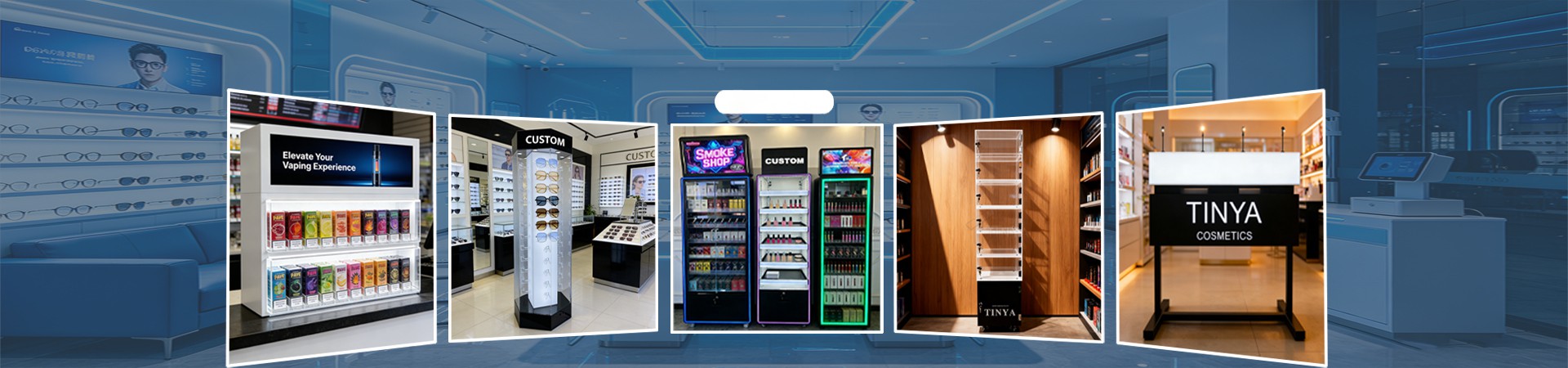
For a long time, clarity was the goal.
In display design, especially in categories like cosmetics, electronics, and fragrance, acrylic became the default material not just because it was practical, but because it made everything look cleaner. Products appeared sharper. Colors felt more controlled. Light behaved in predictable ways.
If something looked "off," the instinct was simple: make it clearer.
But somewhere in the last few years, that instinct started to shift. Not dramatically, not all at once-but enough that you begin to notice it if you spend time walking through stores, not showrooms.
Some brands are no longer chasing perfect transparency.
They are softening it. Interrupting it. In some cases, deliberately breaking it.
At first, it feels counterintuitive. Why move away from something that has worked so well for so long?
The answer becomes clearer when you look at how these displays are actually used-not how they are presented in renders.
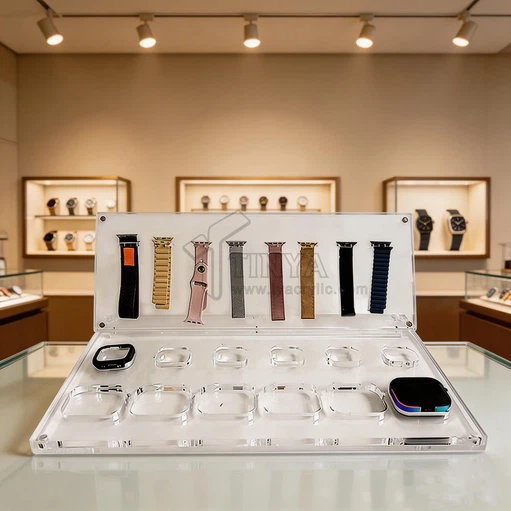


The Problem with "Perfect" Transparency
On paper, fully transparent acrylic solves a lot of problems.
It doesn't compete with the product. It adapts to different packaging colors. It fits into almost any retail environment without requiring major visual adjustments.
Designers often describe it as "neutral."
But in real stores, neutrality rarely stays neutral.
Under bright lighting, especially in large retail chains, fully clear surfaces start reflecting more than they reveal. You don't just see the product-you see everything around it. Shelves behind shelves. Movement. Glare. Cleaning marks. Sometimes even ceiling structures.
Instead of disappearing, the display becomes a layer of visual noise.
And once that happens, the product loses focus.


When Clean Turns Clinical
There is another effect that is harder to describe but easy to feel.
Perfectly transparent displays can sometimes feel too controlled. Too precise. Almost clinical.
This works in certain environments-high-end electronics stores, for example, where precision is part of the brand language. But in categories like beauty or lifestyle products, the same level of perfection can feel distant.
Customers don't always want to interact with something that feels like it belongs behind glass, even when it doesn't.
We've seen cases where a display was technically flawless-perfect edges, invisible joints, high-grade acrylic-but customers hesitated to touch it. Not consciously. Just a slight pause.
That hesitation matters.
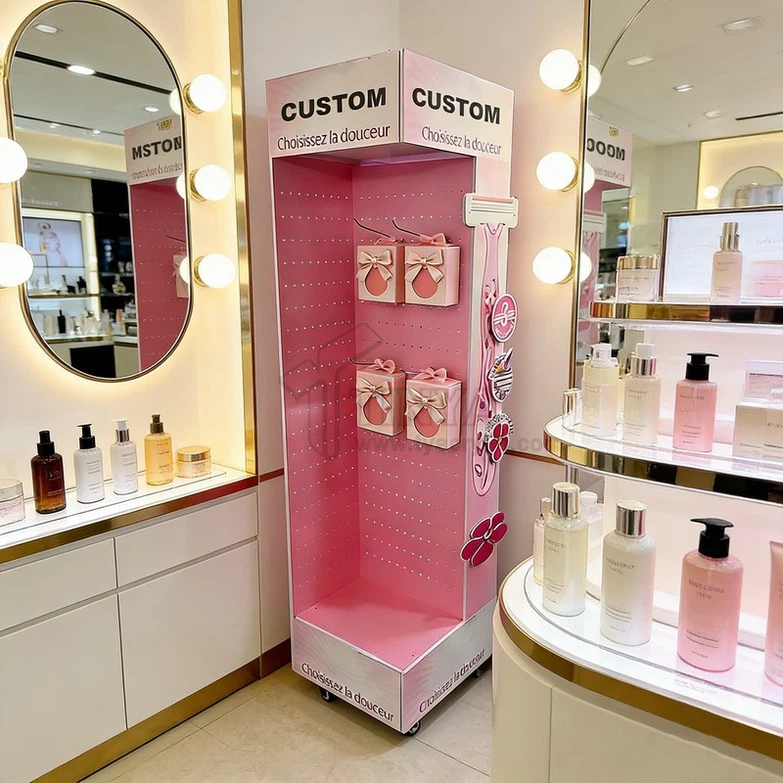

The First Adjustments Were Small
Brands didn't suddenly abandon transparency. They started modifying it in small ways.
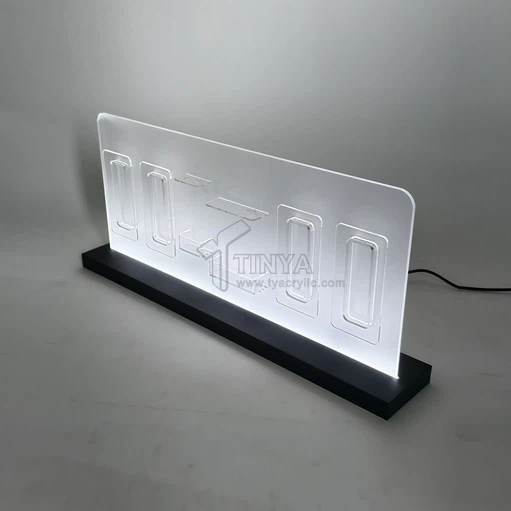
A frosted panel here. A diffused light layer there. Sometimes just a subtle reduction in gloss.
At first glance, these changes seem minor. But they shift how light behaves. Reflections soften. Fingerprints become less visible. The display feels less "exposed."
And interestingly, products often become easier to look at.
Breaking Transparency to Control Light
One of the more practical reasons for "breaking" transparency has nothing to do with aesthetics alone. It has to do with light control.
Fully transparent acrylic works well when lighting conditions are controlled. In reality, they often aren't.
Retail environments vary widely. Even within the same chain, lighting can differ from one location to another. Add in daylight, reflections from nearby surfaces, and inconsistent maintenance, and the behavior of light becomes unpredictable.
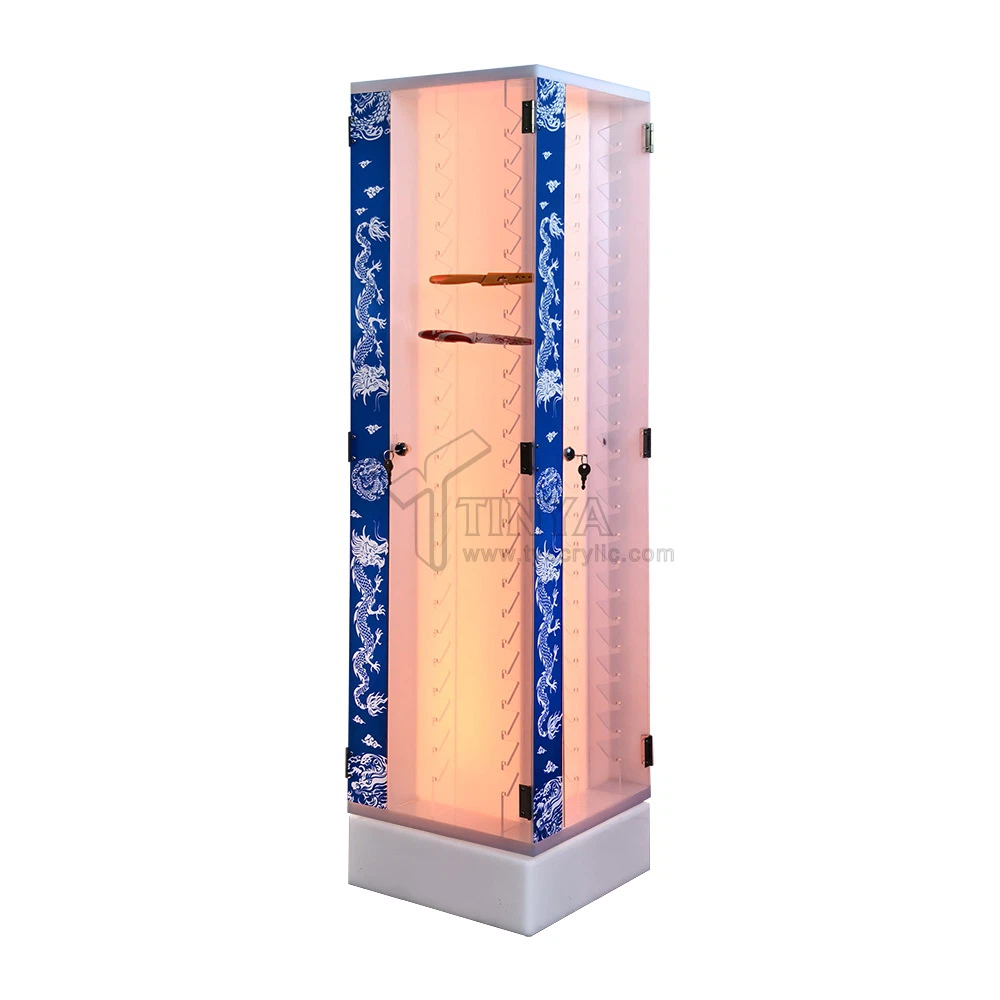
By introducing semi-transparent layers-frosted acrylic, gradient films, textured surfaces-designers regain some control.
Instead of light passing straight through, it diffuses. It spreads. It becomes part of the display rather than something that interferes with it.


The Fingerprint Problem Nobody Talks About
There's also a more practical issue that rarely appears in design presentations.
Fingerprints.
Clear acrylic shows everything. Not just fingerprints, but dust, smudges, and micro-scratches. In high-traffic stores, keeping a fully transparent display clean is an ongoing effort.
Store staff don't always have time to maintain that level of cleanliness. And even when they do, repeated cleaning introduces its own problems-fine scratches, surface haze, and uneven wear.
Semi-transparent or treated surfaces reduce this visibility. Not completely, but enough that the display looks consistent throughout the day.
It's a small detail, but one that has real impact on how "premium" a display feels over time.
When Designers Start Adding "Resistance"
Another shift that's happening is less about material and more about interaction.
Fully smooth, glossy acrylic feels fast. Products slide. Surfaces reflect. Everything is efficient.
But efficiency is not always the goal in retail.
Some brands are introducing slight resistance-through matte finishes, micro-textures, or layered surfaces. Not enough to be noticeable at first, but enough to slow down interaction.
This changes how customers engage with the display. It feels more intentional. Less like picking something off a shelf, more like selecting something.
Again, it's subtle. But it adds a layer of experience that pure transparency doesn't provide.
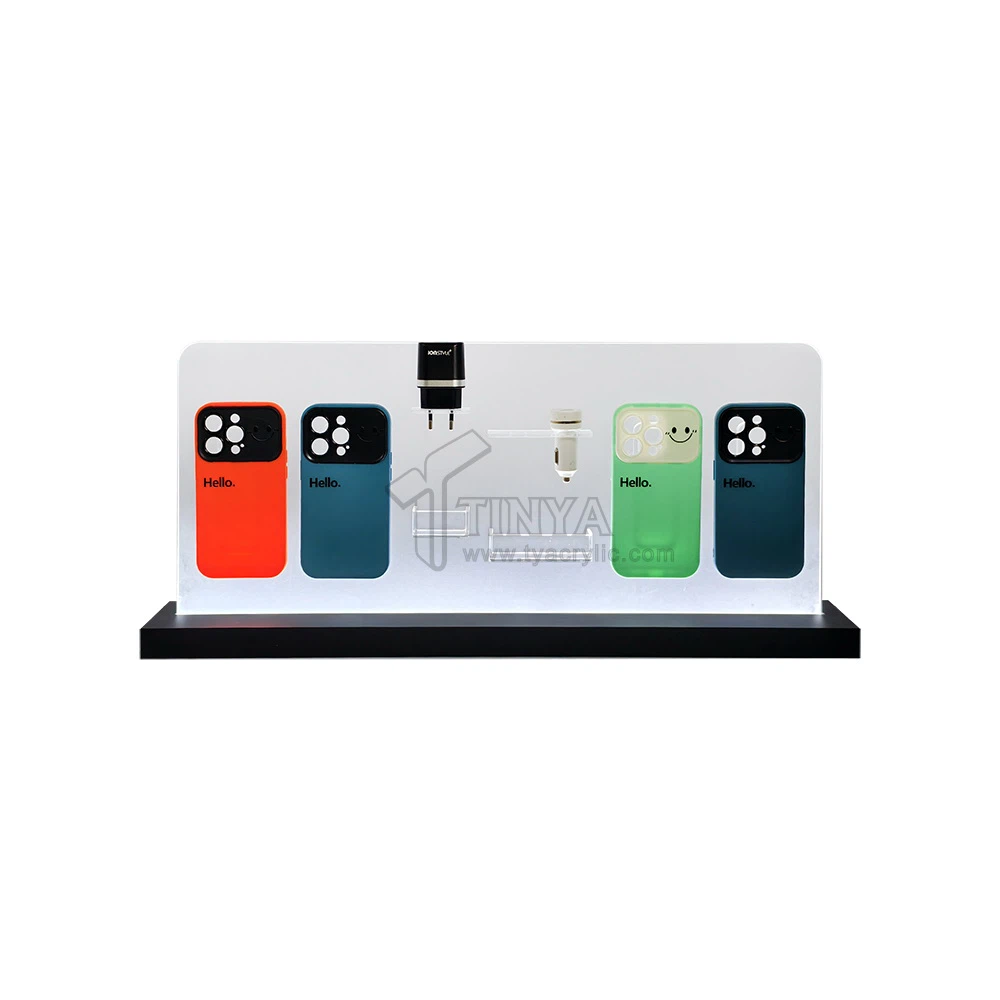

Layering Instead of Showing Everything
Traditional transparent displays aim to reveal everything at once.
Newer approaches are more selective.
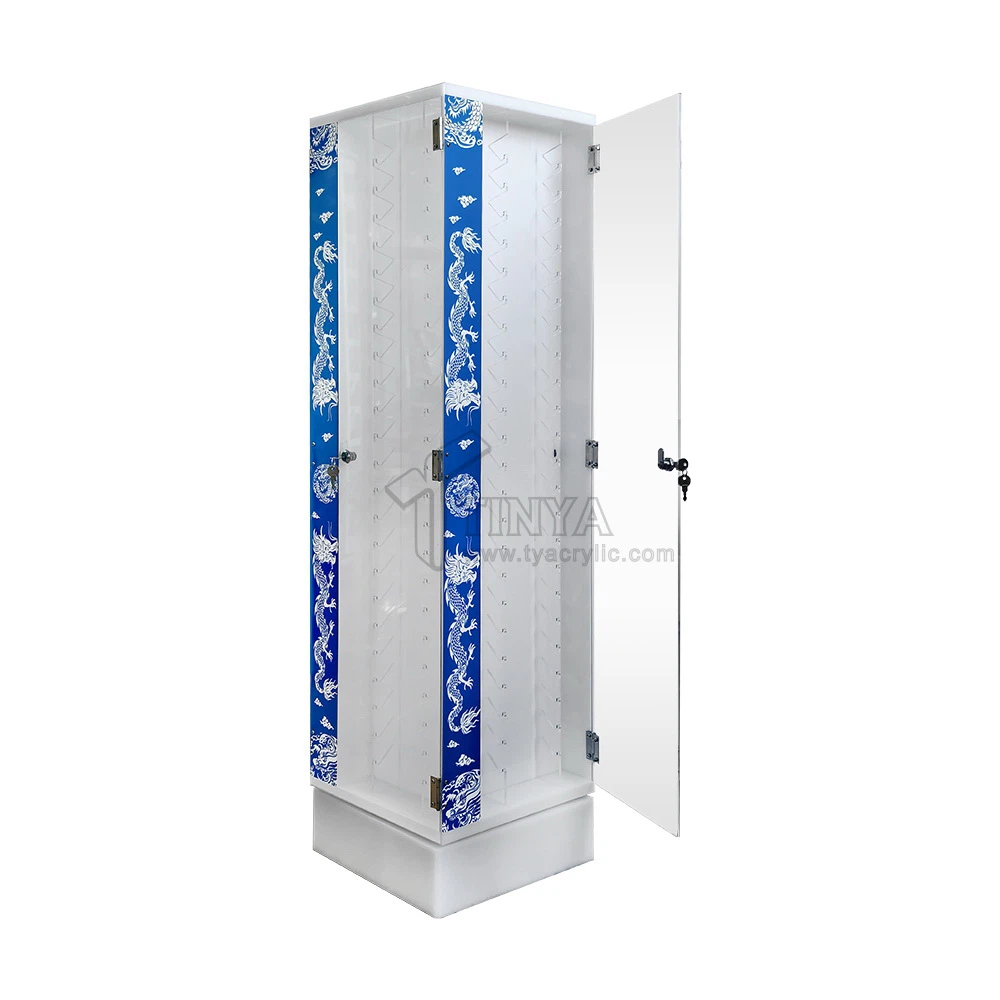
Instead of full visibility, designers are layering materials-clear in some areas, diffused in others, sometimes even introducing partial opacity. This creates depth, but also direction.
The eye is guided, rather than left to wander.
This is particularly useful in product lines with multiple SKUs. Instead of presenting everything equally, the display can subtly prioritize certain items.
Transparency, in this case, becomes a tool-not a default setting.

Not a Trend, But a Response
It would be easy to describe this as a design trend, but that would miss the point.
What's happening is less about style and more about adaptation.
Retail environments have become more complex. Lighting is less controlled. Product ranges are broader. Customer behavior is less predictable.
Perfect transparency worked well in simpler conditions.
Today, it often needs adjustment.
Where Full Transparency Still Works
None of this means that fully transparent acrylic is becoming obsolete.
In certain contexts, it still works extremely well.
High-end electronics, controlled showroom environments, limited product displays-these are places where clarity supports the message.
The difference is that brands are now more selective about when to use it.
Transparency is no longer the default. It's a decision.
A Small Shift with Bigger Implications
From a manufacturing perspective, these changes are not dramatic. Frosted finishes, surface treatments, layered constructions-these are all well-established processes.
But the intent behind them is changing.
Instead of asking, "How clear can we make this?", the question is becoming, "How should this feel in real use?"
That shift is subtle, but it changes how displays are designed, produced, and evaluated.
Acrylic hasn't changed. Its properties are the same as they've always been.
What's changing is how brands think about clarity.
Perfect transparency once represented control and precision. Now, in some cases, it feels like too much exposure.
Breaking transparency-just slightly-introduces softness, direction, and a bit of unpredictability. And in retail, that can make a display feel more human.
Not less refined. Just less distant.