

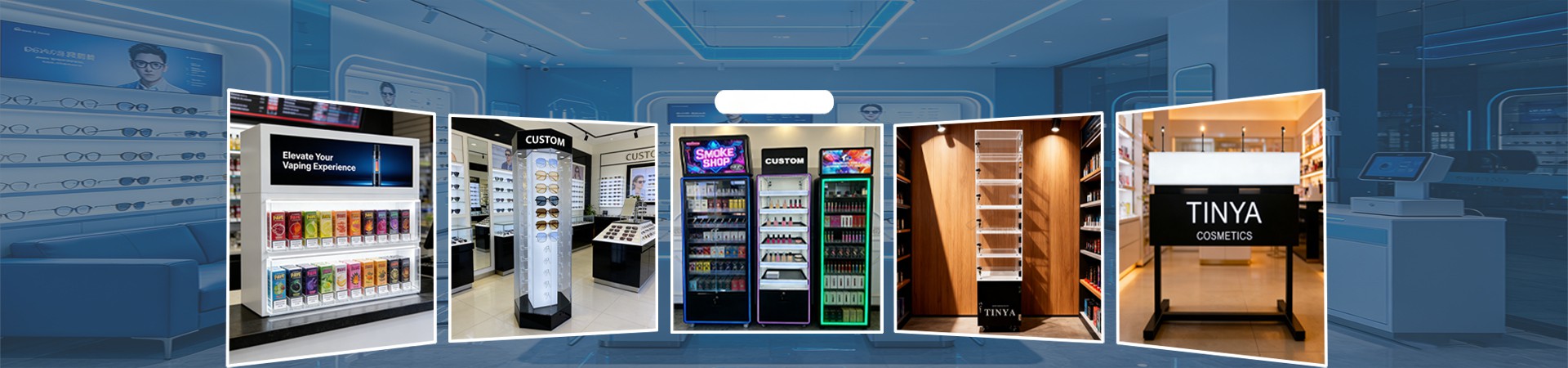

Walk into any well-run retail counter and you'll notice something: the products that sell fastest almost always sit on a stand that earns its keep. A countertop display stand isn't just a holder - it's the last three seconds of persuasion before someone decides to buy. Get the stand wrong, and even a great product gets ignored. Get it right, and a $2 accessory starts outselling everything around it.
This guide breaks down what actually matters when sourcing a custom countertop acrylic display stand - the questions buyers ask, the material choices that quietly affect your bottom line, and how to avoid the two most common sourcing mistakes: picking a supplier who can't customize, and picking one whose "acrylic" turns out to be a different quality tier than advertised.
Why Countertop Display Stands Make or Break Impulse Sales
Counter space is expensive real estate. Every retailer knows this, even if they don't think of it that way. A cash-wrap counter sees more eye contact per square foot than almost anywhere else in the store - customers are standing still, waiting, looking for something to notice.
A generic wire rack or a flat cardboard tray wastes that moment. Products get lost, tip over, or blend into the counter clutter. A custom countertop acrylic display stand does the opposite: it lifts products to eye level, groups them logically, and - because acrylic is transparent - lets the product itself do the selling instead of a bulky housing getting in the way.
Retailers, wholesalers, and hospitality buyers who switch from generic display trays to purpose-built acrylic stands consistently report the same pattern: fewer knocked-over displays, faster restocking, and a noticeably higher rate of "last-minute" purchases at checkout.

What Buyers Usually Ask Before Ordering a Custom Display Stand
Before anyone commits to a custom order, the same handful of questions come up - whether it's a boutique buyer ordering 20 units or a wholesale distributor placing a 5,000-unit program. Here's what we get asked most often, and why each question matters more than it first appears.
"Can you match our brand colors and logo?" - Yes, but ask how: screen printing, UV printing, and laser engraving all age differently under daily handling.
"What's your minimum order quantity?" - MOQs vary by tooling complexity. A simple riser starts low; a multi-tier stand with inserts needs volume to justify mold or jig costs.
"How long from approval to delivery?" - Sampling usually takes 7–12 days; bulk production runs 3–5 weeks depending on design complexity and finishing.
"Is this cast or extruded acrylic?" - This single question separates buyers who've been burned before from first-time importers. More on this below.
"What happens if a shipment arrives damaged or doesn't match the sample?" - A serious manufacturer will have a documented QC process and photos before goods ever leave the factory.
Notice that price is rarely the first question. Buyers who've ordered display stands before know that the cheapest quote often hides the highest long-term cost - through breakage, yellowing, or a supplier who won't touch a custom shape at all.

Custom vs Standard Countertop Acrylic Display Stands
Standard, off-the-shelf stands look tempting on a supplier's catalog page - low price, no design fee, ready to ship. But "standard" also means your product has to fit the stand, not the other way around. Here's how the two options actually compare over time.
|
Factor |
Standard Catalog Stand |
Custom Acrylic Display Stand |
|
Fit to product |
Generic - often too tall, too shallow, or wrong slot spacing |
Built to exact product dimensions |
|
Branding |
None, or a small printed sticker |
Logo engraving, color panels, printed graphics |
|
Unit cost (100+ units) |
$3 – $8 |
$6 – $18, depending on design |
|
Lead time |
Often in stock, ships fast |
3 – 5 weeks including sampling |
|
Shelf differentiation |
Looks identical to competitors' displays |
Recognizable, on-brand presence |
|
Typical lifespan |
1 – 2 years before cracking or clouding |
4 – 7 years with cast acrylic |
|
Reorder flexibility |
Fixed design, no changes |
Design can evolve with your product line |
For a single small order, standard stands make sense - there's no shame in that. But the moment a display stand is meant to represent your brand at scale, the math shifts in favor of custom, usually within the first reorder cycle.
Cast vs Extruded Acrylic: Which One Fits Your Display Needs
This is the question that separates a confident buyer from one who's about to get an unpleasant surprise three months into using their new stands. "Acrylic" is not one material - it's two, and they behave very differently once they're sitting under store lighting for months at a time.
|
Property |
Cast Acrylic |
Extruded Acrylic |
|
Optical clarity |
Excellent, stays clear long-term |
Good initially, can haze faster |
|
Scratch resistance |
Higher - better for daily handling |
Lower - shows fine scratches sooner |
|
Thickness consistency |
Tight tolerance, ideal for precision edges |
Slightly less consistent |
|
Machining / engraving |
Handles laser engraving cleanly |
Can chip or discolor at edges |
|
Cost per unit |
Higher |
15–30% lower |
|
Best fit |
Retail-facing, branded, long-life displays |
Budget or short-run promotional displays |
Neither material is "wrong" - the mismatch happens when a buyer expects cast-grade durability but gets quoted (and delivered) extruded sheet, usually because nobody asked the material question upfront. Any manufacturer worth working with should tell you which one they're using without being pressed.
Design Considerations That Actually Drive Shelf Performance
Once material and branding are settled, a handful of design choices quietly determine whether a stand performs on the counter or just sits there.
Thickness: 3–5mm works for lightweight items; anything holding weight (bottles, boxed goods) should run 5–8mm to resist bowing.
Tiering: multi-level stands increase visible SKUs in the same footprint, but each added tier increases tooling and shipping cube - balance variety against counter space.
Base stability: a weighted or wider base prevents tip-overs on busy counters, especially for taller stands.
Edge finishing: flame-polished edges look premium and are safer to handle daily; unpolished edges chip and yellow faster at stress points.
Optional LED integration: battery or USB-powered LED bases increase visibility for cosmetics, jewelry, and premium accessories, and typically add $2–$5 per unit.
None of these decisions are complicated on their own. What trips buyers up is not knowing which ones matter for their specific product - which is exactly the conversation a good manufacturer should be having with you before a single sheet of acrylic gets cut.

Real Case Study: A Retail Chain's Counter Upgrade
A mid-sized cosmetics retailer with 14 stores across Southeast Asia was running standard extruded-acrylic risers at checkout counters. Within a year, most had visibly yellowed, several had hairline cracks near the base, and staff were regularly repositioning fallen products.
The retailer switched to a custom cast-acrylic countertop stand - three tiers, brand-color edge banding, and a weighted base sized for their best-selling product line. Sampling took 10 days; the full 14-store rollout of 560 units shipped six weeks later.
Three months after installation, checkout-counter sales of featured products were up 24%, breakage complaints dropped to near zero, and store managers reported roughly 20 minutes less restocking time per shift, since products stayed upright and organized rather than sliding around a flat tray.
The retailer's own estimate: the higher unit cost of custom cast acrylic paid for itself within about ten weeks - mostly through reduced breakage and the counter-sales lift.
How TINYA Solves the Design, Quality and Import Challenges
Most buyers sourcing countertop display stands run into the same three walls, no matter what product category they're in.
Design capability gaps - many factories can only replicate what's already in their catalog and can't take a rough sketch to a manufacturable design.
Quality uncertainty - without asking directly, it's hard to know if a quote is for cast or extruded acrylic until the product is already in hand.
Import complexity - coordinating tooling, customs documentation, and freight across a first-time overseas order is its own project.
TINYA is a Guangdong-based manufacturer built specifically around these three problems. We work from a sketch, a reference photo, or a rough product dimension and turn it into a manufacturable countertop stand - cast or extruded, your call, always disclosed upfront. Edge polishing, LED integration, and brand engraving are handled in-house, not outsourced to a third party who adds another two weeks to your timeline.
For buyers ordering internationally for the first time, our team manages export documentation and logistics coordination directly, so a custom order doesn't turn into a customs education project on top of everything else.

Frequently Asked Questions
1. What's the minimum order quantity for a custom countertop acrylic display stand?
MOQs typically start around 100–200 units for simple single-tier designs and scale up for multi-tier or insert-heavy stands, since those require dedicated cutting templates. Sample units are usually available in smaller quantities before you commit to a full run.
2. How do I know if I'm getting cast or extruded acrylic?
Ask directly, and ask for it in writing on the quote. A manufacturer that hesitates or avoids the question is a signal worth paying attention to. Cast acrylic also costs more per unit - if a quote seems unusually low for the thickness requested, it's worth confirming the material again.
3. Can you match our existing brand colors and packaging?
Yes - color-matched acrylic sheet, edge banding, printed graphics, and laser-engraved logos are all standard customization options. Send a Pantone reference or existing packaging sample and we'll match it during the sampling stage.
4. How long does the full process take, from design to delivery?
Sampling typically runs 7–12 days after design approval. Bulk production adds roughly 3–5 weeks depending on order size and finishing options, plus shipping time. Rush timelines are sometimes possible for simpler designs - worth asking about early rather than after a deadline is already set.
5. What's a realistic budget range for a custom countertop display stand?
Simple single-tier cast-acrylic stands typically run $6–$10 per unit at 100+ quantities. Multi-tier designs with LED lighting or heavy branding can run $12–$18 per unit. Extruded-acrylic options run 15–30% lower but trade off on long-term clarity and scratch resistance.

Bringing It Together
A countertop display stand looks like a small purchasing decision until you count how many customer touchpoints happen right there, at the counter, every single day. The difference between a stand that quietly does its job for five years and one that yellows and cracks within twelve months usually comes down to two things: whether the material was actually what you asked for, and whether anyone designed the stand around your product instead of the other way around.
|
Ready to design a countertop display stand built around your product and your brand? TINYA handles design, cast or extruded acrylic manufacturing, and export logistics in-house - from first sketch to delivered pallet. Email: seo@tinya168.com | WhatsApp/WeChat: +86 199 2655 8676 |