

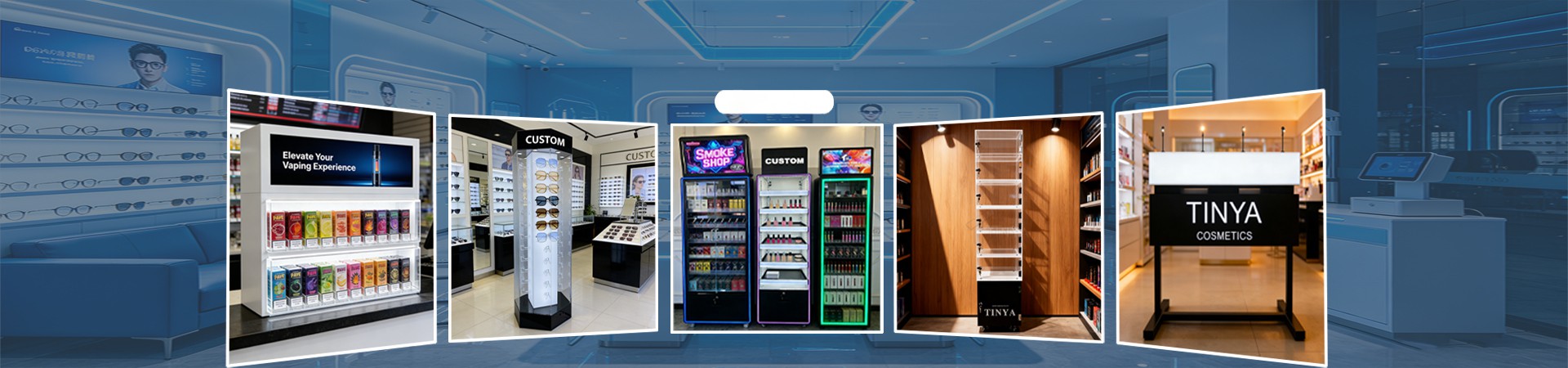

A good snus display does more than hold round cans. It must keep multiple flavors and strengths organized, maintain a consistently front-facing presentation, fit limited counter or shelf space, support fast restocking, and carry brand graphics without making the products difficult to identify.
For nicotine pouch brands, distributors, convenience-store groups, and retail fixture buyers, these operational details matter more than a display that only looks attractive in a rendering. A design may appear impressive on screen but still fail in stores if the channels are too tight, the pushers apply uneven force, the base flexes under a full load, or the printed header is difficult to replace during a campaign update.
This guide explains how an experienced acrylic manufacturer approaches a custom snus display project-from product measurements and capacity planning to prototyping, quality inspection, and bulk packaging.
What Is a Snus Display?
A snus display is a retail fixture designed to organize and present snus cans or nicotine pouch cans at checkout counters, on shelves, behind service counters, or in branded promotional areas. Common formats include countertop tiered stands, spring-loaded pusher displays, gravity-fed racks, wall-mounted units, lockable cabinets, and larger floor-standing displays.
Although many round cans look similar, a snus display stand should not be designed around a "standard can" assumption. Diameter, height, lid profile, label position, and packaging friction can vary between products. The manufacturer should therefore work from approved technical drawings or physical samples before confirming channel widths and clearances.


Start With the Retail Plan, Not the Acrylic
Before choosing material thickness or lighting, define how the display will be used. A checkout-counter unit usually needs a small footprint and strong visual branding, while a behind-counter rack may prioritize capacity, stock control, and rapid staff access. A multi-store rollout may also require flat-pack construction, replaceable campaign graphics, and cartons optimized for pallet loading.
The initial design brief should answer several practical questions:
- How many flavors, strengths, or SKUs must be displayed?
- How many cans should each facing hold?
- Will customers self-select products, or will store staff access the display?
- Is the fixture placed on a counter, shelf, wall, or floor?
- Are spring pushers, gravity feed, lighting, price strips, locks, or removable dividers required?
- Will the same display need to accommodate future can sizes?
- What branding and mandatory retail information must remain visible?
- These answers determine the structure far more accurately than selecting a style from a catalog.
-
How to Calculate Capacity and Display Size
Capacity planning should be based on three connected values: the number of SKU facings, the cans per facing, and the usable depth of each channel.
For example, a brand that needs six flavors with eight cans per flavor requires at least 48-can capacity. However, the final footprint also depends on the can diameter, divider thickness, pusher body, front stop, back clearance, and loading access. Simply multiplying the can dimensions will underestimate the required space.
A manufacturer should verify:
Can diameter and tolerance:
Measure several samples rather than only one can. Packaging variation can cause jamming in a tightly designed channel.
01
Can height and lid profile:
These affect front-stop height, label visibility, stacking, and the risk of cans tipping forward.
02
Channel clearance:
The can must move smoothly without excessive side-to-side movement.
03
Pusher compression length:
The spring mechanism needs enough travel for full loading and reliable forward movement.
04
Loading method:
Rear loading, top loading, or removable cartridges require different access clearances.
05
When several brands or can sizes will share one fixture, adjustable dividers or replaceable channel inserts are usually safer than one fixed compartment size.

Choosing the Right Snus Display Structure
| Display type | Best suited for | Main advantage | Engineering point to verify |
|---|---|---|---|
| Countertop tiered stand | Checkout counters and small shops | Compact presentation with clear SKU separation | Center of gravity and front-edge stability |
| Spring-loaded pusher display | High-turnover stores | Keeps cans continuously front-facing | Spring force, channel friction, and refill access |
| Gravity-fed rack | Deep shelves or behind-counter use | Simple feed system with fewer moving parts | Rail angle and controlled can movement |
| Wall-mounted display | Stores with limited counter space | Uses vertical space efficiently | Fixing method, wall load, and service access |
| Lockable display case | Controlled-access environments | Improves stock security | Lock durability, hinge alignment, and staff access |
| LED branded display | Premium launches and promotional areas | Stronger visual impact | Heat management, wiring route, voltage, and serviceability |
The best snus display rack is not automatically the version with the most features. The right structure is the one that supports the store's replenishment process, available space, campaign duration, and order budget.
Why Acrylic Is Commonly Used
High-quality acrylic provides a clean appearance, accurate fabrication, and broad customization options. Clear panels keep products visible, while colored, frosted, mirrored, or printed components can reinforce the brand identity. Acrylic can also be combined with metal supports, PVC graphics, ABS components, MDF bases, LED modules, and commercial shelf pusher systems.

Material selection should be based on function rather than using the same thickness throughout the fixture. The base may require additional thickness or reinforcement, while dividers and replaceable graphic panels can often use lighter material. Correct material distribution reduces unnecessary weight and cost without weakening the display.
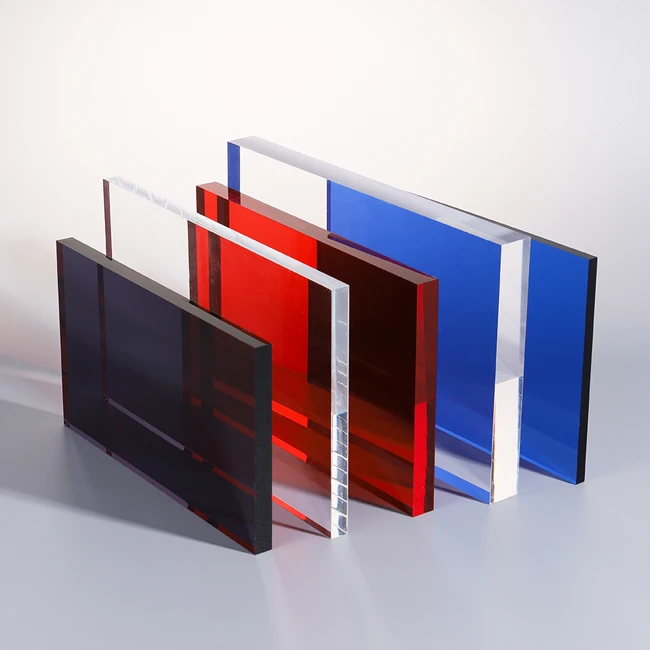
Important acrylic fabrication details include polished exposed edges, controlled bonding lines, accurate slot dimensions, square assembly, protected graphic surfaces, and sufficient strength around hinges, fasteners, and high-stress corners.

Designing a Reliable Shelf Pusher System
Pushers can make a snus display look fully stocked and reduce the time employees spend manually moving products forward. They can also create problems when the spring is too strong, too weak, or poorly aligned.
During prototyping, the manufacturer should test the pusher with the buyer's actual cans at minimum, medium, and full loading levels. The cans should advance consistently after the front item is removed. They should not jump over the front stop, rotate sideways, scrape against the divider, or stop before reaching the front.
The pusher surface and guide rails must remain aligned after repeated cycles. Removable pusher cartridges can simplify cleaning and replacement, while adjustable dividers help the fixture support future product changes. For large retail programs, spare pusher components should be considered in the service plan.

Branding Without Reducing Product Visibility
A branded snus display stand may include a printed header, side graphics, colored acrylic, engraved logos, illuminated panels, price strips, or replaceable promotional inserts. The branding should attract attention without blocking flavor labels, nicotine strength information, pricing, or any notices required by the destination market.
Common branding processes include UV printing for detailed full-color graphics, silk-screen printing for durable solid-color logos, laser engraving for a subtle premium finish, and replaceable printed inserts for seasonal campaigns. Brand color matching should be approved from a physical sample because colors can appear different on clear, white, black, or illuminated acrylic.
When using references to well-known pouch brands or can formats, the display supplier should not imply authorization or a commercial relationship that does not exist. Custom logos and protected artwork should only be produced with the buyer's approval and supplied artwork.


Prototype Testing Before Mass Production
A rendering confirms the appearance, but a physical prototype confirms whether the snus display works. The sample review should include real products whenever possible.
An effective prototype inspection covers:
- Overall dimensions and retail footprint
- Actual capacity for every channel
- Smooth can loading and dispensing
- Pusher force throughout the full travel range
- Divider fit and adjustability
- Stability when empty, half loaded, and fully loaded
- Logo position, print color, and graphic alignment
- Edge finish, bonding quality, and visible scratches
- LED brightness, wiring, switch position, and power compatibility when lighting is included
- Access for cleaning, restocking, component replacement, and packing
Changes should be recorded on an approved drawing or sample confirmation document before production begins. This prevents verbal changes from being interpreted differently by the buyer, designer, and production team.
Quality Control for Bulk Snus Display Orders
For a chain-store rollout, visual consistency across hundreds or thousands of displays is as important as the quality of a single sample. A practical quality plan should define measurable acceptance points instead of relying on "good appearance."
Key checks include incoming acrylic condition, material thickness, cutting dimensions, hole and slot position, bonding strength, base flatness, assembled squareness, pusher operation, print registration, color consistency, LED function, accessory count, and carton labeling.
Functional testing should be conducted on finished units from the production batch, not only on loose components. Packaging must also be tested because polished acrylic can arrive scratched even when the display passed factory inspection. Protective film, soft separators, fitted foam or molded inserts, reinforced corners, and clear assembly instructions may be required depending on the structure.

Information to Send a Snus Display Manufacturer
Providing complete project information shortens the quotation and design cycle. A useful RFQ package should include:
| Required information | Why the manufacturer needs it |
| Can diameter, height, weight, and physical samples | Determines channel clearance, capacity, and pusher selection |
| Number of SKUs and cans per SKU | Defines facings, depth, and total capacity |
| Installation location and maximum footprint | Controls the overall structure and stability requirements |
| Reference photos or layout concept | Communicates the intended visual direction |
| Logo files and brand color references | Supports accurate printing and sample approval |
| Required features | Confirms pushers, LEDs, locks, price strips, dividers, or replaceable graphics |
| Target quantity and rollout schedule | Determines tooling, production method, packaging, and lead-time planning |
| Destination market and shipping method | Influences electrical, labeling, packaging, and carton requirements |
If exact specifications are not available, an experienced OEM/ODM manufacturer can develop a preliminary concept, but capacity and fit should still be confirmed with real cans before final approval.
A Practical OEM/ODM Development Process
At Shenzhen Tinya Acrylic Display Co., Ltd., a custom display project normally begins with product measurements, quantity, retail scenario, branding requirements, and target schedule. The design team then prepares a structural proposal or 3D rendering for review.
After the layout is approved, a prototype can be produced for fit, loading, stability, printing, lighting, and packaging checks. Confirmed changes are transferred to controlled production drawings before mass production. The manufacturing process may include cutting, CNC machining, laser processing, polishing, bonding, printing, assembly, Aging test, cleaning, inspection, and protective packing.
This process is particularly important for a snus display with multiple channels or pushers because a small dimensional error repeated across every compartment can affect the entire fixture.

Frequently Asked Questions
1.Can one snus display fit different can sizes?
Yes, but the structure must be planned for the expected size range. Adjustable dividers, replaceable inserts, or modular pusher channels can accommodate multiple can diameters more reliably than oversized fixed channels. The manufacturer should test every intended can format before production.
2.What is the best display type for a convenience-store counter?
A compact countertop snus display stand with tiered channels or spring pushers is usually suitable because it combines clear SKU separation, high product density, and fast restocking. The final design should match the available counter depth and staff access direction.
3.Can a snus display include LED lighting?
Yes. LEDs can illuminate a header, edge-light a logo panel, or highlight the product area. The design should include safe wiring, accessible switches, suitable voltage, heat control, and replaceable electrical components.
4.How do I choose the number of channels?
Begin with the number of flavors and strengths that need separate facings, then allow space for new SKUs or promotional products. The number of cans per channel should match the store's sales rate and replenishment schedule.
5.Can you manufacture a display compatible with ZYN-style or other round nicotine pouch cans?
The display can be engineered around round pouch cans supplied or specified by the buyer. Compatibility should be confirmed from actual dimensions and samples. Brand names and logos are used only with appropriate customer authorization, and no affiliation should be assumed.
6.What should be approved before bulk production?
Approve the drawing, dimensions, materials, capacity, physical sample, pusher performance, graphics, colors, lighting, accessories, packaging method, carton markings, and inspection standard. A signed sample or written approval record reduces production risk.
Build the Display Around Real Retail Work
The strongest snus display is not simply the clearest or brightest stand. It is a fixture engineered around real products, real store space, and real replenishment routines. Correct channel clearance, reliable pushers, balanced capacity, replaceable graphics, controlled manufacturing tolerances, and protective packaging all contribute to a successful rollout.


If you are developing a custom snus display stand for a nicotine pouch brand, distributor, or retail chain, send us your can dimensions, SKU plan, target capacity, logo artwork, quantity, and installation space. Shenzhen Tinya Acrylic Display Co., Ltd. can support concept development, 2D/3D design, prototyping, custom branding, mass production, inspection, and global shipping.
