

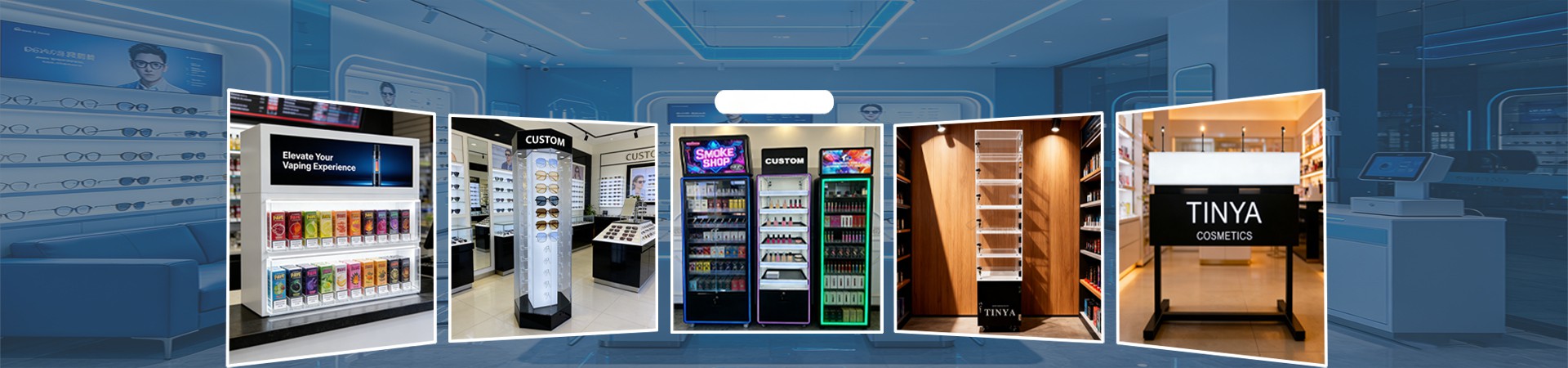


High-value collectibles need more than a shelf - they need protection, visibility, and long-term structural reliability. For retail chains, museums, hobby brands, and exhibition contractors, a household cabinet cannot meet commercial requirements for size, load capacity, or batch consistency. Choosing the right collectors display cabinet means looking beyond appearance to material strength, shelf configuration, lighting, security, and export packaging. This guide walks international buyers through the full decision process, from defining collection requirements to preparing a request for quotation, so a bulk order arrives on time, on spec, and ready for installation.
What Is a Collectors Display Cabinet?
A collectors display cabinet is a structure built to showcase and protect items such as action figures, die-cast models, trophies, coins, sports memorabilia, and limited-edition collectibles. It can be designed as a floor-standing unit, a wall-mounted case, a countertop box, or a modular system linking multiple units into one continuous display. What separates a commercial-grade cabinet from an ordinary storage piece is the combination of high optical clarity, dust-resistant construction, adjustable shelving, secure locking doors, integrated LED lighting, and dimensions built around a specific product line rather than generic storage needs.
Who Buys Collectors Display Cabinets in Bulk?
Bulk buyers of a collectors display cabinet come from a wide range of industries. Collectible and toy brands need consistent units for flagship stores and pop-up events. Retail chains require cabinets that balance easy customer access with theft prevention. Museum and exhibition contractors prioritize sealed, protective enclosures for long-term display, while hobby stores and sports memorabilia retailers need durable units that hold up under daily handling. Luxury gift companies and interior design firms look for a refined finish that matches the retail environment, and distributors, wholesalers, and private-label brands need standardized sizing that supports repeat ordering across multiple locations.
What Types of Collectibles Can Be Displayed?
A well-designed cabinet should be built around the items it will hold, since collectible categories vary widely in size, weight, and sensitivity to light. Common categories include action figures and blind-box figurines, LEGO and building-block models, die-cast cars, sports memorabilia, designer shoes and luxury accessories, dolls, trophies and awards, coins and medals, model ships and aircraft, comic books and signed items, cultural artifacts, and limited-edition or seasonal products. Because these categories differ so much in dimension, weight, and UV sensitivity, buyers should avoid applying one standard cabinet structure to every product line and instead plan the build around the specific collection.
Key Factors to Consider When Choosing a Collectors Display Cabinet
1. Collection Size and Product Dimensions
Before requesting a quote, buyers should confirm the maximum dimensions of the largest single item, the total number of pieces to be displayed, the spacing needed between items, and any room for future expansion. It is important to share both the external cabinet dimensions and the length, width, height, and weight of the collectibles themselves, along with the clearance needed for doors to open fully.

2. Cabinet Material
Material choice affects weight, cost, and suitability for different project types.
|
Material |
Main Advantages |
Suitable Applications |
|
Acrylic |
Lightweight, clear, highly customizable |
Retail, branded projects, export orders |
|
Tempered glass |
Premium appearance, scratch resistant |
Luxury retail, museums |
|
Metal frame |
Strong and secure |
Heavy-duty commercial displays |
|
Wood or MDF |
Decorative and warm |
Home décor, themed retail |
|
Mixed materials |
Balanced appearance and strength |
Custom commercial projects |
The right material depends on the value of the products being displayed, the installation location, expected foot traffic, and how staff will access the cabinet day to day.
3. Visibility and Viewing Angles
A collectors display cabinet may need 180-, 270-, or full 360-degree visibility depending on whether it sits against a wall or in the middle of a room. Buyers should also decide between a transparent back panel and a mirrored one, and consider how much the frame structure will obstruct sightlines, especially when branding elements are added to the design.
4. Shelf Load and Adjustability
Confirm the load capacity per shelf, the shelf span, panel thickness, and whether shelves need to be height-adjustable or removable. Heavier collectibles, such as die-cast models or trophies, may require reinforced metal supports rather than acrylic alone.

5. Access and Security
Security features matter for high-value collections. Options include hinged doors, sliding doors, magnetic closures, lockable doors, staff-only access panels, anti-theft locks, and hidden storage compartments. The right combination depends on door thickness, hinge durability, and how frequently staff need to retrieve or rotate items.

Acrylic vs. Glass Collectors Display Cabinets
Acrylic cabinets are lightweight, which lowers shipping costs and simplifies international freight. Acrylic is easy to laser-cut into curved, frameless, or custom-shaped panels, and it accepts silk-screen printing, UV printing, and logo customization well. It also tends to carry a lower breakage risk than standard glass during transit, although surface cleaning and shelf-span thickness need to be planned carefully, since clarity and durability vary by acrylic grade.
Glass cabinets offer a more scratch-resistant surface and a premium, furniture-like feel that suits fixed, long-term installations. The trade-off is greater weight, higher international packaging costs, and more complex fabrication for curved shapes or small custom runs.
Acrylic is often preferred for lightweight, branded, and export-oriented projects, while tempered glass tends to suit permanent luxury installations where the cabinet will not be relocated.
Essential Customization Options for Commercial Projects
Cabinet Size and Configuration
Countertop, floor-standing, wall-mounted, modular, stackable, or built-in structures.
Lighting Options
White LED, warm LED, RGB lighting, edge lighting, shelf lighting, and backlit logo panels.
Branding Options
UV printing, silk-screen printing, laser engraving, vinyl graphics, replaceable posters, and metal logo plates.
Functional Features
Adjustable shelves, lockable doors, drawers, hidden storage, casters, cable management, remote lighting control, and knock-down structures for easier shipping.
Modular sections, integrated lighting, and theme-specific finishes allow a collectors display cabinet to adapt to different product lines while keeping a consistent look across a multi-store rollout.

Ready to move forward with your project?
How to Prepare a Custom Display Cabinet RFQ
Before requesting a quotation, gather the following details:
- Cabinet dimensions and collectible dimensions and weight
- Order quantity and preferred material
- Number of shelves and shelf load requirements
- Door and lock type, and lighting requirements
- Logo artwork and installation location
- Target market and packaging requirements
- Delivery address and required completion date
For a more accurate quotation, share photos or 3D files of the collectibles themselves, not only the external dimensions of the cabinet.
Most experienced manufacturers will first confirm product dimensions, display density, access method, and merchandising goals, since a cabinet that looks good on paper can still be the wrong fit if these details are missed.
What Should International Buyers Check Before Mass Production?
Prototype Approval
Review overall dimensions, door movement, shelf fit, lighting effect, logo placement, product positioning, and overall stability before authorizing mass production.
Material and Quality Standards
Confirm the acrylic type and thickness, check for surface scratches, verify edge polishing, review color consistency, inspect hardware specifications, and ask about drop-protection packaging.
Mass Production Consistency
Ask about production lead time, monthly capacity, quality inspection procedures, batch tolerances, spare parts ratios, and after-sales support.
Packaging and Shipping
Decide between fully assembled units and knock-down packaging, and confirm carton dimensions, foam or pearl-cotton protection, wooden crates or pallets, and container loading quantity. Pre-assembled cabinets can be used immediately, while knock-down structures generally reduce packaging volume and freight cost, provided the assembly instructions are clear.

How to Evaluate a Collectors Display Cabinet Manufacturer
Before committing to a supplier, buyers should check whether the manufacturer has relevant project experience, can provide 2D or 3D drawings, supports sample production, has combined acrylic, metal, and wood processing capability, can handle LED and electrical assembly, maintains stable mass-production capacity, has export packaging experience, offers OEM and ODM service, allows third-party inspection, and has a clear after-sales process. An experienced manufacturer should be able to translate a buyer's product dimensions, merchandising goals, and logistics requirements into a production-ready cabinet design.
Why Work With Tinya Acrylic for Custom Collectors Display Cabinets?
Tinya Acrylic has manufactured acrylic products since 2005 from an 8,000-square-meter factory, supported by an in-house design and engineering team. We offer free design consultation, 2D and 3D drawing support, and combined acrylic, metal, MDF, and LED integration for a single project. Cabinets can be produced in custom sizes, colors, logos, and packaging, with sample production available before mass orders begin. We also support OEM and ODM service, third-party inspection, and export packaging for worldwide shipping. Typical sample lead time runs about 5–7 days, with mass production taking around 20 days depending on structure and order quantity.
Working with an experienced partner shortens project communication time, reduces the risk of design errors reaching production, improves consistency across large batches, minimizes transit damage, and makes it easier to replicate a proven cabinet design across multiple store locations.
Frequently Asked Questions
1.What is the best material for a collectors display cabinet?
The best material depends on the installation location, product weight, shipping method, and budget. Export-oriented and branded projects usually favor acrylic or mixed-material structures for their lighter weight and design flexibility.
2.Can collectors display cabinets be customized?
Yes. Dimensions, shelving, color, logo placement, LED lighting, door style, locks, casters, and packaging can all be adjusted to match a specific collection and retail environment.
3.How thick should acrylic be for a display cabinet?
Thickness depends on overall cabinet size, shelf span, expected load, and structural design, so it is best confirmed with your manufacturer based on your specific configuration.
4.Can LED lighting be added?
Yes. Shelf lighting, top lighting, edge lighting, RGB options, and backlit branded panels can all be integrated into a custom cabinet.
5.What information is needed for a quotation?
Dimensions, quantity, product weight, required features, logo artwork, preferred material, packaging needs, and delivery location all help produce an accurate quote.
6.Can I order a prototype before mass production?
Yes, and it is recommended. A prototype confirms structure, dimensions, lighting, and product fit before committing to a full production run.
Start Your Custom Display Cabinet Project
A collectors display cabinet needs to be designed around the collection it will hold and the environment where it will be used. Commercial buyers should weigh material, load capacity, lighting, security, and logistics together rather than focusing on appearance alone, and a prototype with clear engineering drawings remains the most reliable way to reduce risk before mass production begins.
Planning a collectors display cabinet project for retail, exhibitions, or a private-label collection?
Contact Tinya Acrylic
WhatsApp: +86 199 2655 8676
Email: seo@tinya168.com