

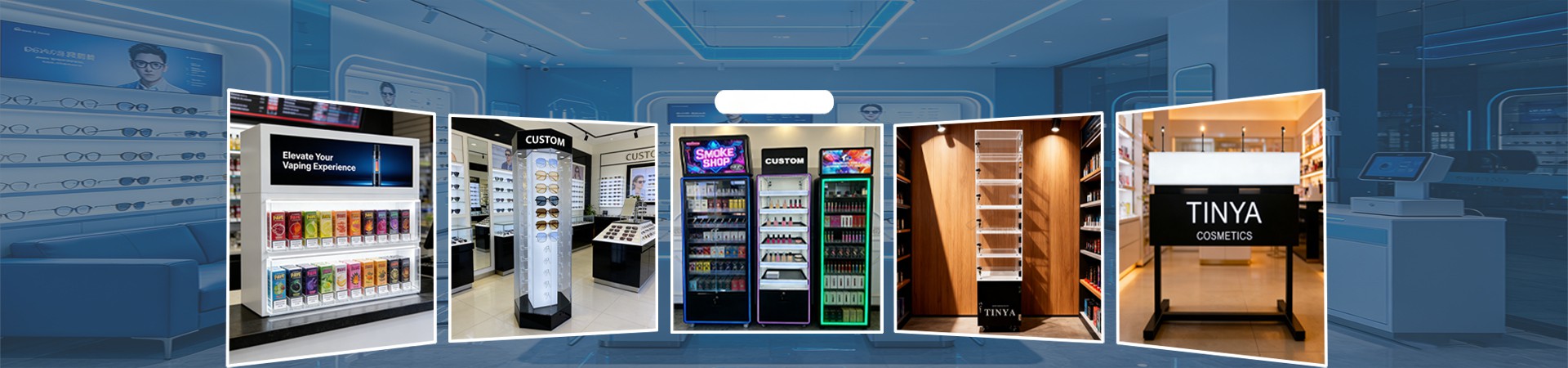
Immersive retail is no longer a buzzword-it's a survival strategy. As customers crave memorable, multi-sensory interactions, acrylic displays are evolving beyond static holders into dynamic storytelling tools. Here's how smart retailers leverage them:
1. Breaking the "Fourth Wall" with Transparency
Acrylic's clarity creates seamless visual layers, making products feel accessible yet staged. A cosmetics brand might stack tinted acrylic tiers under focused lighting, simulating a floating color palette. For tech gadgets, acrylic risers with embedded LED strips can make devices appear to hover, inviting touch. This transparency dissolves barriers between shopper and product, pulling them deeper into the narrative.

2. Sensory Layering Without Clutter
Immersive spaces thrive on curated sensory input-sight, touch, even sound. Acrylic's neutrality anchors chaos. Consider a boutique coffee brand: Acrylic scent pods (perforated cases holding beans) placed near grinders, paired with minimalist signage explaining origins. The display organizes smells and stories without visual noise, keeping focus on the experience.


3. Modular Flexibility for Evolving Stories
Static displays kill immersion. Acrylic's lightweight durability enables reconfigurable systems. Retailers like Samsung use slot-together acrylic frames to reshape demo zones monthly-vertical phone displays one week, horizontal tablet hubs the next. Interchangeable graphic inserts update messaging instantly. This adaptability sustains novelty with minimal cost.


4. Tech-Integration Canvas
Acrylic is tech's discreet partner. Thin-edge LED-lit shelves transform jewelry cases into glowing showcases. NFC-tagged acrylic info stands let shoppers tap phones for specs. A Milan jewelry brand embeds paper-thin RFID readers into acrylic display bases. When a product (e.g., a diamond necklace with tagged tray) is lifted, NFC triggers a wall screen showing its craftsmanship journey – no buttons needed. Acrylic's non-conductive nature prevents signal interference.


5. Psychological Depth & Direction
Strategic acrylic use guides movement and emotion. A bookstore might angle laser-cut acrylic "word clouds" above sections, casting thematic shadows (e.g., mystery titles under looming noir phrases). Mirrored acrylic bases double floral arrangements, creating infinite gardens that slow shoppers. These subtle cues choreograph discovery.

Why This Works for Retailers
Cost Efficiency: Acryclic achieves high-impact visuals cheaper than solid materials.
Speed: CNC-cut acrylic prototypes in days vs. weeks for wood/metal.
Sustainability Story: Recyclable acrylic aligns with eco-conscious branding (when sourced responsibly).
Key Implementation Tips
Light First: Design acrylic displays around lighting plans. Edge-lighting requires specific thicknesses (≥15mm).
Texture Contrast: Pair glossy acrylic with matte concrete or fabric to avoid clinical sterility.
Interactive Touchpoints: Embed QR codes or NFC chips under acrylic surfaces for clean tech integration.
In essence, acrylic's power lies in its invisibility. It frames products without competing, holds tech without shouting, and shapes spaces without dominating. For retailers crafting immersion, it's the quiet enabler of magic.