

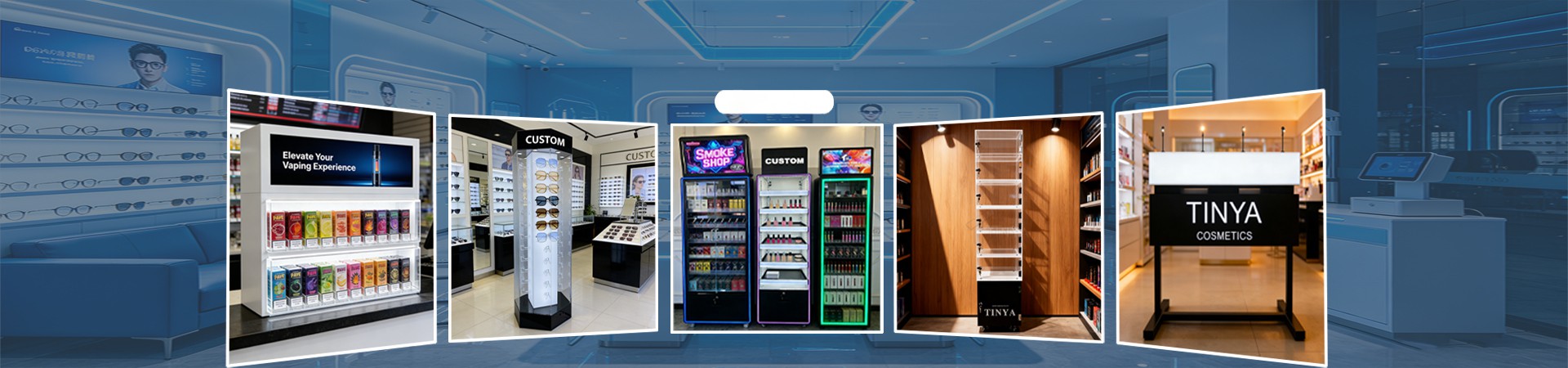

Choosing a retail display manufacturer becomes especially important when your project involves more than a few standard display stands. A cosmetics brand launching into dozens of stores, an electronics company preparing a new product release, or a retail chain replacing fixtures across multiple locations all face the same concern: the display must look right, fit the product correctly, arrive on time and remain consistent from the first unit to the last.
For procurement teams, the question is therefore not simply, "Who can manufacture this display at the lowest price?" A more important question is whether the supplier can turn an idea, drawing or reference image into a display that can actually be manufactured repeatedly and reliably.
A good retail display manufacturer should be able to understand the product being displayed, the retail environment, the expected quantity, branding requirements and how customers will interact with the fixture. These details determine the structure, materials, thickness, lighting, packaging and even the way the display should be assembled.

A Good Retail Display Manufacturer Should Understand the Project Before Quoting
Many custom retail display projects do not begin with complete engineering drawings. Buyers may only have product photos, dimensions, a logo, brand colors and several reference images showing the style they want.
This is completely normal.
An experienced custom retail display manufacturer should be able to take this information and gradually develop it into a manufacturable solution. Before production starts, the supplier may need to consider whether shelves require additional support, whether the structure should be acrylic, metal, MDF or a combination of materials, where the logo should be positioned and whether LED lighting can be integrated without making wiring visible.
This engineering stage is important because a display that looks attractive in a rendering may not necessarily work well in a store.
For example, an acrylic shelf that is too thin may gradually bend when products are placed on it. A large transparent panel without enough support may become unstable. LED lighting positioned incorrectly can create dark areas or visible wiring. A beautiful display may also become expensive to ship if its structure cannot be disassembled.
These are exactly the problems that should be solved before mass production.
At TINYA, custom retail display development normally begins by understanding the product dimensions, display quantity, retail environment and branding requirements before confirming the final structure. Depending on the project, 2D drawings, 3D visualizations, material suggestions and structural adjustments can then be used to move the idea toward production.
Material Selection Should Follow the Product and Retail Environment
Acrylic is one of the most widely used materials for retail displays because it provides excellent transparency and a clean modern appearance. It works particularly well for cosmetics, skincare products, perfume, watches, electronics, collectibles and many other products where visibility is important.
However, acrylic is not automatically the best material for every part of a display.
Large floor-standing displays may need metal reinforcement. Premium retail fixtures may use MDF or wood finishes to create a warmer or more luxurious appearance. Some projects combine a wood or metal base with transparent acrylic shelves so that the display can balance structural strength and product visibility.
The right material combination depends on what the display needs to accomplish.

| Display Requirement | Common Material Solution | Main Benefit |
|---|---|---|
| High product visibility | Clear acrylic | Transparent and modern appearance |
| Heavy product loading | Metal or reinforced structure | Better strength and stability |
| Premium furniture appearance | MDF or wood | More decorative surface options |
| Customized retail fixture | Acrylic + metal + MDF | Greater design flexibility |
| Illuminated product presentation | Acrylic + LED | Better visual impact and brand presentation |
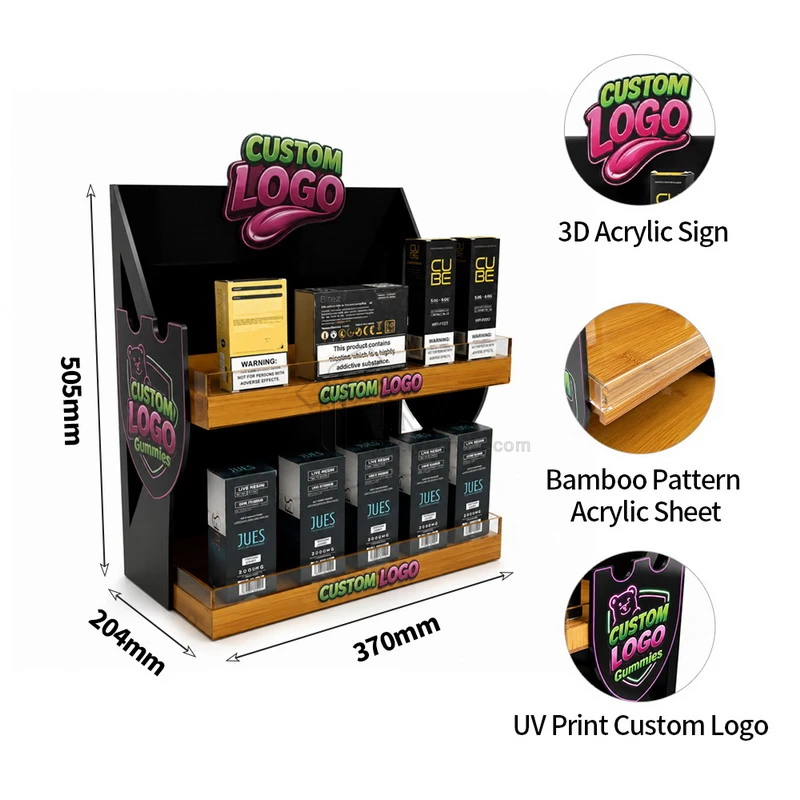
Branding should also be considered together with material selection. UV printing, silk-screen printing, laser engraving and other logo processes create different effects on acrylic and other surfaces. LED lighting can also be incorporated into shelves, bases, back panels or logo areas depending on the desired appearance.
A professional retail display supplier should therefore recommend materials according to the finished application rather than simply choosing the cheapest available option.
The Prototype Is Where Many Problems Should Be Discovered
For a custom project, approving a drawing is useful, but approving a physical sample is much safer.
A prototype allows the buyer to see how the real display looks next to the actual product. Dimensions can be checked, products can be placed onto the shelves, branding proportions can be reviewed and the brightness of LED lighting can be evaluated in a real environment.
This is also the stage where practical problems become easier to identify.
A shelf may technically fit the product but leave too little room for staff to restock it. A logo may look large enough on a computer screen but appear too small when the display is placed inside a store. A structure may look stable in a rendering but require additional reinforcement when the physical sample is tested.
For this reason, prototype development should be treated as part of risk control rather than an unnecessary additional cost.
Depending on project complexity, TINYA's custom prototype process can typically take around 3–7 days. Once the sample is completed, dimensions, workmanship, printing, structure and other important details can be checked before moving into mass production.
Consistency Matters More as Order Quantity Increases
Producing one attractive sample is very different from producing hundreds of displays that all look the same.
For larger retail projects, procurement teams should pay close attention to quality consistency. Acrylic thickness, dimensions, polishing, printing position, LED brightness, assembly accuracy and packaging all need to remain controlled throughout production.
This becomes especially important when the displays will be distributed to different retail locations.
If one store receives a perfectly polished display while another receives a unit with different logo positioning or lighting brightness, the brand presentation becomes inconsistent. The same issue can occur when a buyer places a repeat order several months later and the new batch does not match the original one.
A reliable custom retail display manufacturer should therefore maintain drawings, production specifications, branding information and quality requirements so that future orders can be reproduced as closely as possible.
Price Should Be Evaluated Together With Structure, Quality and Quantity
Custom retail display pricing can vary significantly between suppliers because seemingly similar products may use very different specifications.
Acrylic thickness, material grade, metal structure, printing method, LED components, hardware, surface treatment, packaging and order quantity can all influence the final cost. A display designed for 500 stores also requires a different level of consistency and production control from a small promotional order.
This is why comparing quotations only by unit price can be misleading.
A cheaper display may become more expensive if it arrives damaged, requires additional assembly work, cannot support the expected product weight or has to be reproduced because branding is incorrect.
The better approach is to compare what each quotation actually includes.
When evaluating a retail display manufacturer, buyers should understand the proposed material thickness, structure, logo process, lighting configuration, packaging method and production standard. Once these specifications are aligned, price comparisons become much more meaningful.
Production Time Should Be Confirmed Before the Retail Launch Date
For commercial display projects, missing the installation date can be more expensive than paying slightly more for manufacturing.
When a supplier says production takes approximately 20 days, buyers should confirm what that period actually includes. Prototype approval, design revisions, special material sourcing, logo confirmation, LED components, packaging and international transportation may all occur outside the quoted manufacturing period.
TINYA's typical mass-production period for many customized retail display projects is approximately 20 days, depending on quantity, structure, materials and customization requirements.
Projects combining acrylic, metal, MDF, complex LED systems or specially customized hardware may require additional time.
For launches with fixed store-opening or promotion dates, design approval, sample confirmation, production and shipping should therefore be planned as one complete timeline rather than treated as separate tasks.

Packaging Is Part of the Product, Not an Afterthought
A retail display is only successful if it reaches the customer in the same condition in which it left the factory.
This is particularly important for acrylic displays because scratches are highly visible on transparent surfaces. Large structures can also be vulnerable to impact during international transportation, while LED wiring, printed logos and protruding components require additional protection.
Packaging should therefore be considered during product development.
Protective film, foam, pearl cotton, reinforced cartons and other protective materials can be selected according to the structure of the display. For larger fixtures, a KD or knocked-down design can also be considered.
Instead of shipping a fully assembled display that occupies a large amount of space, shelves, panels and structural components can be packed flat and assembled after arrival. When engineered correctly, KD construction can reduce shipping volume and make replacement of individual components easier.
The key is to keep installation straightforward. A flat-pack display that saves freight but requires complicated installation at every retail store creates another problem.
Choosing a Manufacturer for More Than the First Order
The real value of a good retail display manufacturing partner often becomes clear after the first project.
A successful pilot order may lead to a larger rollout. A cosmetics brand may launch a new collection requiring different shelf dimensions. An electronics retailer may need the same display structure with a new logo or updated LED design. Existing stores may also require replacement units several months later.
When this happens, the manufacturer should not need to redesign the entire project from the beginning.
Production drawings, colors, materials, logo positions and structural details should already be documented so that repeat orders can remain consistent.
This is one of the biggest differences between purchasing a display as a one-time product and developing a long-term relationship with a retail display manufacturer.

FAQ About Custom Retail Display Manufacturing
Can you manufacture a retail display from only a photo or idea?
Yes. A professional custom display manufacturer can usually start with product photos, approximate dimensions, logo files and reference designs. The concept can then be converted into drawings and adjusted according to manufacturing requirements before sampling.
Can acrylic, metal and MDF be used in the same retail display?
Yes. Mixed-material construction is common in customized retail displays. Acrylic can provide transparency, metal can increase structural strength and MDF can create a premium furniture-style appearance. The final combination should depend on the product and retail environment.
Should I make a sample before placing a large order?
For customized projects, a prototype is strongly recommended. It allows dimensions, product fit, structural stability, branding, LED lighting and overall appearance to be confirmed before mass production.
How long does custom retail display production take?
The exact lead time depends on design complexity, quantity and materials. For many projects, TINYA's mass production time is approximately 20 days after the design and sample are approved. More complicated structures may require additional time.
Can the display include our logo and LED lighting?
Yes. Logo printing, engraving, customized colors and LED lighting can all be incorporated into the design. These details are best confirmed during the design stage so wiring, structure and logo placement can be integrated properly.
Can displays be shipped disassembled?
Yes. KD or flat-pack structures are particularly useful for larger displays and bulk orders because they can reduce shipping volume. The display should still be designed so that installation at the destination remains simple.
Work With an Experienced Retail Display Manufacturer
Choosing the right retail display manufacturer means finding a supplier that can do more than cut material and assemble parts. The manufacturer should understand how the product will be displayed, how the structure will be manufactured, how branding will remain consistent and how hundreds of units can be delivered without changing the approved design.
TINYA supports custom retail display projects using acrylic, metal, MDF and mixed-material structures. From initial design and prototype development to logo customization, LED integration, production, quality inspection and export packaging, the goal is to make the display suitable not only for the sample stage, but also for stable bulk production.
If you are planning a new retail display project, send us your product photos, approximate dimensions, quantity, branding requirements and reference images. Our team can review the project and recommend a suitable structure and manufacturing solution.
Email: seo@tinya168.com
Phone: +86 199 2655 8676