

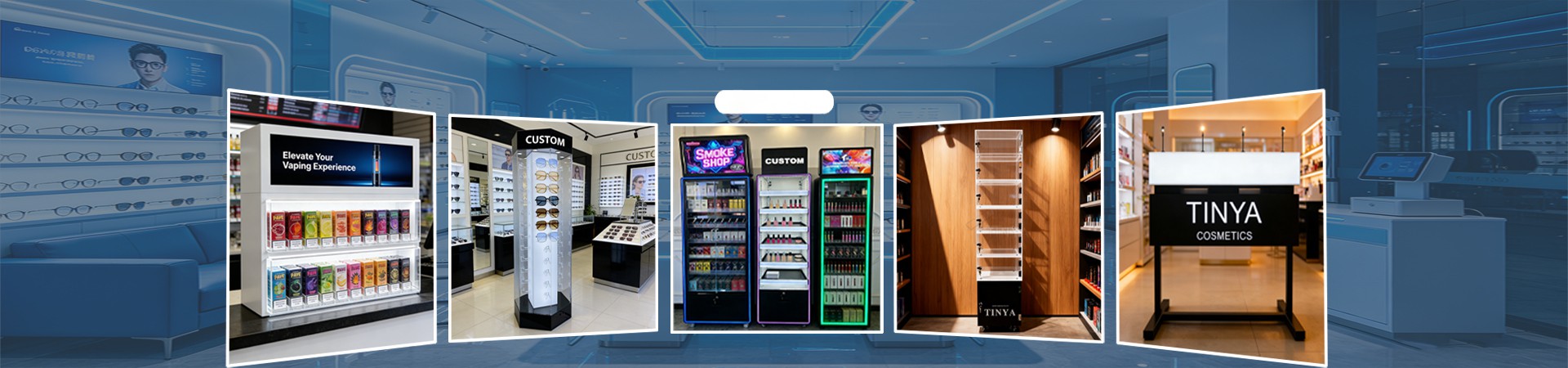
Acrylic display stands are ideal for showcasing various products due to their optical clarity and durability. Below is a detailed analysis of product categories suitable for acrylic display stands, including advantages/disadvantages, solutions, and design features:
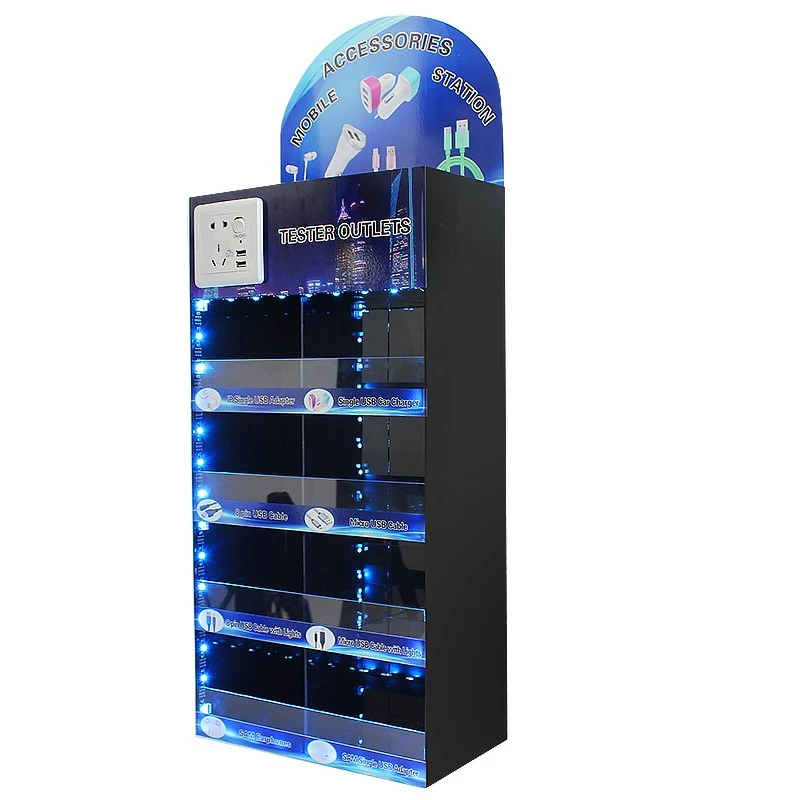
1. Electronics (Smartphones/Tablets/Headphones/Speakers)
Advantages:
High light transmittance: Zero visual obstruction, enhancing product detail visibility.


Anti-static treatment: Protects sensitive electronic components from electrostatic discharge (ESD).
Interactive design: Integrated charging ports or magnetic structures enable live product demos.
Disadvantages:
Fingerprint susceptibility: Transparent surfaces show smudges, reducing aesthetics.
Load-bearing limitations: Thicker acrylic sheets (≥8mm) required for heavy speakers, increasing costs.
Solutions:
Apply anti-fingerprint (AF) coating on surfaces.
Use hybrid metal-acrylic structures (e.g., reinforced speaker bases).
Design Features:
5–8mm thickness recommended; pair with LED cold light sources to prevent heat buildup.
Tiered accessory displays (e.g., headphones + chargers) to boost cross-selling.
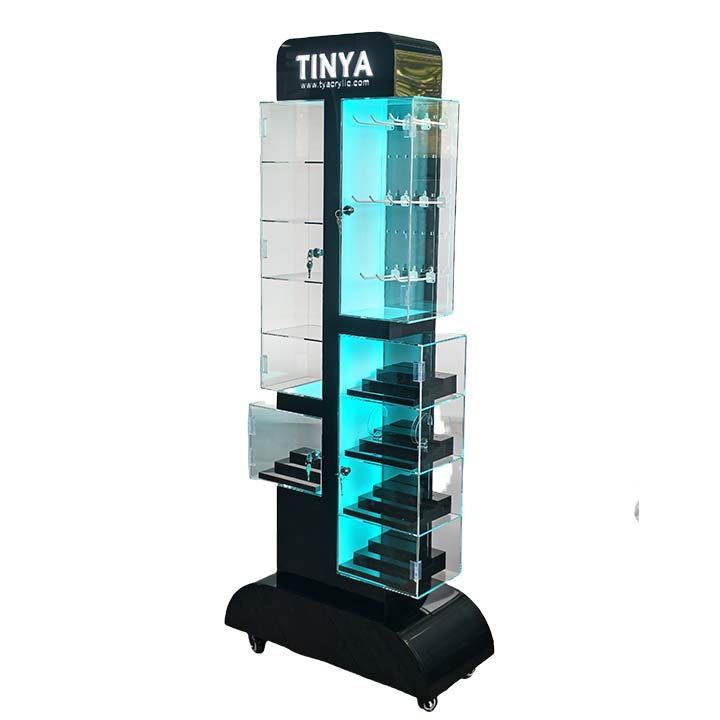

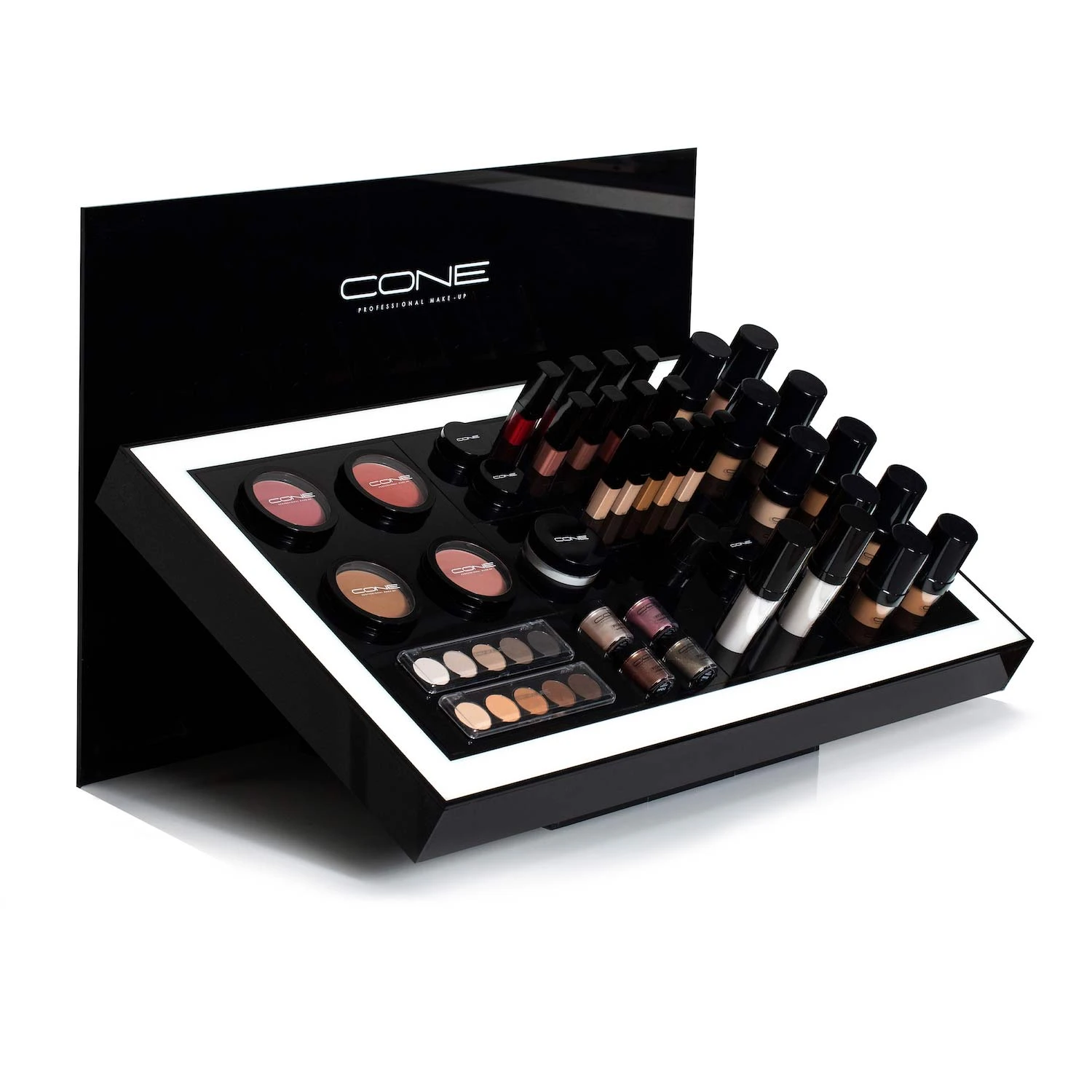
2. Cosmetics (Perfumes/Skincare/Makeup)
Advantages:
Mirror-finish integration: Doubles as a makeup mirror for user experience enhancement.
Chemical resistance: Withstands alcohols, essential oils, and cosmetic solvents.
Brand customization: UV printing for logos or gradient color schemes.
Disadvantages:
Scratch-prone surfaces: Frequent contact causes mirror abrasion.
Volatility issues: Open designs unsuitable for perfume evaporation control.
Solutions:
Add tempered glass protective film (+15% cost) to mirror layers.
Implement acrylic sealed enclosures with micro-ventilation for perfumes.
Design Features:
15°–30° angled displays for makeup palettes to mimic application angles.
Thermostatic modules embedded in skincare displays for temperature stability.


3. Food & Beverage (Candy/Chocolate/Bottled & Canned Goods)
Advantages:
FDA-compliant materials: Food-safe, non-toxic certification.
Dust/ moisture resistance: Sealed rounded-edge design extends shelf life.
Rotating displays: Multi-tier turntables optimize spatial efficiency.
Disadvantages:
Grease adhesion: Prolonged candy oil exposure causes surface hazing.
Thermal deformation: Warping risks in refrigerated/high-temperature environments.
Solutions:
Regular cleaning with acrylic-specific degreasers.
Use modified acrylic (with thermal stabilizers) for extreme temperatures.
Design Features:
Non-slip grooves + 30° tilt for beverage bottle label visibility.
Black acrylic bases to heighten chocolate contrast.


4. Jewelry & Accessories (Necklaces/Watches/Rings)
Advantages:
Ultra-clear transparency (≥92% light transmittance): Accurately reflects gemstone brilliance.
Micro-support structures: Secures delicate items (e.g., earrings).
Anti-theft compatibility: RFID tag slots for security integration.
Disadvantages:
Scratch visibility: Metal contact leaves surface marks.
High customization costs: Complex geometries (e.g., wave-shaped ring holders) increase machining complexity.
Solutions:
Add velvet/silicone padding at contact points.
Use modular designs (e.g., universal ring holders + customizable plaques).
Design Features:
Anti-oxidation coated hooks for necklace displays.
AR projection modules integrated into luxury jewelry stands.
5. Stationery & Office Supplies (Pens/Notepads/Accessories)
Advantages:
Minimalist aesthetics: Transparency aligns with office environments.
Modular configurability: Adapts to SKU updates.
Anti-tip design: Slotted pen holders ensure stability.
Disadvantages:
Glare interference: Reflective surfaces obscure paper-based items.
Load capacity constraints: Heavy equipment requires structural reinforcement.
Solutions:
Use frosted acrylic to eliminate glare.
Embed hidden metal frameworks for load-bearing layers.
Design Features:
Magnetic levitation displays for sticky notes to enhance engagement.
45° angled slots in document trays for ergonomic access.
6. Toys & Gifts (Collectibles/Seasonal Items)
Advantages:
IP customization: UV-printed anime/game graphics.
Dynamic presentation: 360° rotating platforms highlight figurine details.
Themed staging: Transparent stepped displays mimic gift stacks.
Disadvantages:
Size limitations: Height >50cm requires reinforced supports.
Seasonal inefficiency: Holiday-themed stands face low reuse rates.
Solutions:
Combine acrylic + steel columns for large displays.
Design interchangeable panels (e.g., Christmas/Spring Festival inserts).
Design Features:
Honeycomb-style dense display grids for blind box collections.
Acrylic dust covers + plaque slots for limited-edition toys.
7. Health & Beauty (Vitamins/Care Products)
Advantages:
Medical-grade aesthetics: Enhances brand credibility.
UV protection: Blocks light degradation of liquid formulations.
Compartmentalization: Transparent pillbox-style organization.
Disadvantages:
Low contrast: White pills blend into transparent backgrounds.
Residue retention: Wet wipes leave watermarks.
Solutions:
Use frosted backplates + LED backlighting for pill visibility.
Incorporate angled drainage channels in high-traffic areas.
Design Features:
Stepped inclined displays for supplement bottles.
Silicone non-slip mats in tool displays.
8. Fashion Apparel (Socks/Hats/Belts)
Advantages:
Ultra-thin profiles (3mm): Emphasizes apparel visibility.
Contextual lighting: Built-in soft light panels simulate wear scenarios.
Adjustable systems: Removable hooks accommodate size variations.
Disadvantages:
Dust prominence: Dark fabrics highlight surface dust.
Deformation risks: Knitwear stretches under prolonged hanging.
Solutions:
Apply anti-static coatings to dark display areas.
Use fold-and-flatten + acrylic pressing plates for knits.
Design Features:
Adjustable mannequin heads for hat displays.
Metal buckle slots for belt fixation.
Comprehensive Solution Comparison Table
| Product Category | Core Advantages | Key Limitations | Solutions | Recommended Processes |
|---|---|---|---|---|
| Electronics | Live demo/ESD protection | Fingerprint residue | AF coating + hybrid metal frames | CNC precision drilling |
| Cosmetics | Dual-function mirrors | Mirror scratches | Tempered glass film + sealed vents | UV gradient printing |
| Food & Beverage | FDA compliance | Grease haze | Degreasers + oil-resistant coatings | Laser welding |
| Jewelry | Ultra-clear optics | Metal scratches | Silicone padding + modular designs | Diamond-cut edging |
| Stationery | Modularity | Glare distortion | Frosted surfaces + magnetic levitation | Sandblasting |
| Toys & Gifts | IP customization | Seasonal constraints | Interchangeable panels + hybrid supports | UV full-color printing |
| Health Products | Formulation protection | Low contrast visibility | LED backlighting + drainage slopes | UV-block coatings |
| Apparel | Contextual lighting | Dark fabric dust exposure | Anti-static coatings + flat layouts | Embedded light panels |
Design Implementation Guidelines
Material Selection:
Prioritize impact-modified acrylic (50% higher shatter resistance).
Add tempered glass layers or metal reinforcements in high-traffic zones.
Cost Optimization:
Standardize dimensions (e.g., 20×20cm base) to reduce mold costs.
Reserve complex processes (mirrors/custom shapes) for flagship displays.
Maintenance Protocols:
Monthly cleaning with 3M microfiber cloths + isopropyl alcohol.
Avoid alcohol wipes (causes surface fogging).
Safety Standards:
Radius ≥2mm rounded edges in child-accessible areas.
Load-bearing structures must pass 25kg/m² static pressure tests.
For more customized information, please contact us immediately TINYA Acrylic Display Factory