

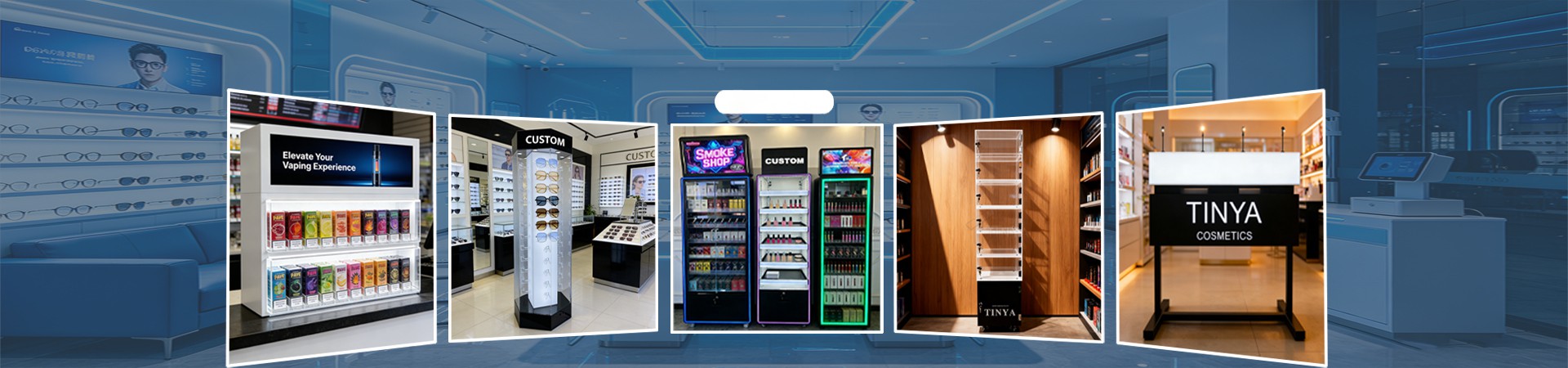

A wholesale makeup display is not simply a stand used to place cosmetic products on a counter. For beauty brands, distributors and retail chains, it is an important part of product presentation, customer experience and in-store brand communication. A well-designed display helps shoppers understand the product range, notice key items more quickly and interact with testers in a more organized way. It can also make a cosmetic collection appear more professional and valuable without requiring major changes to the retail space.
The requirements of a wholesale project are different from those of purchasing a single ready-made display. Buyers must consider whether the structure can hold the correct number of products, whether the slots match the packaging dimensions, whether the logo and colors remain consistent across the complete order and whether the display can survive international transportation and frequent retail use. A design that looks attractive in a rendering may still create problems if the product openings are too tight, the shelves bend under weight or the assembled display occupies too much shipping space.
This guide explains how wholesale makeup displays are designed, which materials and structures are suitable for different cosmetic products and what buyers should confirm before starting sample and mass production.
What Is a Wholesale Makeup Display?
A wholesale makeup display is a retail presentation fixture produced in quantity for cosmetic brands, beauty retailers, distributors, wholesalers and marketing agencies. It can be placed on checkout counters, cosmetic shelves, promotional tables, retail islands or the floor of a beauty store. Unlike a general storage organizer, a commercial makeup display is designed around a specific product range, packaging size, brand identity and customer purchasing journey.
The display may hold lipsticks, foundations, powders, mascaras, eyeliners, skincare bottles, perfumes or complete makeup collections. Each category requires a different layout. Lipsticks usually need individual openings or rows that make different shades easy to compare. Foundation displays often need wider slots and clear shade identification. Skincare bottles require stable platforms with enough depth to prevent tipping. A complete launch collection may require several levels so that hero products are visually prominent while supporting products remain accessible.
For wholesale buyers, consistency is especially important. Every display supplied to different stores should have the same dimensions, logo position, color and product spacing. If the openings vary between units or printed graphics are not aligned, store staff may find that some products do not fit correctly. This is why the development of a wholesale makeup display should begin with actual product dimensions, packaging samples or accurate technical drawings rather than appearance alone.

How Display Structure Affects Cosmetic Presentation
The correct structure depends on the type of cosmetics, the available retail space and the way customers are expected to interact with the products. Countertop displays are suitable for checkout areas, cosmetic counters and limited promotional spaces. They keep the products close to the customer and are often used for new collections, testers or high-margin products. Floor displays provide more capacity and stronger visibility from a distance, making them suitable for complete product ranges, seasonal campaigns and freestanding retail areas.
A tiered structure helps prevent products in the back rows from being hidden by those in front. The height and spacing between each level must be calculated according to the packaging dimensions and viewing angle. If the levels are too close together, customers may not be able to remove the products comfortably. If the height difference is too large, the display can become unstable or visually unbalanced.
Some makeup displays use individual holes, grooves or removable inserts to keep each product in place. This structure creates a clean and organized appearance, but the openings must match the product precisely. Other displays use open shelves, which provide greater flexibility when the brand frequently changes packaging or product combinations. Removable inserts can offer a balance between these two options because the main display body can remain in use while the internal layout is updated.
| Display structure | Suitable products | Main retail advantage |
|---|---|---|
| Multi-tier countertop display | Lipsticks, mascara, eyeliner and foundation | Makes different products and shades easier to compare |
| Open shelf display | Skincare bottles, boxed cosmetics and gift sets | Provides flexibility for changing product sizes |
| Individual slot display | Lipstick, nail polish and tester products | Keeps every item aligned and organized |
| Rotating makeup display | Mixed cosmetic collections | Allows more products to be displayed in limited space |
| Floor-standing display | Complete beauty collections and promotional campaigns | Provides higher capacity and stronger store visibility |
| Lockable cosmetic cabinet | Premium skincare, perfume and valuable products | Adds protection in public retail environments |
A professional manufacturer should evaluate not only the external size of the display but also the usable internal space. Product packaging often includes caps, pumps, curved bottles or protruding labels that require additional clearance. When possible, buyers should send actual samples to the manufacturer so the fit and removal experience can be tested before bulk production.
Choosing the Right Materials for a Wholesale Makeup Display
Acrylic is widely used for wholesale makeup displays because it offers a clean, modern appearance and allows customers to see the products clearly. Transparent acrylic can make a display feel lighter and reduce visual obstruction, while black, white or colored acrylic can be used to match a brand's identity. Frosted, mirrored or printed panels can also be added to create a more distinctive presentation.
Material thickness should be selected according to the overall dimensions, shelf span and expected product load. A small lipstick holder may use relatively thin acrylic, while a wide display carrying glass skincare bottles needs stronger shelves and better structural support. Simply increasing the thickness of every panel is not always the most efficient solution. Reinforced supports, shorter shelf spans or a combination of acrylic and metal may provide better stability while controlling weight and cost.
Acrylic can also be combined with MDF, metal, ABS and LED components. MDF bases can add visual weight and provide space for printed graphics or electrical components. Metal frames may be used for larger floor-standing displays that need additional strength. ABS inserts can be suitable when large quantities of identical product openings are required. The final material combination should be based on the display environment, order quantity, budget and expected service life.

| Material | Visual and structural characteristics | Typical use |
|---|---|---|
| Clear acrylic | High visibility and a clean appearance | Countertop displays, shelves and product holders |
| Colored acrylic | Strong brand presentation | Logo panels, bases and decorative sections |
| Mirrored acrylic | Reflects packaging and product details | Perfume and premium cosmetic displays |
| MDF | Solid base with flexible surface finishing | Floor displays and illuminated bases |
| Metal | Greater support for larger structures | Frames, brackets and heavy-duty displays |
| ABS | Suitable for repeatable molded components | High-volume inserts and product trays |
Buyers should also consider how the display will be cleaned. Cosmetic testers can leave powder, liquid and fingerprints on the surface. Smooth surfaces, removable trays and accessible corners make daily store maintenance easier. A highly detailed structure may look impressive but create difficulties for retail staff if it cannot be cleaned efficiently.
How Branding Turns a Display into a Sales Tool
The visual design of a wholesale makeup display should help customers recognize the brand before they begin reading the product information. Logo position, color, lighting, graphics and product arrangement should work together rather than appear as separate decorative elements.
The header panel is often the most visible branding area. It can display the brand logo, campaign name or product benefit. Side panels can carry additional graphics without blocking the products, while the base can communicate shade information, product categories or promotional messages. The available viewing distance should determine the size of the logo and text. Small product details may work at a cosmetic counter, but a floor display requires larger and simpler messages that can be understood from farther away.
UV printing is suitable for detailed, full-color graphics and photographic images. Silk-screen printing can provide consistent solid colors for logos and simple brand elements. Laser engraving creates a subtle effect on clear or colored acrylic, while interchangeable printed panels allow campaign graphics to be updated without replacing the complete display.
LED lighting can make premium makeup and skincare packaging more noticeable, especially in stores with complex ambient lighting. The light should highlight the products rather than create reflections that block the customer's view. Hidden light channels, diffusers and carefully positioned LED strips can produce a more even effect than exposing individual light points.
When lighting is included, the power supply, voltage, plug type, switch position and target market should be confirmed during development. The electrical components should be accessible for maintenance but hidden from the normal customer viewing angle.
What Determines the Cost of Wholesale Makeup Displays?
The cost of a wholesale makeup display depends on more than its overall dimensions. Material type and thickness, structural complexity, printing process, lighting, hardware, packaging and order quantity all affect the quotation. A simple open-shelf display generally requires fewer processing steps than a display containing individual product openings, removable trays, drawers and illuminated graphics.
The quantity also influences how production costs are distributed. Custom drawings, fixtures, printing preparation and sample development create initial costs that must be considered even for a small order. When the quantity increases, these development and setup costs can be distributed across more units. However, buyers should not select an order quantity based only on the lowest unit price. Storage capacity, campaign duration and the number of retail locations should also be considered.
Packaging can represent a meaningful part of the total project cost. A fully assembled display provides a better out-of-box experience but occupies more shipping space. A knock-down structure can reduce carton volume and freight costs, but it requires a reliable assembly method and clear instructions. The manufacturer should evaluate whether the display can be safely disassembled without affecting its appearance or structural strength.
Buyers requesting a quotation should provide the product dimensions, required display capacity, estimated quantity, preferred materials and branding requirements. Reference images are helpful for communicating the desired style, but accurate product information is still required before the structure and price can be confirmed.

Why Sampling Is Essential Before Mass Production
A digital rendering can show the intended appearance of a makeup display, but it cannot fully confirm how the physical products will fit or how the structure will perform in a store. A sample allows the buyer to evaluate the real proportions, product spacing, color, logo size, lighting effect and overall stability.
Product fit is one of the most important sample checks. Openings should hold the products securely without scratching the packaging or making them difficult to remove. Shelves should remain stable when fully loaded, and the display should not tip when a customer removes an item from the front or upper level. Drawers, doors, locks and rotating components should operate smoothly.
The sample is also an opportunity to confirm branding. Printed colors can appear different from those shown on a computer screen because the acrylic background, lighting and printing process affect the result. Buyers with strict brand-color requirements should provide Pantone references or approved physical color samples.
After the sample is approved, the confirmed dimensions, materials, printing files and assembly details should be recorded as the production standard. Mass-production quality control should compare the finished units with the approved sample rather than relying only on a general product description.
Quality Control and Packaging for Wholesale Orders
Wholesale orders require consistent quality across the complete batch. Acrylic surfaces should be checked for scratches, cracks, bubbles and visible processing marks. Polished edges should appear clear and even, while bonded areas should remain clean. Product openings, shelves and removable inserts should be measured to confirm that the cosmetics fit correctly.
Printed logos and graphics must be inspected for color consistency, alignment and adhesion. For illuminated displays, the LED system, wiring, switch and power connection should be tested. The completed display should also be placed on a flat surface and loaded with products to evaluate stability.
Protective film is normally retained on acrylic panels during production whenever possible. Additional soft materials may be placed between surfaces to prevent rubbing during transportation. Corners and protruding components require suitable cushioning because these areas are more vulnerable to impact.
The outer carton must be selected according to the product weight, structure and shipping method. For international projects, the packaging should be designed for repeated handling rather than only for movement inside the factory. If the display is shipped in knock-down form, each component should be clearly identified, and the assembly instructions should match the final production structure.
Good packaging is not simply an additional layer around the display. It should be considered during structural development because the dimensions of the display influence carton volume, freight cost and the risk of transportation damage.

How to Choose a Wholesale Makeup Display Manufacturer
A suitable manufacturer should be able to turn cosmetic packaging information into a practical retail structure. This requires more than cutting and assembling acrylic panels. The supplier should understand product spacing, customer access, visual hierarchy, structural stability, branding processes and export packaging.
Before confirming a supplier, buyers should review whether the company can provide technical drawings or 3D design support, whether it can combine different materials and whether it has experience with printing, lighting and custom retail structures. The quotation should clearly explain the material, thickness, dimensions, packaging and included customization instead of offering only a single unit price.
Communication is especially important during a custom project. Changes to product packaging, graphics or store dimensions should be identified before production begins. A manufacturer that asks detailed questions about the cosmetics, quantity and retail environment is more likely to identify potential problems during development rather than after delivery.
Shenzhen Tinya Acrylic Display Co., Ltd. has provided OEM and ODM manufacturing services since 2005. We support custom makeup displays in acrylic, metal, MDF and ABS, together with custom sizes, structures, colors, logos, UV printing, silk-screen printing, LED lighting and export packaging. Our team can assist with 2D and 3D design, sampling and production according to the requirements of beauty brands, retailers, distributors and display projects.
If you are planning a new cosmetic launch or need displays for multiple retail locations, send us your product dimensions, required quantity, logo files and reference images. We can evaluate the product layout, recommend a suitable structure and prepare a factory quotation.
Email: seo@tinya168.com
WhatsApp: +86 199 2655 8676
Frequently Asked Questions About Wholesale Makeup Displays
Can a wholesale makeup display be customized for our cosmetic packaging?
Yes. The display can be designed according to the dimensions, shape and quantity of your products. Sending actual packaging samples or accurate drawings helps the manufacturer confirm the openings, spacing and shelf depth more precisely.
What materials can be used for a custom makeup display?
Acrylic is commonly used for transparent shelves, holders and branding panels. It can be combined with MDF, metal and ABS when the project requires a heavier base, stronger frame or repeatable product inserts. The material combination should be selected according to the display size, product weight and retail environment.
Can we add our logo and brand colors?
Logos, campaign graphics and brand colors can be added through UV printing, silk-screen printing, engraving, colored acrylic or removable graphic panels. Buyers should provide high-resolution artwork and color references before sample production.
Can LED lighting be added to a wholesale makeup display?
LED lighting can be integrated into the base, header, shelves or side panels. The voltage, plug, switch, light color and target country should be confirmed before production so the lighting system can be designed correctly.
What information is needed for a quotation?
The manufacturer normally needs the cosmetic packaging dimensions, required display capacity, order quantity, preferred display size, material requirements, logo files and reference images. Information about the target retail environment and destination country is also helpful.
Should we order a sample before mass production?
A sample is strongly recommended for a custom wholesale project. It allows the buyer to verify the actual product fit, structure, printing, lighting and stability before approving mass production.
Can the display be shipped flat-packed?
Some makeup displays can be designed with a knock-down structure to reduce packaging and shipping volume. Whether this is suitable depends on the appearance, strength and assembly requirements of the project. The structure should be evaluated during the design stage rather than changed after sampling.