

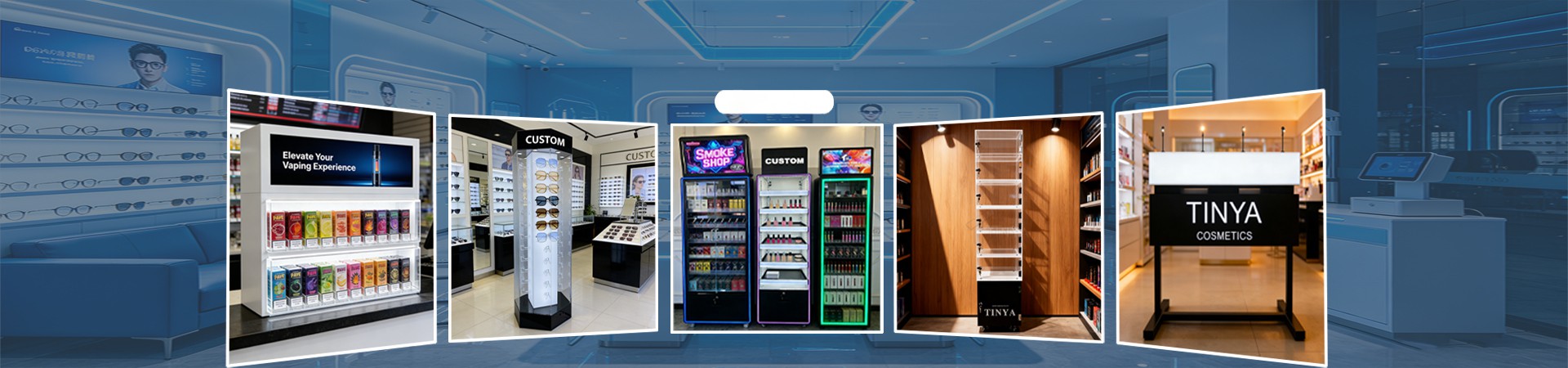

Walk into almost any convenience store or tobacco specialty shop these days and you'll notice something: the cluttered wooden shelving and scratched-up plastic cabinets of ten years ago are quietly disappearing. In their place? Clean, clear, almost invisible acrylic fixtures that somehow make the whole counter look bigger, brighter, and more in control. It's not a coincidence, and it's definitely not just about looks.
Store owners are under real pressure right now - age-verification laws are tighter, shelf space is shrinking, and shoppers expect a counter that feels organized rather than chaotic. So why has acrylic quietly become the go-to material for tobacco merchandising, from gas station counters to airport duty-free walls? Let's get into it.
The Old Way of Displaying Tobacco Products Wasn't Cutting It
For years, tobacco products sat behind laminated wood cabinets or dusty glass cases that were heavy, hard to reconfigure, and honestly kind of gloomy. Wood absorbs smoke residue and odor over time. Metal racks dent and rust near humid coastal stores. Glass, while premium-looking, cracks under repeated restocking and is expensive to replace when it does.
On top of that, regulations in most US states, the EU, the UK, and Australia now require tobacco products to be kept out of direct sightline or behind locked panels in many settings. That single requirement changed the whole game for store design - retailers suddenly needed fixtures that could be both concealed and quick to open for a verified adult customer. Old-school cabinetry just wasn't built for that kind of flexibility.

What Makes Acrylic Different From Everything on the Shelf Before It
Here's the honest answer: acrylic solves about five problems at once, and it does it without looking cheap.
It's crystal clear, so product branding and packaging colors do the selling for you instead of a bulky frame getting in the way.
It's roughly half the weight of glass at the same thickness, which matters when a store is remodeling a counter on a weekend and can't wait for a crew.
It can be laser-cut into custom slot widths for cigarette packs, cigars, vape pods, or rolling papers - no more one-size-fits-none shelving.
It takes UV printing and silk screen branding beautifully, so a store's logo or a supplier's promotional graphic sits right on the display, not on a flimsy sticker.
It holds up to daily handling, cleaning sprays, and the occasional dropped lighter far better than most people expect from a plastic material.
And here's a small thing that isn't small at all - acrylic doesn't hold onto smell the way wood does. Anyone who has worked a counter shift near an older wooden tobacco case knows exactly what that stale smell is. Acrylic just doesn't do that.

Cast vs. Extruded Acrylic: Which One Actually Belongs Behind Your Counter?
Not all acrylic is built the same, and this is where a lot of buyers get tripped up when comparing quotes. Cast acrylic is poured and cured slowly, giving it a denser, more optically clear finish that resists yellowing under retail lighting for years. Extruded acrylic is manufactured faster and costs less, but it's softer, scratches more easily, and can warp slightly under heat from nearby lighting fixtures or a sunny storefront window.
|
Factor |
Cast Acrylic |
Extruded Acrylic |
|
Clarity & UV resistance |
Excellent - stays clear for years |
Good initially, yellows faster |
|
Scratch resistance |
High, holds up to daily restocking |
Moderate, shows wear sooner |
|
Best for |
Locked cabinets, high-traffic counters |
Short-term promo displays, budget runs |
|
Typical thickness range |
3mm – 10mm |
2mm – 6mm |
|
Price point |
Higher upfront, lower lifetime cost |
Lower upfront, more frequent replacement |
If a display is going to sit under counter lighting for two or three years and get opened dozens of times a day, cast is almost always the smarter buy - even though the invoice looks bigger on day one.

Compliance Without the Headache: Locking Mechanisms and Age-Restricted Access
Say a store in Ontario or California needs tobacco kept fully out of view until a staff member unlocks it. That's a design brief, not just a regulation. Acrylic fabricators can build sliding-door units with recessed key locks, push-button magnetic latches, or even RFID-triggered panels that only release when an employee badge is scanned nearby.
None of that flexibility exists with a solid wood cabinet built on a factory line six months ago. Acrylic units, because they're typically produced through CNC routing and laser cutting rather than mass-molded, can be adjusted panel by panel to match whatever a state, province, or country requires this year - and whatever it requires next year, too.
Acrylic vs. Traditional Display Materials, Side by Side
|
Comparison Point |
Acrylic |
Wood / Melamine |
Metal / Steel |
|
Visibility of product |
Excellent, near-invisible frame |
Blocked by cabinet edges |
Blocked by bars/mesh |
|
Weight for installation |
Light, easy to reposition |
Heavy, needs a crew |
Heavy, fixed placement |
|
Odor & moisture resistance |
Doesn't absorb smoke or humidity |
Absorbs odor over time |
Can rust near coastal air |
|
Custom branding options |
UV print, laser engrave, backlit |
Limited to paint/vinyl wraps |
Limited, often plain |
|
Lifespan in daily retail use |
5+ years with proper care |
3–5 years before wear shows |
5+ years, but looks dated |
None of this means wood or metal is a bad choice everywhere - a rustic tobacco lounge with a whiskey-bar feel might genuinely want wood grain on purpose. But for a modern convenience chain or a duty-free counter that needs to move a lot of product through a small footprint, acrylic just does more with less material.


What Store Owners Are Actually Seeing on the Floor
Talk to enough regional convenience chain buyers and a pattern shows up pretty quickly: stores that swap over to acrylic tobacco fixtures tend to report faster restocking (staff can see remaining stock at a glance instead of opening every drawer), fewer damaged units during shipping because the panels nest and stack flat, and noticeably less counter clutter once bulky wooden risers are gone.
It's not flashy data, and honestly it doesn't need to be - the appeal here is practical, not trendy. A counter that looks organized also feels trustworthy to a customer standing there waiting to be carded, and that's worth something too.
What We Can Do
The role we play in the current market and the pain points we can resolve for you.
1
A Category That's Growing Fast: Vape and Nicotine Pouch Displays
Here's something worth noting if you're only thinking about cigarette shelving - the fastest-growing corner of tobacco retail right now isn't cigarettes at all, it's vape pods and nicotine pouches. Both categories come in small, oddly-shaped packaging that doesn't sit well on shelving designed for cigarette cartons twenty years ago.
Acrylic handles this shift easily, since custom slot widths and tiered risers can be laser-cut for whatever shape a brand ships in that quarter. Try doing that with a fixed wooden cabinet and you're looking at a full rebuild every time a supplier changes their box size. That kind of flexibility is quietly becoming one of the biggest reasons chains are switching over, not just the compliance angle everyone talks about first.


2
Where TINYA Fits Into This Picture
This is exactly the gap TINYA was built to close. As a Guangdong-based acrylic manufacturer with in-house CNC routing, laser cutting, UV printing, and flame-polishing lines, TINYA works directly with retailers, wholesalers, and hospitality buyers who need tobacco display cabinets that meet local compliance rules without a six-week back-and-forth over drawings.
Whether the brief is a locked under-counter unit for a single store or a multi-region rollout with custom branding across 200 locations, TINYA's OEM/ODM setup means a buyer can send a rough sketch or a competitor's spec sheet and get back cast-acrylic samples, not just a quote. Export documentation, container packing, and quality inspection are handled in-house, which removes a lot of the guesswork that usually slows down cross-border tobacco fixture orders.
If your current supplier is still quoting extruded acrylic at cast-acrylic prices, or your team is stuck redesigning cabinets every time a new state law passes, that's worth a conversation.

Frequently Asked Questions
1. Is acrylic actually durable enough for daily tobacco retail use?
Yes, particularly cast acrylic at 4mm thickness or above. It resists scratching from daily pack restocking far better than most buyers expect, and unlike wood, it won't warp from cleaning sprays or humidity near a beverage cooler.
2. Can acrylic tobacco displays be built with locking mechanisms for age-restricted products?
Absolutely. Recessed key locks, magnetic push-latches, and sliding lockable panels are all standard options, and they can be built directly into the cabinet frame rather than added as a bulky external fixture.
3. How long does it take to get a custom acrylic tobacco display manufactured?
For a manufacturer with in-house CNC and laser cutting, a sample typically ships in one to two weeks, with bulk production following in three to five weeks depending on order size and finishing details like UV printing.
4. Is cast acrylic worth the extra cost over extruded acrylic for a tobacco counter?
In most cases, yes. Cast acrylic holds its clarity and color longer under retail lighting, so a store isn't replacing yellowed panels every year - the lifetime cost usually ends up lower even though the initial price is higher.
5. Can acrylic displays be customized to match specific state or country tobacco regulations?
Yes, and this is one of the biggest advantages over molded wood or metal cabinets. Panel width, opacity, locking style, and signage placement can all be adjusted individually, so a display built for one region can be reconfigured rather than replaced when rules change.
