

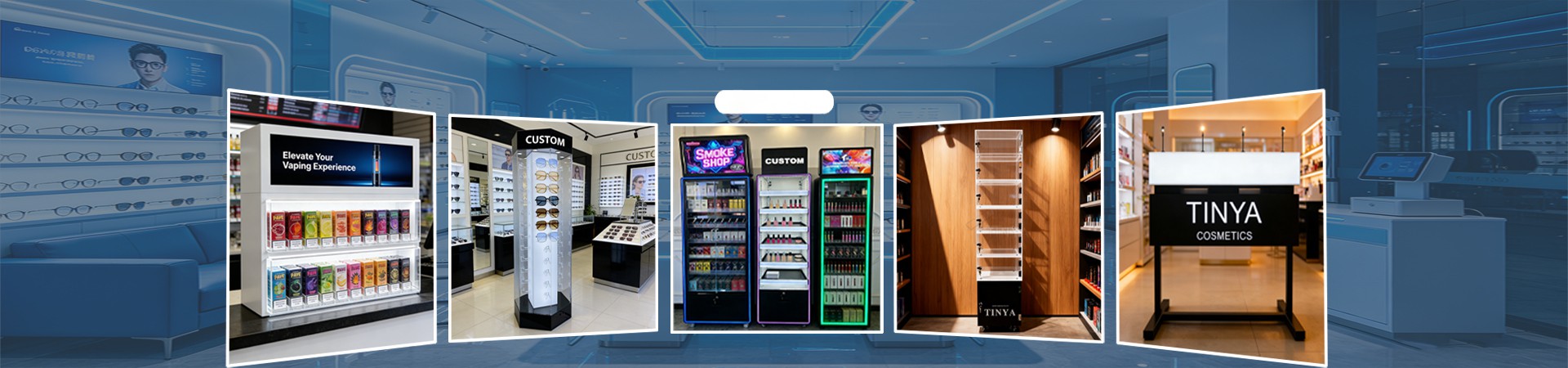

Walk into ten different boutiques and there's a decent chance you'll spot the same acrylic risers, the same wire spinner racks, the same slightly scuffed shelf units, all pulled from the same catalog. Sound familiar? There's a reason so many stores start to blur together, and it isn't bad taste. It's standard fixtures doing standard things, whether or not they actually fit the product, the space, or the brand sitting on top of them.
Here's the thing: retailers aren't moving toward custom displays because it's trendy. They're moving because standard racks quietly cost them floor space, sales, and brand identity, day after day, without anyone noticing until the numbers get compared. Let's get into why.

The Trouble With "One-Size-Fits-All" Racks
Standard display racks are built for a hypothetical average product in a hypothetical average store. Problem is, your store isn't hypothetical. Your shelf has a specific depth. Your best-selling item is a slightly odd shape. Your brand has a color palette that, funnily enough, never quite matches the beige acrylic sitting in a warehouse somewhere by the pallet.
Ever notice how a rack from a big catalog supplier just looks... generic? That's not an accident. It was designed to fit as many stores as possible, which really means it fits none of them particularly well. A few things tend to go wrong:
Awkward gaps or overhang because the rack was never sized for your product
Items sliding, toppling, or bunching together, which looks messy fast
Zero branding, so the display could belong to any store on the block
Inconsistent build quality between batches, since bulk suppliers rarely disclose the acrylic grade they used
None of that is a huge disaster on its own. Stacked together over a season, though, it adds up to shelves that don't sell as hard as they could.
What "Custom" Actually Buys You
Custom doesn't just mean prettier. It means the display works with your product instead of around it. A candle brand can get risers cut to match the exact curve of its bottles. A cosmetics counter can get a display that doubles as a storage drawer underneath, so backstock isn't cluttering the register area. A hospitality buyer furnishing a hotel gift shop can request a lit, branded unit that photographs well and matches the lobby's finish.
It's a genuinely simple trade: you spend a bit more thought up front, and the display spends the rest of its life quietly doing its job, instead of fighting your layout. Small business owners feel this the moment new stock arrives that doesn't fit the old rack; enterprise buyers feel it across forty store locations at once.
There's a seasonal angle too, worth mentioning. Around the winter holidays or a big product launch, retailers often want a display that can carry extra volume for a few weeks and then step back to normal capacity afterward. A custom unit can be designed with that swing in mind from day one; a standard rack, bought off a shelf somewhere, either can't flex that way or forces you to buy a second rack you'll barely use come January.

Custom Displays vs. Standard Display Racks, Side by Side
Here's how the two options stack up once you look past the first invoice.
|
Feature |
Standard Display Racks |
|
|
Fit to product & shelf |
Built to exact dimensions of your SKUs and counter space |
Generic sizing; gaps, overhang, or wasted space are common |
|
Brand representation |
Logo etching, custom colors, on-brand shapes |
Same neutral look shared with competitors |
|
Material transparency |
Buyer chooses and confirms grade (cast or extruded) |
Grade often undisclosed; quality varies by batch |
|
Lead time |
Longer for first order; shorter on repeat runs once molds/files exist |
Fast, since it ships from existing stock |
|
Unit cost (first order) |
Higher, tied to tooling and design work |
Lower sticker price |
|
Long-term value |
Better sell-through, fewer replacements, stronger shelf presence |
Repeat purchases as units chip, yellow, or get swapped out |
Notice the pattern? Standard racks win on the very first purchase and lose everywhere after. Custom displays flip that around, costing more upfront and paying it back through fewer replacements and stronger presentation.

The Material Question Nobody Talks About
Here's something most retailers only discover the hard way: not all acrylic is the same acrylic. Two racks can look identical in a supplier photo and behave completely differently after three months under store lighting.
Cast acrylic is poured and cured in sheets, which gives it deeper clarity, a harder surface, and much better behavior under laser cutting or gentle heat-forming. Extruded acrylic is pushed through rollers at speed, which keeps the price down but leaves it softer, a touch hazier over time, and more likely to warp near a window or a heat lamp. Neither one is "bad"; they're just suited to different jobs, and a rack maker who won't tell you which one you're getting is usually a rack maker who's cutting corners somewhere.
|
Trait |
Cast Acrylic |
Extruded Acrylic |
|
Clarity & finish |
Deep, glass-like clarity that holds up over years |
Slightly hazier; can dull faster under store lighting |
|
Heat & warp resistance |
Handles laser cutting and thermoforming with minimal distortion |
More prone to warping under heat or direct sun |
|
Scratch resistance |
Harder surface, better for high-touch retail use |
Softer surface, shows fine scratches sooner |
|
Cost per sheet |
Higher raw material cost |
Lower raw material cost |
|
Best suited for |
Flagship displays, engraved branding, long-life fixtures |
Short-run promotions, temporary signage, tight budgets |
If a supplier can't answer a simple question about which grade went into your display, that's worth a second look before you place a large order.
A Quick Case in Point
A hospitality buyer we've worked with had been using a generic spinner rack for branded merchandise near checkout. Items kept sliding to the back, guests couldn't see half the stock, and the unit didn't match the property's finish at all. Swapping it for a custom cast-acrylic countertop display, sized to the exact counter and finished in the hotel's brand colors, solved both problems at once: better visibility, and a fixture that finally looked like it belonged there instead of looking borrowed.
That's a small story, but it's a common one. Wholesalers, procurement managers, and retail buyers tend to run into the same wall: the product is great, the packaging is great, and then it sits on a rack that undersells all of it. Fix the fixture, and the rest of the merchandising suddenly does its job properly.

A hospitality buyer we worked with was using a generic spinner rack for branded merchandise near checkout. Products slipped to the back, visibility was poor, and the rack didn't match the hotel's finish. Replacing it with a custom cast-acrylic countertop display, sized to the counter and matched to the hotel's brand colors, improved visibility and made the fixture feel like part of the space.
The Real Cost Conversation
It's tempting to compare displays purely on unit price, and honestly, that's the comparison most spreadsheets default to. But unit price only tells you what you pay today. It says nothing about how often you'll reorder, how the finish holds up under fluorescent lighting, or whether the display still looks presentable after a busy holiday season.
A standard rack that costs less but needs replacing twice a year isn't actually cheaper. A custom unit built from the right acrylic grade, sized correctly the first time, tends to stay on the floor looking sharp for years rather than months. So the real question isn't "which display costs less," it's "which display costs less per year it's actually useful."

Where a Manufacturer Like TINYA Acrylic Fits In
This is generally where retailers run into three walls at once: not every factory can turn a rough idea into a working design, not every supplier is upfront about cast versus extruded acrylic, and importing custom fixtures from overseas can feel like a headache nobody has time for. TINYA, a Guangdong-based acrylic manufacturer working across retail displays, game accessories, pet products, and home decor, was built around closing exactly those three gaps: in-house design support, transparent material sourcing, and export experience that keeps the paperwork from becoming its own project.

Frequently Asked Questions
Is custom acrylic display manufacturing expensive compared to standard racks?
The first order usually costs more, mainly because of design work and tooling. On repeat orders, that gap narrows a lot, and the display's longer lifespan often makes it cheaper per year than replacing standard racks.
What's the typical minimum order quantity for custom acrylic displays?
It varies by manufacturer and design complexity, but many acrylic display makers, TINYA included, can work with small businesses on lower minimums for a first order before scaling up production.
How long does custom display production usually take?
A first custom run typically takes several weeks from approved design to shipment, since molds and cutting files need to be prepared. Reorders using existing files move considerably faster.
How do I know if a display is cast or extruded acrylic?
Ask the supplier directly and get it in writing. Cast acrylic generally feels slightly heavier for the same size, holds a sharper polish, and resists yellowing better than extruded sheet over time.
Can custom acrylic displays be branded with a logo or specific colors?
Yes. Laser engraving, UV printing, and color-matched acrylic sheets are all common ways to bring brand identity onto a display, and most manufacturers can match a Pantone reference fairly closely.
Curious what a custom display would look like for your own shelf space or product line? TINYA's team can talk through sizing, material grade, and lead time for your specific case. Reach out at seo@tinya168.com or +86 199 2655 8676.