

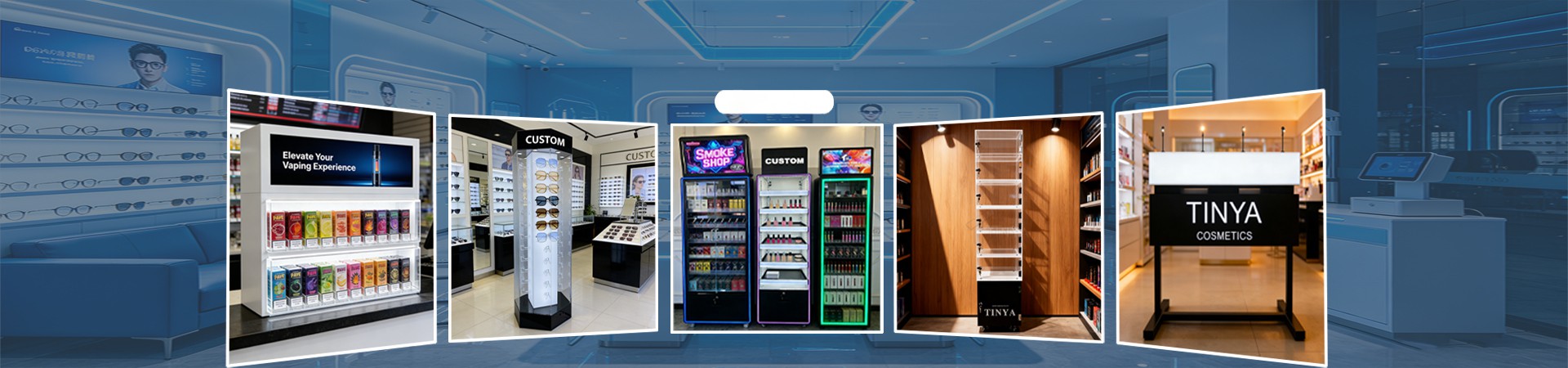
If you have ever grabbed a candy bar at the checkout counter or picked up a travel-size lotion you never planned to buy, you have already experienced the power of a well-designed POP display. Point of purchase displays are one of the most effective - and often underestimated - tools in retail marketing. When done right, a POP display does not just hold products; it tells a story, creates urgency, and drives purchasing decisions at the exact moment shoppers are ready to buy.
This guide covers everything you need to know about the best point of purchase displays: what they are, the different types available, how to evaluate their effectiveness, real-world industry examples, and how to choose the right one for your brand.
If you are planning to customize POP displays for your brand, you may explore tailored acrylic display solutions that match your retail environment and product positioning.
What Is a POP Display?
A POP display, short for point of purchase display, is any type of marketing fixture or structure placed near or at the location where a buying decision is made. Unlike traditional advertising that reaches consumers before they enter a store, a POP display works directly on the sales floor - intercepting shoppers at the precise moment they are evaluating their choices.
Research consistently shows that a significant portion of purchase decisions are made inside the store. According to POPAI (now known as the Path to Purchase Institute), over 76% of buying decisions are made at the point of purchase. This makes the POP display not just a nice visual add-on, but a critical sales tool.
Beyond driving impulse buys, a well-placed point of purchase display serves multiple strategic purposes: reinforcing brand identity, educating consumers about product features, highlighting promotions, and differentiating products in a crowded retail environment.

Types of POP Displays
Understanding the different formats of POP displays helps brands and retailers choose the best fit for their product, space, and audience.
1. Floor Displays
Floor-standing POP displays are among the most prominent and impactful options in any retail setting. Placed in high-traffic areas such as store entrances, end-of-aisle locations (endcaps), or promotional zones, floor displays command attention. They are commonly used for new product launches, seasonal promotions, and multi-unit bundles. A well-executed floor POP display can function almost like a mini store-within-a-store, giving a brand dedicated real estate to showcase its products.
2. Counter and Checkout Displays
Counter displays - also called checkout displays or impulse displays - are positioned at or near the point of payment. This is prime retail territory. Shoppers waiting in line are a captive audience, making them highly susceptible to small, affordable add-on purchases. Brands selling gum, lip balm, batteries, snacks, or accessories thrive with counter POP displays. The key here is compact design and irresistible pricing or messaging.
3. Shelf Displays and Shelf Talkers
Shelf-level POP displays work within the existing retail shelving structure. This includes shelf strips, shelf talkers (small cards or signs attached to the shelf edge), violators (signs that jut out from the shelf), and header cards. These point of purchase materials guide shoppers' eyes to the right product among dozens of competing SKUs. They are lower-cost options but highly effective when designed with clarity and visual contrast.
4. Hanging and Pegboard Displays
These POP displays suspend products from ceiling hooks or pegboard panels, making great use of vertical space. Commonly seen in hardware stores, pharmacies, and convenience stores, hanging displays maximize floor space while keeping products visible and accessible.
5. Digital and Interactive POP Displays
The future of point of purchase marketing is increasingly digital. Digital POP displays use screens - ranging from small tablet-sized units to large-format digital signage - to deliver animated content, video demonstrations, and even interactive product configurators. They are particularly effective in electronics retail, cosmetics, and fashion. The ability to update content remotely without reprinting materials is a significant operational advantage.

What Makes a POP Display Truly Effective?
Not all point of purchase displays are created equal. The best ones share several key characteristics:
Visual Impact. The display must stop shoppers in their tracks. Bold colors, strong contrast, clear imagery, and an uncluttered layout all contribute to visual pull. A crowded or confusing POP display blends into the retail noise rather than cutting through it.
Brand Consistency. Every POP display should feel like a natural extension of the brand. Fonts, colors, tone of voice, and imagery must align with the broader brand identity. Inconsistency erodes trust and dilutes recognition.
Clear Messaging. Shoppers make split-second decisions. The core message - whether it is a price promotion, a new product benefit, or a limited-time offer - must be readable at a glance. Aim for a headline that communicates the value in five words or fewer.
Strategic Placement. Even the most beautifully designed POP display will underperform if it is placed in a low-traffic corner. Eye-level placement (roughly between 4 and 5 feet from the floor) is widely considered prime real estate. This principle, often summarized as "eye level is buy level," is a cornerstone of retail merchandising.
Call to Action. The best point of purchase displays guide the shopper toward a specific next step: "Buy 2, Save $1," "Try It Free," or "Limited Time Only." A clear CTA removes decision friction and nudges shoppers toward the purchase.
Structural Integrity. A wobbly or collapsed display reflects poorly on the brand. The physical construction of a POP display must be sturdy enough to survive high-traffic retail environments throughout its intended campaign period.

Best POP Display Examples by Industry
To understand what separates good from great, it helps to look at how different industries leverage point of purchase displays.
Food and Beverage. Seasonal and promotional POP displays drive enormous volume in this category. Think of a branded floor display stacked with canned beverages near a summer barbecue zone, or a snack brand's endcap display timed to the Super Bowl. The best food and beverage POP displays combine appetite appeal (strong product imagery) with clear value messaging (multipack savings, new flavors).
Beauty and Personal Care. Cosmetics and skincare brands use POP displays not just to sell but to educate. A counter display in a drugstore that includes a testers station, before-and-after imagery, and ingredient callouts does more than hold product - it functions as a mini retail theater. Brands like L'Oréal and Dove have long excelled at creating point of purchase displays that feel premium even in mass retail environments.
Consumer Electronics. In this category, the POP display has to do the heavy lifting of the product demo. Interactive kiosks, touch-screen tablets, and video-playing displays are common. The goal is to reduce purchase anxiety by letting the shopper experience the product before committing.
Confectionery and Snacks. Nowhere is the power of the POP display more evident than in candy and snack aisles, and especially at checkout. The low price point and high impulse nature of these products make counter displays exceptionally effective. Vibrant colors, character mascots, and "grab and go" packaging all contribute to conversion.
Seasonal and Holiday. Retailers dedicate significant floor space to temporary seasonal POP displays during peak shopping seasons - back to school, Halloween, Christmas, Valentine's Day. The best seasonal displays create a sense of discovery and excitement, transforming a routine shopping trip into an experience.

Design Best Practices for POP Displays
Creating a high-performing point of purchase display is part art, part science. These best practices apply across formats and industries:
Keep It Simple. The most common mistake brands make is overloading a POP display with information. Choose one primary message. Everything else should support it, not compete with it.
Use the Right Color Psychology. Red signals urgency and sale pricing. Blue communicates trust and quality. Yellow grabs attention. Understanding how colors influence mood and perception can meaningfully improve the effectiveness of a point of purchase display.
Integrate Digital Elements Where Appropriate. QR codes on POP displays bridge the physical and digital worlds. A shopper scanning a code might access a how-to video, a loyalty program sign-up, or an augmented reality experience. These interactions extend the value of the display well beyond the shelf.
Create Urgency. Limited-time language - "Today Only," "While Supplies Last," "New Arrival" - taps into the psychology of scarcity and loss aversion, two powerful motivators at the point of purchase.
Design for the Retail Environment. A POP display designed for a boutique specialty store will look out of place in a warehouse club. Match the display's aesthetic and scale to the retail channel it will occupy.

Materials and Sustainability
The materials used in a POP display affect both its performance and its environmental footprint.
Corrugated Cardboard is the most commonly used material for temporary and semi-permanent POP displays. It is lightweight, cost-effective, easy to print on, and recyclable - making it a popular choice for brands with environmental commitments.
Acrylic and Plastic are used for more durable, semi-permanent point of purchase displays. They offer a premium look and can be molded into virtually any shape, though they are harder to recycle.
Metal displays (usually steel or aluminum) are the most durable and are often used for permanent POP fixtures in high-end retail environments. They signal quality and longevity but come at a higher upfront cost.
Sustainable Materials are a growing priority. Brands are increasingly turning to FSC-certified paperboard, recycled plastics, and biodegradable substrates for their point of purchase displays - both to reduce environmental impact and to align with the values of eco-conscious consumers.

How to Choose the Right POP Display for Your Brand
Selecting the best point of purchase display involves balancing several practical factors:
Budget. Temporary corrugated displays can cost a fraction of what permanent metal fixtures cost. For a short promotional campaign, a lower-cost POP display often makes more economic sense.
Retail Channel. A display that works in a convenience store will not necessarily succeed in a department store. Factor in ceiling height, floor space, shopper dwell time, and retailer compliance requirements.
Product Type. Heavy products need structurally strong displays. Small, lightweight SKUs work well in pegboard or counter point of purchase displays. Perishable products may require refrigerated display cases.
Campaign Duration. Temporary POP displays (under 6 months) are typically made from corrugated or lighter materials. Semi-permanent and permanent point of purchase displays justify heavier materials and higher investment.
Retailer Requirements. Many major retailers have strict guidelines around display dimensions, weight limits, and setup requirements. Always verify compliance before finalizing a POP display design.

Measuring the ROI of Your POP Display
Investing in a point of purchase display is only worthwhile if you can measure its impact. Key performance indicators to track include:
Sales Lift. Compare unit sales during the POP display period against a baseline period without the display. Many brands report 20–50% sales lifts from well-executed point of purchase campaigns.
Sell-Through Rate. How quickly does the displayed product move? A high sell-through rate signals that the display is working.
Shopper Dwell Time. Are shoppers stopping to engage with the display? Retailers with traffic analytics tools can measure how long shoppers spend in front of a POP display versus standard shelving.
Retailer Feedback. Store managers and merchandising teams often have firsthand insight into which POP displays generate the most shopper engagement and questions.
A/B Testing. Running two different POP display designs in comparable stores allows brands to test variables - headlines, colors, layouts - and identify what drives the most conversion.
The best point of purchase displays combine smart strategy, compelling design, and precise placement to influence shoppers exactly when and where it matters most. Whether you are a CPG brand launching a new product, a startup trying to stand out on a crowded shelf, or a retailer looking to increase basket size, investing in the right POP display can deliver measurable returns.
Start by identifying your goals, understanding your retail environment, and designing a point of purchase display that speaks directly to your target shopper. Keep it simple, make it bold, and give shoppers a clear reason to act.
Because in retail, the display that stops the shopper wins the sale.

If you are looking for a reliable manufacturer to turn your POP display ideas into custom acrylic retail fixtures, feel free to contact us for design and production support.
Looking to design your next POP display campaign? Evaluate your current retail fixtures against the best practices outlined above - and consider where a smarter point of purchase strategy could unlock more revenue on the shelf.