

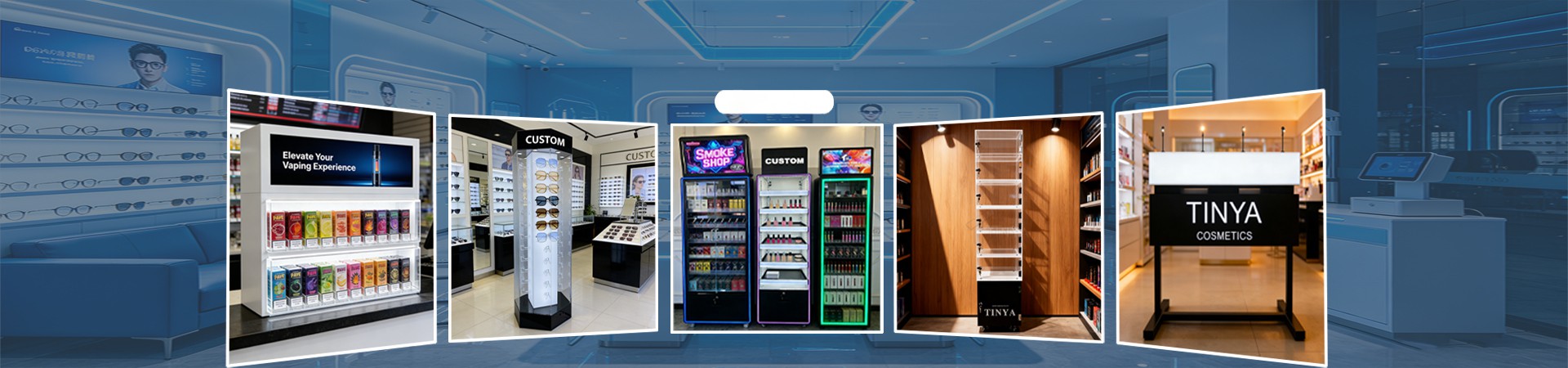
Walk into any modern vape shop and the first thing that grabs your eye is the glow: neat rows of devices, pods and bottles lined up under soft LED strips, each tier of product seeming to hover in its own spotlight. Behind that magic are the acrylic display racks for vapes that owners swear by-clear, crisp, and almost invisible so the merchandise does the talking. Unfortunately, after a year or two many of those once-pristine cases start to look cloudy, even amber, and the effect is no longer premium. Customers notice, sales dip, and the owner is left wondering what went wrong.
Last month I helped a friend refit his brick-and-mortar in Austin. His goal was simple: keep a vaping display that still looked freshly unboxed on day 400. We settled on a floor-standing unit, 1.8 m tall, four adjustable tiers, and a perimeter of 3000 K LEDs recessed into the frame. More importantly, we engineered it so the acrylic would stay clear for the long haul. Below is the exact checklist we used-practical, low-tech, and cost-effective.
1.Start with UV-filtered cast acrylic
Extruded sheet is cheaper, but it contains more residual monomer and plasticizer. Over time these leach to the surface and yellow under shop lighting. Cast acrylic, by contrast, polymerizes more completely and can be ordered with a UV inhibitor built in. We specced 8 mm Optix-L from Plaskolite; its manufacturer guarantees <1 % yellowness shift over ten years under normal indoor conditions.
2.Keep the heat down
LEDs are cool, but not cold. The driver tucked beneath the base can reach 45 °C if ventilation is poor. Every 10 °C rise in temperature roughly doubles the oxidation rate of acrylic. We mounted the driver externally, added a 2 mm aluminum heat spreader, and drilled 5 mm vent holes along the rear kick plate. Touch the surface now and it barely feels warm.
3.Block the blue spike
White LEDs emit a narrow band around 450 nm that accelerates photo-oxidation. A 395 nm UV-cut filter film on the inside of the acrylic panels knocks this down by 30 % without dimming the product. The film is invisible to shoppers; it simply looks like glare-free glass.
4.Clean like a jeweler
Ammonia-based sprays are acrylic's kryptonite. They micro-crack the surface, trapping airborne nicotine and dust that turn yellow-brown. We placed a small sign for staff: "70 % isopropyl + distilled water only." Microfiber cloths are stored in a drawer under the counter. Ten seconds of weekly wiping has kept the panels showroom-new for the past six months.
5.Position away from direct sun
In a street-front space, even filtered daylight through tinted windows carries enough UV to matter. The vaping display sits three meters back from the glass façade, perpendicular to the window line. A ceiling track light supplements the LEDs, so the product still pops without relying on daylight.
6.Rotate stock, rotate stress
Static load can create tiny crazing lines-especially where bottles press against the acrylic lip. Once a week staff slide the entire inventory two centimeters left or right. The movement is small, but it redistributes mechanical stress and prevents the ghost outlines that precede yellowing.
7.Seal the edges
Flame-polishing looks slick, but it leaves residual stress and exposes raw polymer to oxygen. We switched to diamond-polish plus a thin bead of clear polyurethane along the top edges. The seal is invisible, yet it blocks the oxygen that feeds oxidation.
8.Document and compare
Every quarter we photograph a calibration card placed inside the case. A simple smartphone app measures LAB color values; if the b* (yellowness) index creeps past two units, we know it's time to replace a panel-not the entire rack. To date, we're still at 0.4.
The result? Sales of disposables in that section rose 18 % versus the old wooden shelving. Customers say the "glass boxes" make the flavors look cleaner, even when the same juice sat unnoticed before. Because the racks are modular, adding a new row for 30 mL nic-salts takes ten minutes, no tools. The LEDs are dimmable, so for late-night events the owner cranks them to 100 %, then drops to 30 % during the morning lull to cut heat and power.
Total cost for the four-tier vaping display came in at $340-$220 for the UV-grade acrylic, $70 for the LED kit, and $50 for hardware and finishing. Compare that to replacing yellowed extruded panels every year at $120 a sheet, and the math is obvious.
If you're kitting out a new shop or refreshing an old one, insist on cast acrylic with UV inhibitors, ventilate the LEDs, and treat cleaning like a ritual. Do that, and your acrylic display racks for vapes will keep that just-installed sparkle long enough to pay for themselves-several times over.

