


A well-designed custom LED liquor bottle display stand does more than hold bottles. It directs attention toward selected products, strengthens brand recognition and helps premium spirits stand out in a crowded bar or retail environment. The right solution must balance visual impact with bottle stability, lighting performance, daily usability and reliable production for repeat orders.
For buyers, the most important decision is not simply whether the display should include LED lighting. The stand must also match the bottle dimensions, display quantity, installation location, brand campaign and available counter space. A display designed for a single premium whisky bottle will require a different lighting and structural solution from a multi-tier shelf holding several vodka, gin or tequila products.
Before requesting a quotation, buyers should define where the display will be used, how many bottles it must hold, whether the bottles will be removed frequently and what type of visual effect the brand wants to create. These details allow the manufacturer to develop a practical structure rather than merely adding LED strips to a standard acrylic shelf.

What Makes an Effective LED Liquor Bottle Display?
An effective LED liquor display should make the bottles visible without allowing the lighting system to overpower the products. The illuminated base, back panel or shelf edge should guide the viewer's eyes toward the bottle label while keeping the overall presentation clean and consistent with the brand identity.
Bottle stability is equally important. Liquor bottles vary considerably in height, width, shape and weight. A narrow cylindrical bottle, a wide whisky bottle and a tall champagne-style bottle may not fit securely on the same platform without suitable positioning areas, rails or anti-slip components. The manufacturer should therefore evaluate the actual bottle dimensions and weight before confirming the final platform size.
The display must also work during everyday operation. Bar staff and retail employees may need to remove and replace bottles frequently. Cables should be positioned neatly, the control system should be easy to reach, and the surfaces should be accessible for cleaning. A visually impressive display that is difficult to maintain will quickly become inconvenient in a commercial environment.
Choose the Display Structure According to the Application
The most suitable structure depends on the number of bottles, product positioning and installation environment. Some projects need a compact bottle glorifier for one hero product, while others require a multi-tier illuminated shelf for an entire liquor collection.
| Display type | Suitable application | Main design consideration |
|---|---|---|
| Single-bottle LED glorifier | Premium whisky, cognac, vodka or limited-edition launches | Focused lighting, secure bottle position and strong logo visibility |
| Multi-bottle countertop stand | Liquor stores, promotional counters and tasting events | Bottle spacing, platform strength and efficient use of counter space |
| Multi-tier LED bottle shelf | Bars, nightclubs, restaurants and hospitality venues | Clear visibility for rear bottles, even lighting and cable management |
| Wall-mounted illuminated display | Back bars and permanent retail installations | Installation method, weight distribution and access to power |
| Floor-standing liquor display | Retail campaigns and larger promotional areas | Stability, transport, assembly and sufficient branding surfaces |
A single-bottle display is usually designed to create a concentrated visual effect around a flagship product. A multi-tier shelf has a different purpose: it must keep every bottle visible while preventing the front row from blocking products behind it. Tier height and depth should therefore be calculated according to the real bottle dimensions rather than selected from a generic template.
For temporary campaigns or exhibition use, a knock-down structure may make transportation and storage easier. Permanent bar installations can use a more integrated structure, provided the wiring and LED components remain accessible for inspection or replacement.
Material and Structural Design
Clear acrylic is widely used for illuminated liquor displays because it can transmit and diffuse light while maintaining a clean, premium appearance. Black, white, colored or mirrored acrylic can be combined with transparent panels to create different visual effects. Depending on the project, acrylic can also be integrated with metal, MDF or ABS components to improve support, provide a particular finish or accommodate electrical parts.
Material thickness should be selected according to the total weight of the bottles, the width of the platform and the overall structure. A larger display does not automatically require every panel to be excessively thick. The manufacturer should consider support points, internal reinforcement and load distribution so that the design remains stable without becoming unnecessarily heavy or expensive.
Edges, corners and joints also influence the perceived quality of the finished display. Smooth polished edges, accurate panel alignment and clean bonding or assembly help the unit look refined under LED illumination. Lighting often makes imperfections more visible, so production accuracy is especially important for clear acrylic displays.
If bottles will be handled regularly, the design may include shallow positioning recesses, raised edges or anti-slip components. These details should secure the products without covering the bottle label or making removal inconvenient.

Select the Right LED Lighting Effect
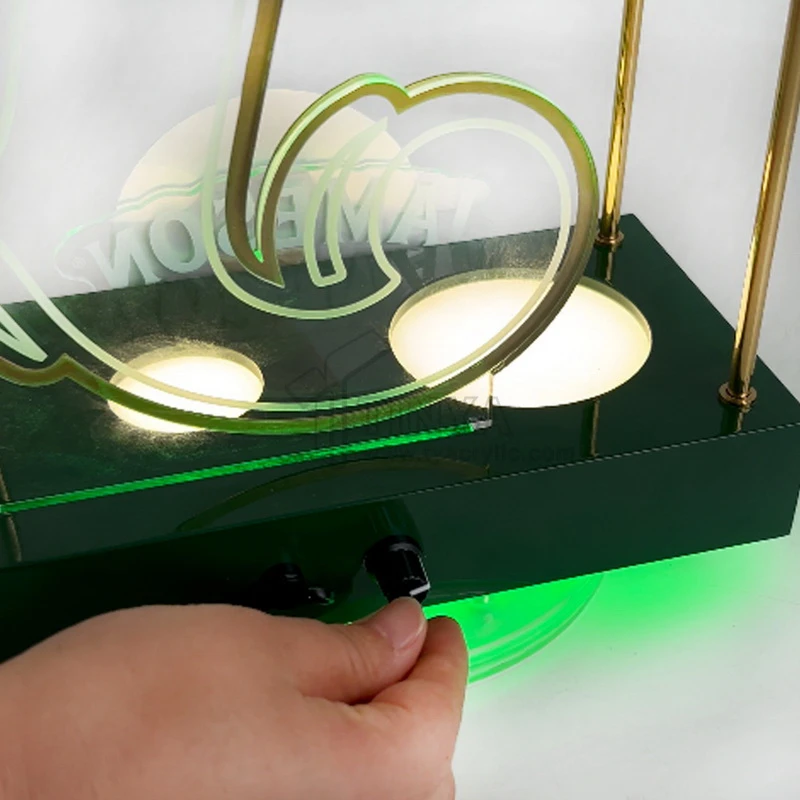
The lighting method should be selected according to what the display needs to emphasize. Edge lighting can highlight acrylic outlines and engraved graphics, while illumination from beneath the bottle can create a stronger glowing effect around the base. A backlit logo panel may be more suitable when brand visibility is the primary objective.
Fixed white light provides a clean and controlled presentation that works well for premium retail environments. Warm white lighting can create a softer hospitality atmosphere, while RGB lighting allows the display to change color for nightclubs, events and promotional campaigns. Color-changing effects should still be used carefully because rapid or overly bright lighting can distract attention from the bottles.
Buyers should specify the required light color, brightness, control method, cable position, plug type and operating voltage during the design stage. If a remote controller, dimmer or programmable lighting sequence is needed, it should be confirmed before prototyping.
Serviceability is another important consideration. LED components and power connections should not be permanently enclosed in a way that makes maintenance impossible. A removable panel or accessible component area can simplify inspection and replacement during long-term commercial use.
Electrical requirements and any necessary test documents should be confirmed according to the destination market and final product configuration. They should not be assumed based only on the appearance of a sample.
Turn the Display Into a Branded Retail Feature
A custom LED liquor bottle display stand should communicate the brand before customers begin reading the bottle label. Logo placement, brand color, promotional artwork and lighting should work together as one visual system.
Acrylic panels can support several branding processes, including UV printing, silk-screen printing, pad printing, hot stamping and applied acrylic lettering. Laser engraving can also be combined with edge lighting to create an illuminated logo or pattern. The best process depends on the artwork, color requirements, order quantity and desired visual effect.
Large back panels offer space for campaign graphics and brand stories, while the front edge of a bottle platform is often suitable for a concise logo or product name. Side panels can carry supporting visual elements without competing with the bottle itself.
For seasonal promotions, it may be useful to design replaceable printed panels or interchangeable brand inserts. This allows the main display structure to remain in use while promotional graphics change between campaigns.
Information to Prepare Before Requesting a Quote
A clear project brief helps the manufacturer evaluate the structure and prepare a more accurate proposal. Buyers should ideally provide the bottle dimensions and weight, required bottle quantity, available installation space, reference images, logo artwork and preferred lighting effect.
The operating environment also matters. A display used behind a bar may face frequent cleaning and continuous illumination, while a promotional unit in a liquor store may need to be packed and moved between locations. These conditions can influence material selection, assembly method, cable routing and packaging.
If the final concept has not yet been completed, a reference photo or simple hand drawing can still provide a useful starting point. TINYA can provide 2D and 3D design support so that the dimensions, structure, branding position and lighting layout can be reviewed before a physical sample is produced.
How the Customization Process Works
The project normally begins with an evaluation of the bottles, display location and branding requirements. After the structure has been discussed, the manufacturer prepares a drawing or visual proposal showing the overall dimensions, bottle arrangement, material combination, logo position and LED configuration.
A physical sample is especially valuable for an illuminated display because photographs and renderings cannot fully demonstrate brightness, light diffusion, surface finish or bottle stability. The sample allows the buyer to inspect the display with the actual liquor bottle and request adjustments before bulk production.
After sample approval, production should follow the confirmed drawings and approved appearance. Materials, printed graphics, lighting components and assembly details must remain consistent across the order. Finished units should be checked for dimensions, stability, surface condition, logo accuracy, lighting performance and correct accessory inclusion before packing.
Lead time, MOQ and sample arrangements depend on the structure, materials, lighting components, order quantity and level of customization. These details should be confirmed for each project rather than treated as fixed specifications.
What Determines the Cost of an LED Liquor Display?
The cost of a custom display depends on more than its outer dimensions. Material thickness, number of tiers, bottle capacity, lighting method, electronic components, printing process and assembly complexity all affect the quotation.
A simple illuminated acrylic base with a printed logo will generally require fewer manufacturing steps than a multi-tier display with RGB lighting, mixed materials, engraved graphics and a custom control system. Packaging can also influence the total project cost, particularly when a fully assembled display requires a larger carton and more protective material.
Order quantity is another important factor because printing setup, component preparation and production fixtures are distributed across the production run. Buyers comparing quotations should confirm that suppliers are pricing the same structure, material specification, lighting configuration, packaging method and accessories. A lower quotation may not represent the same finished product.

Quality Checks for Bulk Production
For a custom LED display, quality control should cover both the physical structure and the lighting system. The stand should remain stable when loaded with the intended bottles, and every platform should match the approved dimensions. Acrylic surfaces should be free from obvious scratches, edges should be properly finished and the printed logo should match the confirmed artwork.
The lighting should be checked for color consistency, brightness and uniformity. Cables, controllers, adapters and switches should be included according to the approved specification. The completed unit should also be tested after assembly because a lighting component that works independently may still encounter problems if cables are compressed or connections are placed incorrectly inside the final structure.
Batch consistency matters for retail rollouts. Displays installed across different stores should present the same brand color, logo position and lighting effect. An approved sample, confirmed drawing and clear inspection standard provide the reference for bulk production.
Packaging for International Transportation
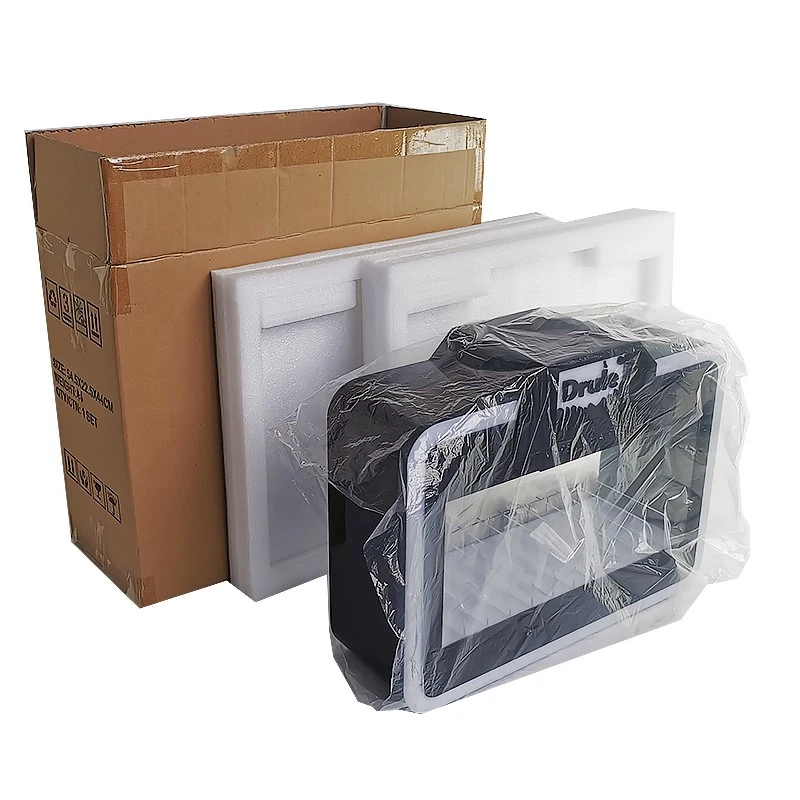
Clear acrylic surfaces can be scratched during transportation if they are not individually protected. Depending on the structure, the display may require protective film, bags, foam or other cushioning materials before being placed in the inner and outer cartons.
Fragile corners, raised logo elements and exposed electrical components require additional attention. Accessories should be packed securely and identified so that nothing is lost during installation. If the display is supplied in a knock-down structure, the package should include the required hardware and clear assembly guidance.
The packaging solution should be developed around the final display structure and shipping method. TINYA can provide project-based export packaging and discuss global shipping options under terms such as EXW, FOB, CIF, DAP or DDP, subject to the actual destination and order requirements.
Working With a Custom Display Manufacturer
Shenzhen Tinya Acrylic Display Co., Ltd. has manufactured custom acrylic and retail display products since 2005. We support OEM and ODM projects for brands, retailers, importers, distributors and display solution companies.
A custom liquor display project can include acrylic, metal, MDF or ABS components, as well as customized dimensions, structures, colors, logos and LED effects. Our team can provide 2D and 3D design support, sample development, manufacturing, quality inspection and export packaging according to the confirmed project specification.
To receive a factory quotation, send us your bottle dimensions, display quantity, required bottle capacity, logo file, lighting preference and reference image. We can then evaluate the structure and recommend a suitable custom display solution.
Frequently Asked Questions
Can the display be designed around our actual liquor bottle?
Yes. The platform size, bottle spacing, positioning areas and overall height can be developed according to the actual bottle dimensions and weight. Providing a physical bottle or detailed measurements helps improve design accuracy.
Can we customize the LED color and lighting mode?
Yes. Fixed-color and RGB lighting options can be discussed according to the project. The required brightness, controller, dimming function, plug type, voltage and cable position should be confirmed before sample production.
Can our logo and campaign graphics be added?
Yes. Available processes include UV printing, silk-screen printing, pad printing, hot stamping, laser work and applied acrylic lettering. The suitable method depends on the artwork and desired finish.
Do you provide a sample before bulk production?
Sample development is available for custom projects. The sample is used to confirm the dimensions, appearance, bottle fit, logo, lighting effect and assembly before mass production.
What is the MOQ for a custom LED liquor bottle display stand?
MOQ depends on the structure, materials, LED components, branding process and production requirements. Send the project details and required quantity for an accurate assessment.
Can the display be shipped fully assembled?
Both assembled and knock-down structures can be considered. The best option depends on the design, installation requirements, carton size and transportation cost.
What information is required for a quotation?
Please provide the bottle dimensions and weight, number of bottles per display, overall size limitations, order quantity, logo artwork, preferred lighting effect, destination country and reference images or drawings.
Start Your Custom LED Liquor Display Project
A successful LED liquor display should fit the bottles securely, present the brand clearly and remain practical during everyday commercial use. Structural design, lighting, branding, quality control and packaging should therefore be planned together from the beginning.
Send us your bottle dimensions, logo, quantity and reference image to request a custom display proposal and factory quotation.