

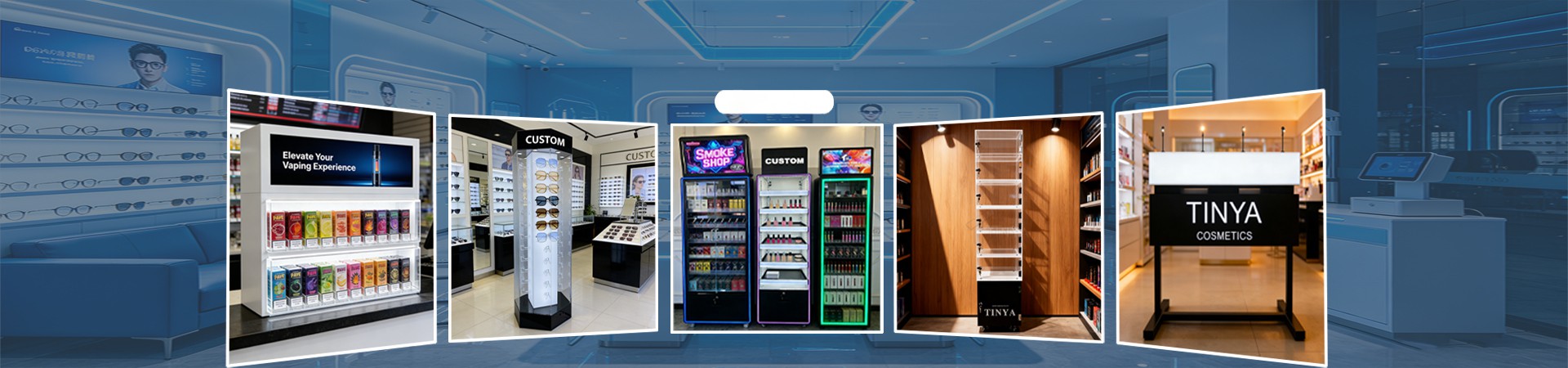

If you sell phone cases, chargers, cables, earbuds, or any other mobile gadgets, the way you present those products on your shelves matters just as much as the products themselves. A well-built cell phone accessory display does more than hold merchandise upright. It guides shoppers through your inventory, protects small items from theft, and quietly signals that your store or brand is worth trusting. Choosing the wrong supplier for this kind of fixture can mean warped acrylic, mismatched branding, or shipments that never arrive on time. Choosing the right one can mean a display that lasts for years and keeps paying for itself in higher sell-through rates.
This guide walks you through what actually separates a dependable cell phone accessory display manufacturer from a risky one, so you can order with confidence whether you need fifty units for a single retail terminal or several thousand for a nationwide rollout.
Why the Right Manufacturer Matters More Than You Think
Retail buyers, procurement teams, and store owners often treat display fixtures as an afterthought, something to sort out after the products themselves are locked in. In reality, the fixture is part of the product experience. A flimsy cell phone accessory display that yellows after a few months under store lighting, wobbles when customers reach for a charger, or arrives with crooked joints reflects poorly on the brand it's meant to promote. On the other hand, a precisely cut, well-assembled display reinforces the idea that the accessories sitting on it are premium, current, and worth the price tag.


Because these fixtures are usually ordered in bulk and shipped internationally, mistakes are expensive to fix. A batch of a thousand units with the wrong slot spacing or a color that doesn't match your brand guide cannot simply be returned to a local shop. That is why so much of the buying decision should happen before you place an order, not after.

Key Factors to Evaluate Before You Order
1. Manufacturing Experience and Specialization
Not every acrylic fabricator understands the specific demands of a cell phone accessory display. Phone accessories are small, varied in shape, and often need to be secured against theft while still remaining easy for shoppers to pick up and inspect. A manufacturer with years of focused experience in retail display fixtures, rather than general acrylic fabrication, will already understand slot tolerances, weight distribution, and the kind of finishing that holds up under daily handling. Ask how long the company has specialized in retail and point-of-sale fixtures, and ask to see examples of similar display projects they have completed for other clients.


2. Certifications and Quality Systems
Reliable manufacturers back up their claims with third-party verification. Look for certifications such as ISO9001 for quality management, SGS testing reports, ROHS compliance for restricted substances, and Sedex membership for social and ethical auditing. These certifications aren't just paperwork. They indicate that a factory has processes in place to catch defects, protect workers, and meet the import requirements of markets in the United States, Europe, Australia, and the Middle East. If a supplier cannot produce documentation for these standards, treat that as a warning sign rather than a minor gap.

3. Factory Audits and Client History
A factory that has passed audits from recognized international brands has already been vetted against strict operational and ethical standards. This kind of third-party scrutiny is far more convincing than a supplier's own marketing claims. When you're comparing manufacturers, ask directly whether the factory has undergone any brand audits, and ask for references from past clients who ordered similar volumes to yours.

4. Customization and Design Support
Off-the-shelf fixtures rarely fit a brand's exact needs. A manufacturer worth working with should offer in-house design and engineering support, meaning you can send rough dimensions or even a simple sketch and receive a workable technical drawing in return. This matters especially for phone accessory displays, since accessory categories differ so widely: cable organizers need different slot depths than earbud cases, and phone stands need different footprints than charger displays. Free design consultation, sample development, and the ability to produce custom molds for larger orders are all signs of a manufacturer set up to handle real B2B requirements rather than a one-size-fits-all catalog seller.
5. Material Quality and Craftsmanship
Acrylic quality varies enormously between suppliers. Cheaper material scratches easily, yellows under UV exposure, and can crack during shipping. A dependable manufacturer works with higher-grade acrylic sheeting and uses precision cutting, polished edges, and secure bonding methods rather than rough glue joints. When evaluating a cell phone accessory display supplier, ask for physical samples before committing to a bulk order. The way a sample feels in your hand, how clean the edges are, and how well the joints hold together under light pressure will tell you more than any spec sheet.
6. Communication and Order Transparency
International buyers deal with time zone gaps, language differences, and long shipping windows, so clear communication becomes essential. A trustworthy supplier responds to inquiries promptly, gives realistic production timelines instead of vague promises, and is upfront about minimum order quantities, sample fees, and payment terms such as T/T, PayPal, or Western Union. If a manufacturer is cagey about lead times or dodges questions about production capacity, that hesitation usually points to problems that will surface later in the order.

Questions to Ask Before You Commit
Before signing off on a bulk order for any cell phone accessory display, it helps to have a short list of questions ready:
How many years has the company been manufacturing retail display fixtures, and does it specialize in acrylic construction?
Can the factory provide ISO9001, SGS, ROHS, or Sedex documentation on request?
Has the factory passed audits from recognized international brands?
Is there an in-house design team that can turn rough ideas into finished technical drawings?
What is the minimum order quantity, and are sample fees refundable once a bulk order is placed?
What payment methods are supported, and what does the production and shipping timeline typically look like?
A supplier that answers these questions clearly and without hesitation is far more likely to deliver a smooth ordering experience than one that gives vague or evasive responses.
Red Flags to Watch For
Certain warning signs tend to predict trouble down the line. Be cautious of manufacturers that refuse to share certification documents, cannot provide any client references or audit history, quote unusually short production times that seem too good to be true, or push mass injection-molded designs when you've specifically asked for a custom acrylic display. Handmade, precision-built fixtures require more time and skill than machine-molded plastic, so a supplier promising both rock-bottom turnaround and premium craftsmanship is often overstating one or the other.
What Sets a Trustworthy Manufacturer Apart
|
Factor |
Reliable Manufacturer |
Risky Supplier |
|
Industry Experience |
Over two decades focused on retail display fixtures |
Limited or unclear history in display manufacturing |
|
Certifications |
ISO9001, SGS, ROHS, Sedex documentation available on request |
No certifications or refuses to share documentation |
|
Brand Audits |
Has passed audits from recognized international brands |
No verifiable audit history |
|
Design Support |
In-house design and engineering team, free consultation |
No design support, buyer must supply finished files |
|
Material Quality |
Precision-cut, higher-grade acrylic with polished edges |
Inconsistent material, visible tool marks or rough joints |
|
Order Flexibility |
Sample fees refundable on bulk orders, custom molds for large volumes |
Rigid minimums, no sample option |
|
Communication |
Prompt responses, transparent timelines and payment |
Slow replies, vague or shifting timelines |
Why Buyers Choose Tinya for Cell Phone Accessory Display Projects
Shenzhen Tinya Acrylic Display Co., Ltd. has specialized in acrylic display fixtures since 2005, giving the team more than two decades of hands-on experience producing retail and point-of-sale displays, including a wide range of cell phone accessory display solutions for phone shops, kiosks, and electronics retailers around the world. The factory has passed a Victoria's Secret audit and holds SGS, ISO9001, ROHS, and Sedex certifications, giving overseas buyers documented proof of quality and ethical manufacturing standards before they ever place an order.
Every cell phone accessory display produced at Tinya is handmade and custom-built rather than mass injection-molded, with an in-house design and engineering team offering free consultation for buyers who need help translating an idea into a finished product. Custom mold tooling is available for orders of sufficient volume, and sample fees are refundable once a bulk order is confirmed, reducing the risk for buyers testing a new design. Tinya supports OEM and ODM projects, meaning brands can develop a display that carries their own look and specifications rather than a generic template.
For international transactions, Tinya accepts T/T, PayPal, and Western Union, and the team communicates directly with overseas buyers throughout design, sampling, and production to keep timelines clear from the first inquiry through final shipment.

A Note on Shipping and Lead Times
Even the best-built fixture is only useful if it arrives when you need it. International orders typically involve production time, quality inspection, and freight, so buyers should build in extra weeks beyond the manufacturer's quoted production window, especially during peak shipping seasons. Ask suppliers whether they handle export documentation directly or expect you to coordinate with a freight forwarder, and confirm packaging methods for acrylic pieces, since inadequate padding is one of the most common causes of transit damage. A manufacturer that proactively explains its packing process, rather than waiting to be asked, is usually one that has shipped enough international orders to know where things tend to go wrong.
Planning ahead also gives you room to request and review a pre-shipment sample or photos of the finished batch before it leaves the factory. This extra checkpoint costs little in time but can catch color mismatches, missing hardware, or assembly issues long before a container is on the water, saving both money and the headache of dealing with a bad batch after it lands at your warehouse.

Frequently Asked Questions
What is a cell phone accessory display used for?
A cell phone accessory display is a retail fixture designed to organize and showcase small mobile products such as cases, chargers, cables, earbuds, and screen protectors. It keeps items visible and accessible to shoppers while protecting smaller pieces from being misplaced or damaged on an open shelf.
How long does it take to manufacture a custom cell phone accessory display?
Production timelines depend on order volume, design complexity, and whether custom molds are needed. Buyers should ask suppliers for a specific timeline based on their exact requirements rather than relying on general estimates, since rushed quotes can be a sign of corners being cut.
Can I order a custom phone accessory display with my own branding?
Yes. Manufacturers with in-house design and engineering support, like Tinya, can incorporate logos, brand colors, and custom dimensions into the fixture. OEM and ODM services allow buyers to develop a display that is unique to their brand rather than a generic catalog item.
Is acrylic a durable material for retail displays?
High-grade acrylic is scratch-resistant, holds its clarity over time, and withstands regular handling far better than lower-grade plastic. The durability depends heavily on the quality of material and craftsmanship, which is why sourcing from an experienced, certified manufacturer matters.
What is the minimum order quantity for a custom display?
Minimum order quantities vary by manufacturer and by the complexity of the design. Buyers planning a large rollout should discuss volume requirements early, since custom mold tooling is typically only available once an order reaches a sufficient size.
How do I verify a manufacturer's quality claims before ordering?
Request certification documents such as ISO9001, SGS, and ROHS, ask about any factory audits from recognized brands, and request physical samples before committing to a bulk order. A manufacturer confident in its quality will not hesitate to provide this information.
Get in Touch
Sourcing the right cell phone accessory display manufacturer takes a bit of upfront research, but it pays off in fewer surprises, better-looking fixtures, and a smoother relationship with your supplier over time. If you're evaluating options for an upcoming order, Tinya's team is available to discuss design, certifications, samples, and timelines.
WhatsApp: +8619926558676
Email: seo@tinya168.com