

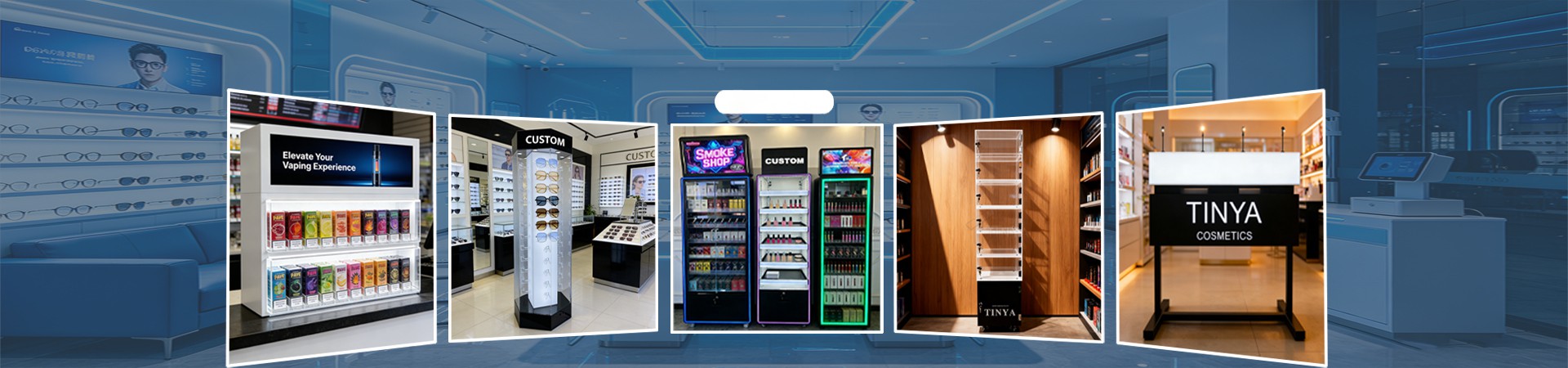

Nicotine pouch packaging is compact, but displaying multiple flavors and strengths in a limited retail space can quickly become difficult. Cans may be pushed toward the back of a shelf, different SKUs can become mixed, and branded packaging can lose visibility when the display is partially empty.
A nicotine pouch display dispenser solves this by giving each product a defined position while keeping cans accessible and easy to restock.
For brands, distributors and retail programs, the right display should be designed around more than appearance. Can dimensions, SKU count, store placement, refill method and required capacity all affect the final structure.
That is why most successful nicotine pouch displays are developed around the actual product rather than an off-the-shelf acrylic holder.
What Is a Nicotine Pouch Display Dispenser?
A nicotine pouch display dispenser is a retail fixture designed to organize and present round pouch cans while helping products remain positioned near the front of the display.
The unit may sit on a checkout counter, retail shelf or behind a service counter. Depending on the project, it can use spring-loaded pushers, gravity-feed channels or fixed acrylic compartments.
A basic acrylic tray may be enough when only a few cans are displayed. For larger product ranges, however, separate channels usually make the display easier to manage.
For example, one channel may hold mint, another citrus and another a different nicotine strength. The display graphics can then identify each SKU without relying on loose shelf labels.
For larger retail rollouts, this also creates a more consistent presentation between stores.

Pusher Display or Gravity-Feed Dispenser?
Two structures are commonly used for a custom nicotine pouch dispenser: a spring-loaded pusher system and a gravity-feed system.
A nicotine pouch display with pushers places a spring mechanism behind each row of cans. When the front can is removed, the remaining products are pushed forward.
This structure works well when brands want clearly separated channels and a consistent front-facing position. It is especially useful for countertop displays carrying several flavors or product strengths.
A gravity feed nicotine pouch display uses an angled channel instead of a spring. After the front product is removed, the cans behind it move forward through gravity.
The structure is mechanically simpler, but the channel angle and surface need to be tested with the actual product. Different can shapes, lid profiles and packaging surfaces can affect how smoothly they move.
| Display Structure | Common Application | Main Design Consideration |
|---|---|---|
| Spring pusher | Countertop and shelf displays | Pusher tension and channel width |
| Gravity feed | Shelf and deeper dispenser layouts | Channel angle and product friction |
| Fixed acrylic channels | Smaller displays | Easy access and SKU separation |
| Multi-tier dispenser | High-SKU countertop programs | Visibility between tiers |
There is no single structure that works for every nicotine pouch brand. The design should be selected according to the product and retail environment.
Designing a Countertop Nicotine Pouch Display
Counter space is valuable, particularly in convenience stores and specialty retail locations. A countertop nicotine pouch display therefore needs to balance product capacity with footprint.
Making the unit wider allows more SKUs to be displayed side by side, while increasing the depth allows more cans to be stored in each channel. Adding tiers can increase total capacity without using as much counter width.
However, simply adding more levels is not always the best solution.
The back rows still need to remain visible, staff need enough room to refill each channel, and customers or store employees must be able to remove the front product without interference from the shelf above.
For this reason, the overall display dimensions should normally be developed after confirming three things: how many SKUs will be displayed, how many cans should fit in each channel, and how much counter or shelf space is available.
This produces a more practical layout than selecting a display size first and trying to fit the products into it later.
Can Size Matters More Than It Looks
Round nicotine pouch cans may look similar in photographs, but a custom display should not be designed around the assumption that every brand uses exactly the same packaging.
Diameter, can height, lid shape and outer edge details can vary. Even small differences can affect how a product fits inside a channel.
This becomes particularly important with pusher and gravity-feed systems.
If the channel is too narrow, cans can rub against the side walls or fail to move smoothly. If it is too wide, they may rotate or become misaligned.
The safest approach is to provide the manufacturer with an accurate product drawing or a physical sample before the final structure is approved.
When multiple pouch brands will be displayed in the same fixture, each can size should be checked rather than assuming one channel specification will fit every product.

Acrylic Works Well for Branded Pouch Displays
Acrylic is widely used for countertop retail fixtures because it can be cut, bent, polished, printed and combined with other display components.
Clear acrylic keeps the pouch packaging visible, while colored acrylic can be matched more closely to a brand's retail identity. Black, white or custom-colored panels can also be combined with transparent product areas.
Brand graphics can be applied through UV printing, screen printing or other logo processes depending on the design.
A typical custom display may include a branded header, printed side panels and product labels along the front of each channel. LED lighting can also be integrated when the project calls for a more prominent illuminated presentation.
For larger or heavier fixtures, acrylic does not have to be the only material. Metal components, PVC panels or other materials can be incorporated when additional structural support is required.
The goal should be to choose the material around the display function instead of forcing the entire fixture to use one material.
Plan the Display Around SKU Management
The number of product channels is one of the most important decisions when developing a nicotine pouch retail display.
A brand launching four flavors does not need the same structure as a distributor managing twelve or twenty SKUs.
Each flavor or strength should have a clearly assigned location whenever possible. This makes the assortment easier to identify and reduces the risk of different products being mixed during restocking.
Printed flavor names, color coding or replaceable product labels can also be built into the display.
For retail programs where product ranges change frequently, replaceable graphics may be more practical than permanently printing every SKU name onto the acrylic.
This is worth discussing before production because the best branding method depends on how long the display will be used and how frequently the product assortment changes.

Prototype Before Bulk Production
A rendering can confirm the appearance of a display, but it cannot fully test how a pouch can moves through a dispenser.
For displays using pushers or gravity-feed channels, a physical prototype is particularly valuable.
The sample allows the manufacturer and buyer to check product fit, channel clearance, pusher movement, loading access, stability and graphic placement before moving into volume production.
If anything needs adjustment, it is much easier to change the channel width or structural dimensions during the sampling stage than after hundreds of units have been manufactured.
For branded retail programs, the prototype can also be used internally for approval before the final purchase order is released.
What to Send When Requesting a Custom Display Quote
The more complete the project information is, the easier it is to develop an accurate display concept and quotation.
| Information | What to Provide |
|---|---|
| Pouch can size | Diameter, height and product photos |
| SKU quantity | Number of flavors or strengths |
| Display capacity | Desired cans per SKU or total capacity |
| Retail location | Countertop, shelf, wall or other placement |
| Available space | Maximum width, depth and height |
| Branding | Logo, colors and artwork if available |
| Display style | Pusher, gravity feed or reference image |
| Order quantity | Sample requirement and estimated bulk quantity |
If you do not have a finished drawing, a reference photo and basic product dimensions are usually enough to begin discussing the structure.
The final dimensions can then be developed around the actual pouch cans and required capacity.
Custom Nicotine Pouch Display Manufacturing
At Tinya Acrylic, custom retail displays can be developed around your pouch packaging, SKU layout and branding requirements.
Projects can include clear or colored acrylic structures, multi-tier countertop layouts, spring pushers, gravity-feed channels, custom printed graphics, LED elements and mixed-material construction.
The process normally starts with your product dimensions, desired capacity, reference design and estimated order quantity. A display concept can then be adjusted before prototyping and bulk production.
For brands and distributors planning a larger retail rollout, the same approved structure can be standardized for repeat production.
Need a custom nicotine pouch display dispenser?
Send us your pouch can dimensions, number of SKUs, required capacity, logo and estimated quantity. We can develop a display layout based on your products and retail space and provide a quotation for sampling and bulk production.

Frequently Asked Questions
Can you customize a nicotine pouch display for different can sizes?
Yes. Channel width, depth, tier spacing and overall dimensions can be adjusted according to the actual pouch can dimensions. For the best fit, provide an accurate drawing or physical sample before final production.
Can a display hold several flavors or nicotine strengths?
Yes. Multi-channel displays can separate individual SKUs so different flavors or strengths have their own positions. The number of channels can be designed around your product range.
Is a pusher system better than a gravity-feed system?
It depends on the product and retail setup. Pushers provide controlled forward movement, while gravity-feed structures use angled channels and fewer moving components. The actual pouch can should be tested before deciding which system is more suitable.
Can our logo and brand colors be added to the display?
Yes. Custom branding can include UV printing, screen printing, colored acrylic, printed headers, side graphics and other treatments depending on the approved design.
Can we make a sample before placing a bulk order?
Yes. Prototyping is recommended for custom dispenser projects, especially when the design includes pushers, gravity-feed channels or new product dimensions. The sample can be checked before the bulk production specifications are finalized.