

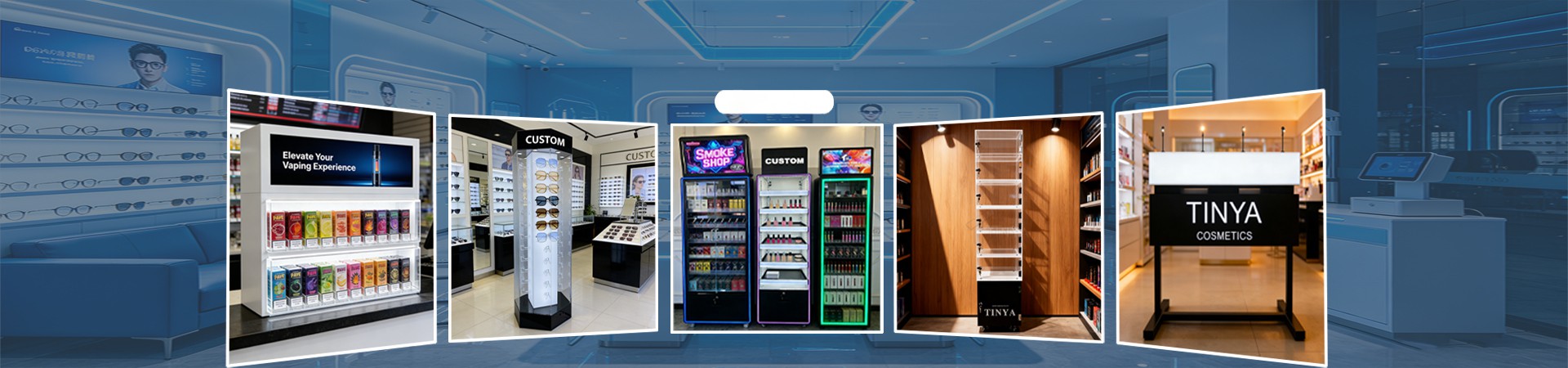

And How I Finally Found a Reliable Vape Display Supplier
As a purchasing manager for a company specializing in vape pods and vape kits, my job goes far beyond sourcing the core vaping products themselves. In current highly competitive retail environment, vape display systems have become just as important as the products they showcase. A well-designed vape display not only organizes products but also attracts attention, communicates brand value, and directly influences consumer purchasing decisions.


Over the past year, our demand for lighted vape display stands has increased dramatically. Most of our displays are equipped with LED lighting, adapters, and switches to enhance visibility in retail stores. Unfortunately, this rapid expansion also exposed a serious problem that nearly derailed our retail rollout strategy: display lighting failures.


In this article, I want to share my real experience dealing with defective vape displays, explain the root causes behind lighting failures, and show how I eventually found a professional supplier-Shenzhen Tinya Acrylic Display Co., Ltd-that helped me understand and solve these problems at a technical level. I also hope my experience can help other buyers avoid the same costly mistakes.
The Growing Importance of Vape Display Quality in Retail
For vape brands today, product quality alone is no longer enough. When customers walk into a store, they are immediately influenced by visual presentation. A premium vape display with clean acrylic structure, bright LED lighting, and intuitive layout can dramatically improve brand perception.


Retailers repeatedly tell us that illuminated vape displays:
* Increase product visibility in low-light environments
* Encourage impulse purchases
* Elevate perceived product value
* Help differentiate brands in crowded vape stores
Because of this, we invested heavily in custom acrylic vape displays with integrated lighting systems. At least, that was the plan-until problems started appearing.
When Vape Displays Start Failing: A Costly Lesson
About one month after deploying a large batch of new lighted vape displays, complaints began coming in from multiple retail stores.
The issues were consistent and alarming:
The LED lights stopped working
The switches could no longer control the lights
Some displays worked initially but failed after a few weeks
At first, we assumed these were isolated incidents. But as the number of complaints grew, it became clear that we were dealing with a systemic quality issue. Stores were frustrated. Our sales team was under pressure. And worst of all, our brand image was being negatively affected by faulty vape displays.

Replacing displays across dozens of stores is expensive-not just in product cost, but also in logistics, labor, and lost retailer trust.
That's when I made a difficult decision: stop working with our existing supplier and start searching for a truly professional vape display manufacturer.
Restarting the Supplier Search from Zero
This time, I approached supplier selection differently. Instead of focusing primarily on price and appearance, I wanted a manufacturer who truly understood the technical aspects of lighted vape displays.
After contacting several factories, I connected with Shenzhen Tinya Acrylic Display Co., Ltd, a professional acrylic display manufacturer based in Shenzhen. From our first conversation, their approach felt different.
I shared my previous failure experience with them in detail and sent:
* Photos of non-functioning vape displays
* Videos showing lights not turning on
* Information about adapters and switches used

Rather than giving vague reassurances, their engineering team carefully analyzed the problem and came back with four very specific root causes.
Root Cause #1: Insufficient Adapter Amperage
The first issue they identified was surprisingly common: the adapter's amperage (A) was insufficient.
Many buyers focus only on voltage (for example, 12V) when sourcing adapters for vape displays. However, LED systems-especially those running continuously in retail environments-require sufficient current to operate reliably.

If the adapter does not provide enough amperage:
* The lights may turn on initially
* Brightness may be unstable
* Over time, the LEDs fail completely
This alone explained why many of our vape displays worked at first but stopped lighting after weeks of use.
Root Cause #2: Fake or False Adapter Ratings
The second issue was even more concerning.
Shenzhen Tinya pointed out that the amperage printed on an adapter is not always real-especially when the adapter is not certified.
For example, an adapter labeled as 12V 5A may actually only deliver:
4A
3.5A
Or even less under continuous load

This happens frequently when adapters lack certifications such as UL or ETL. Without certification, manufacturers may falsely label electrical parameters to reduce costs.

As a result, the vape display appears compliant on paper but fails in real-world use.
The Real Cost of Certified Adapters
Shenzhen Tinya recommended replacing all adapters with UL-certified adapters with true rated amperage.
Yes, these adapters cost more-approximately USD 1.5 to USD 2.85 more per unit compared to generic adapters. However, the benefits are undeniable:
* Stable current output
* Improved safety
* Significantly reduced lighting failures
* Lower long-term replacement and complaint costs

From a buyer's perspective, this small increase in upfront cost is negligible compared to the expense of replacing faulty vape displays across retail networks.
Root Cause #3: Loose Internal Wiring
The third potential cause involved internal wiring connections.
In some cases, even with a correct adapter, the LED lights may still fail due to loose connections inside the acrylic structure. This can occur during:
* Transportation vibration
* Inadequate soldering
* Poor internal cable fixing

Because most acrylic vape displays are fully glued and sealed, internal wiring issues are extremely difficult to repair once the display is finished.
Root Cause #4: LED Damage During Installation
The fourth issue was particularly insightful.
During LED installation, improper use of glue can cause chemical corrosion of the LED components. Initially, the lights may work fine. However, over time:
* Glue corrodes the LED terminals
* Positive and negative wires touch
* A short circuit occurs
* The LED burns out


Once this happens, the vape display can no longer be repaired unless it was designed with maintenance access-which most are not.
Why Most Lighted Vape Displays Are Not Repairable
One important reality buyers must understand is this:
Most acrylic vape displays are fully bonded and have no maintenance access points.
When lighting issues occur due to internal wiring or LED damage, the options are limited:
* Use the display without lighting
* Replace the entire display for the store
This is why preventing problems before shipment is far more important than trying to fix them afterward.
The Most Important Solution: Aging Tests Before Shipment
Based on all these issues, Shenzhen Tinya strongly recommended one critical quality-control measure:
LED Aging Tests Before Packing
Their advice was clear:
* Randomly select a certain percentage of vape displays
* Turn on the LED lights continuously for 8–12 hours
* Monitor brightness, heat, and stability

This aging test allows factories to detect:
* Insufficient adapters
* False amperage ratings
* Wiring problems
* Early LED failures

By addressing these issues before shipment, the probability of lighting problems in stores can be dramatically reduced.

Why I Chose to Work with Shenzhen Tinya Acrylic Display
What ultimately convinced me to stop working with my previous supplier and move forward with Shenzhen Tinya was not just their product quality-but their professional mindset.
They didn't simply say, "We can do better."
They explained why problems happen, how to prevent them, and what trade-offs exist.


For me as a buyer, that level of transparency is invaluable.
I decided to start with a trial order to test real market feedback. If performance meets expectations, I plan to establish a long-term partnership and continue updating our experience and evaluations of their vape displays.

Practical Advice for Buyers Sourcing Vape Displays
Based on my experience, here are actionable tips for other buyers:
1, Never judge a vape display supplier by price alone
2, Always ask what adapter certifications are used
3, Confirm real amperage, not just printed values
4, Request UL or ETL-certified adapters for lighted displays
5, Ask about LED aging tests before shipment
6, Understand whether the display design allows maintenance
7, Accept slightly higher upfront costs to avoid long-term losses
A high-quality vape display is an investment, not an accessory. Lighting failures may seem like small technical issues, but they can damage brand image, retailer trust, and sales performance.
By learning from failure, asking the right technical questions, and working with professional manufacturers, buyers can avoid these problems entirely.
I hope my experience helps other vape brands make smarter sourcing decisions-and avoid the painful lessons I had to learn the hard way.
I will continue to share updates as we receive more feedback from stores using our new vape displays.If you would like to learn more, please contact us immediately for further information.